TEST BANKw
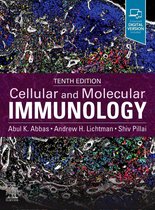
Cellular and Molecular Immunology
w w w
Abul Abbas, Andrew Lichtman, and Shiv Pillai
w w w w w w
10th Edition
w
,Table of Contents
w w
Chapter 01 Properties and Overview of Immune Responses
w w w w w w w 1
Chapter 02 Cells and Tissues of the Immune System
w w w w w w w w 3
Chapter 03 Leukocyte Circulation and Migration Into Tissues
w w w w w w w 6
Chapter 04 Innate Immunity
w w w 10
Chapter 05 Antibodies and Antigens
w w w w 17
Chapter 06 Antigen Presentation to T Lymphocytes and the Functions of Major
w w w w w w w w w w w
Histocompatibility Complex Molecules
w w 20
Chapter 07 Immune Receptors and Signal Transduction
w w w w w w 27
Chapter 08 Lymphocyte Development and Antigen Receptor Gene Rearrangement
w w w w w w w w 30
Chapter 09 Activation of T Lymphocytes
w w w w w 34
Chapter w 10 w Differentiation and Functions of CD4+ Effector T Cells
w w w w w w w 38
Chapter w 11 w Differentiation and Functions of CD8+ Effector T Cells
w w w w w w w 42
Chapter w 12 w B Cell Activation and Antibody Production
w w w w w 46
Chapter w 13 w Effector Mechanisms of Humoral Immunity
w w w w 52
Chapter w 14 w Specialized Immunity at Epithelial Barriers and in Immune Privileged Tissues
w w w w w w w w w 56
Chapter w 15 w Immunologic Tolerance and Autoimmunityw w w 62
Chapter w 16 w Immunity to Microbes w w 67
Chapter w 17 w Transplantation Immunology w 72
Chapter w 18 w Tumor Immunology
w 77
Chapter w 19 w Hypersensitivity Disorders w 81
Chapter w 20 w Allergy 86
Chapter w 21 w Primary and Acquired Immunodeficiencies
w w w 89
,Chapter 01: Properties and Overview of Immune Responses
w w w w w w w
Abbas, Lichtman, and Pillai: Cellular and Molecular Immunology, 10th Edition
w w w w w w w w w
MULTIPLE CHOICE w
1. The principal function of the immune system is:
w w w w w w w
a. Defense against cancer w w
b. Repair of injured tissues w w w
c. Defense against microbial infections w w w
d. Prevention of inflammatory diseases w w w
e. Protection against environmental toxins w w w
ANS: C
The immune system has evolved in the setting of selective pressures imposed by
w w w w w w w w w w w w
microbial infections. Although immune responses to cancer may occur, the concept
w w w w w w w w w w w
that ―immunosurveillance‖ against cancer is a principal function of the immune system
w w w w w w w w w w w w
is controversial. Repair of injured tissues may be a secondary consequence of the
w w w w w w w w w w w w w
immune responses and inflammation. Although the immune system has regulatory
w w w w w w w w w w
features that are needed to prevent excessive inflammation, prevention of
w w w w w w w w w w
inflammatory diseases is not a
w w w w w
primary function. The immune system can protect against microbial toxins, but it generally
w w w w w w w w w w w w
does not offer protection against toxins of nonbiologic origin.
w w w w w w w w w
2. Which of the following infectious diseases was prevented by the first
w w w w w w w w w w
successful vaccination?
w w
a. Polio
b. Tuberculosis
c. Smallpox
d. Tetanus
e. Rubella
ANS: C
In 1798, Edward Jenner reported the first intentional successful vaccination, which
w w w w w w w w w w
was against smallpox in a boy, using material from the cowpox pustules of a
w w w w w w w w w w w w w w
milkmaid. In 1980, smallpox was reported to be eradicated worldwide by a
w w w w w w w w w w w w
vaccination program.
w w
Effective vaccines against tetanus toxin, rubella virus, and poliovirus were
w w w w w w w w w
developed in the 20th century and are widely used. There is no effective
w w w w w w w w w w w w w
vaccine against Mycobacterium tuberculosis.
w w w w
3. Which of the following is a unique property of the adaptive immune system?
w w w w w w w w w w w w
a. Highly diverse repertoire of specificities for antigens
w w w w w w
b. Self-nonself discrimination w
c. Recognition of microbial structures by both cell-associated and soluble receptors
w w w w w w w w w
d. Protection against viral infections w w w
e. Responses that have the same kinetics and magnitude on repeated exposure to
w w w w w w w w w w w
the same microbew w w
ANS: A
, Highly diverse repertoires of specificities for antigens are found only in T and
w w w w w w w w w w w w
B lymphocytes, which are the central cellular components of the adaptive
w w w w w w w w w w w
immune system. Both the innate and the adaptive immune systems use cell-
w w w w w w w w w w w w
associated and soluble receptors to recognize microbes, display some degree of self-
w w w w w w w w w w w
nonself discrimination, and protect against viruses. On repeated exposure to the
w w w w w w w w w w
same microbe, the adaptive immune response becomes more rapid and of
w w w w w w w w w w w
greater magnitude; this is the manifestation of memory.
w w w w w w w w
4. Antibodies and T lymphocytes are the respective mediators of which two types
w w w w w w w w w w w
of immunity?
w w
a. Innate and adaptive w w
b. Passive and active w w
c. Specific and nonspecific w w
d. Humoral and cell-mediated w w
e. Adult and neonatal w w
ANS: D
Both B and T lymphocytes are principal components of adaptive immunity. B
w w w w w w w w w w w
lymphocytes produce antibodies, which are the recognition and effector molecules of
w w w w w w w w w w w
humoral immune responses to extracellular pathogens. T cells recognize and promote
w w w w w w w w w w w
eradication of intracellular pathogens in cell-mediated immunity. Passive and active
w w w w w w w w w w
immunity both can be mediated by either B or T lymphocytes. Specific
w w w w w w w w w w w w
immunity is another term for adaptive immunity. Both B and T lymphocytes
w w w w w w w w w w w w
participate in adult adaptive immunity but are still developing in the neonatal
w w w w w w w w w w w w
period.
w
5. The two major functional classes of effector T lymphocytes are:
w w w w w w w w w
a. Helper T lymphocytes and cytotoxic T lymphocytes
w w w w w w
b. Natural killer cells and cytoWtoWxW
ic.TTlB
yS
mMph.oW
cyStes
w w w w
c. Memory T cells and effector T cells w w w w w w
d. Helper cells and antigen-presenting cells w w w w
e. Cytotoxic T lymphocytes and target cells w w w w w
ANS: A
T cells can be classified into effector subsets that perform different effector functions.
w w w w w w w w w w w w
Most effector T cells are either helper T lymphocytes, which enhance the
w w w w w w w w w w w w
responses of other immune cells, including phagocytes and B cells, to
w w w w w w w w w w w
infections, or cytotoxic T lymphocytes, which directly kill infected cells.
w w w w w w w w w w
Natural killer cells are not T lymphocytes.
w w w w w w w
Antigen-presenting cells usually are not T cells. Memory T cells are not effector T w w w w w w w w w w w w w
cells.
w
6. Which of the following cell types is required for all adaptive humoral immune
w w w w w w w w w w w w
wresponses?
a. Natural killer cells w w
b. Dendritic cells w
c. Cytolytic T lymphocytes w w
d. B lymphocytes w
e. Helper T lymphocytes w w
ANS: D
Humoral immune responses are antibody-mediated immune responses, and all antibodies
w w w w w w w w w
are made by B lymphocytes and no other cell type.
w w w w w w w w w w
Cellular and Molecular Immunology
w w w
Abul Abbas, Andrew Lichtman, and Shiv Pillai
w w w w w w
10th Edition
w
,Table of Contents
w w
Chapter 01 Properties and Overview of Immune Responses
w w w w w w w 1
Chapter 02 Cells and Tissues of the Immune System
w w w w w w w w 3
Chapter 03 Leukocyte Circulation and Migration Into Tissues
w w w w w w w 6
Chapter 04 Innate Immunity
w w w 10
Chapter 05 Antibodies and Antigens
w w w w 17
Chapter 06 Antigen Presentation to T Lymphocytes and the Functions of Major
w w w w w w w w w w w
Histocompatibility Complex Molecules
w w 20
Chapter 07 Immune Receptors and Signal Transduction
w w w w w w 27
Chapter 08 Lymphocyte Development and Antigen Receptor Gene Rearrangement
w w w w w w w w 30
Chapter 09 Activation of T Lymphocytes
w w w w w 34
Chapter w 10 w Differentiation and Functions of CD4+ Effector T Cells
w w w w w w w 38
Chapter w 11 w Differentiation and Functions of CD8+ Effector T Cells
w w w w w w w 42
Chapter w 12 w B Cell Activation and Antibody Production
w w w w w 46
Chapter w 13 w Effector Mechanisms of Humoral Immunity
w w w w 52
Chapter w 14 w Specialized Immunity at Epithelial Barriers and in Immune Privileged Tissues
w w w w w w w w w 56
Chapter w 15 w Immunologic Tolerance and Autoimmunityw w w 62
Chapter w 16 w Immunity to Microbes w w 67
Chapter w 17 w Transplantation Immunology w 72
Chapter w 18 w Tumor Immunology
w 77
Chapter w 19 w Hypersensitivity Disorders w 81
Chapter w 20 w Allergy 86
Chapter w 21 w Primary and Acquired Immunodeficiencies
w w w 89
,Chapter 01: Properties and Overview of Immune Responses
w w w w w w w
Abbas, Lichtman, and Pillai: Cellular and Molecular Immunology, 10th Edition
w w w w w w w w w
MULTIPLE CHOICE w
1. The principal function of the immune system is:
w w w w w w w
a. Defense against cancer w w
b. Repair of injured tissues w w w
c. Defense against microbial infections w w w
d. Prevention of inflammatory diseases w w w
e. Protection against environmental toxins w w w
ANS: C
The immune system has evolved in the setting of selective pressures imposed by
w w w w w w w w w w w w
microbial infections. Although immune responses to cancer may occur, the concept
w w w w w w w w w w w
that ―immunosurveillance‖ against cancer is a principal function of the immune system
w w w w w w w w w w w w
is controversial. Repair of injured tissues may be a secondary consequence of the
w w w w w w w w w w w w w
immune responses and inflammation. Although the immune system has regulatory
w w w w w w w w w w
features that are needed to prevent excessive inflammation, prevention of
w w w w w w w w w w
inflammatory diseases is not a
w w w w w
primary function. The immune system can protect against microbial toxins, but it generally
w w w w w w w w w w w w
does not offer protection against toxins of nonbiologic origin.
w w w w w w w w w
2. Which of the following infectious diseases was prevented by the first
w w w w w w w w w w
successful vaccination?
w w
a. Polio
b. Tuberculosis
c. Smallpox
d. Tetanus
e. Rubella
ANS: C
In 1798, Edward Jenner reported the first intentional successful vaccination, which
w w w w w w w w w w
was against smallpox in a boy, using material from the cowpox pustules of a
w w w w w w w w w w w w w w
milkmaid. In 1980, smallpox was reported to be eradicated worldwide by a
w w w w w w w w w w w w
vaccination program.
w w
Effective vaccines against tetanus toxin, rubella virus, and poliovirus were
w w w w w w w w w
developed in the 20th century and are widely used. There is no effective
w w w w w w w w w w w w w
vaccine against Mycobacterium tuberculosis.
w w w w
3. Which of the following is a unique property of the adaptive immune system?
w w w w w w w w w w w w
a. Highly diverse repertoire of specificities for antigens
w w w w w w
b. Self-nonself discrimination w
c. Recognition of microbial structures by both cell-associated and soluble receptors
w w w w w w w w w
d. Protection against viral infections w w w
e. Responses that have the same kinetics and magnitude on repeated exposure to
w w w w w w w w w w w
the same microbew w w
ANS: A
, Highly diverse repertoires of specificities for antigens are found only in T and
w w w w w w w w w w w w
B lymphocytes, which are the central cellular components of the adaptive
w w w w w w w w w w w
immune system. Both the innate and the adaptive immune systems use cell-
w w w w w w w w w w w w
associated and soluble receptors to recognize microbes, display some degree of self-
w w w w w w w w w w w
nonself discrimination, and protect against viruses. On repeated exposure to the
w w w w w w w w w w
same microbe, the adaptive immune response becomes more rapid and of
w w w w w w w w w w w
greater magnitude; this is the manifestation of memory.
w w w w w w w w
4. Antibodies and T lymphocytes are the respective mediators of which two types
w w w w w w w w w w w
of immunity?
w w
a. Innate and adaptive w w
b. Passive and active w w
c. Specific and nonspecific w w
d. Humoral and cell-mediated w w
e. Adult and neonatal w w
ANS: D
Both B and T lymphocytes are principal components of adaptive immunity. B
w w w w w w w w w w w
lymphocytes produce antibodies, which are the recognition and effector molecules of
w w w w w w w w w w w
humoral immune responses to extracellular pathogens. T cells recognize and promote
w w w w w w w w w w w
eradication of intracellular pathogens in cell-mediated immunity. Passive and active
w w w w w w w w w w
immunity both can be mediated by either B or T lymphocytes. Specific
w w w w w w w w w w w w
immunity is another term for adaptive immunity. Both B and T lymphocytes
w w w w w w w w w w w w
participate in adult adaptive immunity but are still developing in the neonatal
w w w w w w w w w w w w
period.
w
5. The two major functional classes of effector T lymphocytes are:
w w w w w w w w w
a. Helper T lymphocytes and cytotoxic T lymphocytes
w w w w w w
b. Natural killer cells and cytoWtoWxW
ic.TTlB
yS
mMph.oW
cyStes
w w w w
c. Memory T cells and effector T cells w w w w w w
d. Helper cells and antigen-presenting cells w w w w
e. Cytotoxic T lymphocytes and target cells w w w w w
ANS: A
T cells can be classified into effector subsets that perform different effector functions.
w w w w w w w w w w w w
Most effector T cells are either helper T lymphocytes, which enhance the
w w w w w w w w w w w w
responses of other immune cells, including phagocytes and B cells, to
w w w w w w w w w w w
infections, or cytotoxic T lymphocytes, which directly kill infected cells.
w w w w w w w w w w
Natural killer cells are not T lymphocytes.
w w w w w w w
Antigen-presenting cells usually are not T cells. Memory T cells are not effector T w w w w w w w w w w w w w
cells.
w
6. Which of the following cell types is required for all adaptive humoral immune
w w w w w w w w w w w w
wresponses?
a. Natural killer cells w w
b. Dendritic cells w
c. Cytolytic T lymphocytes w w
d. B lymphocytes w
e. Helper T lymphocytes w w
ANS: D
Humoral immune responses are antibody-mediated immune responses, and all antibodies
w w w w w w w w w
are made by B lymphocytes and no other cell type.
w w w w w w w w w w