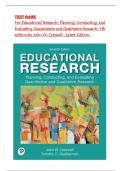
Test Bank For
Educational Research: Planning, Conducting, and Evaluating Quantitative and
Qualitative Research
Authors: John W. Creswell, Timothy C. Guetterman
7th Edition
,CONTENTS
Chapter 1 The Process Of Conducting Research Using Quantitative And Qualitative
Approaches
Chapter 2 Identifying A Research Problem
Chapter 3 Reviewing The Literature
Chapter 4 Specifying A Purpose And Research Questions Or Hypotheses
Chapter 5 Collecting Quantitative Data
Chapter 6 Analyzing And Interpreting Quantitative Data
Chapter 7 Collecting Qualitative Data
Chapter 8 Analyzing And Interpreting Qualitative Data
Chapter 9 Reporting And Evaluating Research
Chapter 10 Experimental Designs
Chapter 11 Correlational Designs
Chapter 12 Survey Designs
Chapter 13 Grounded Theory Designs
Chapter 14 Ethnographic Designs
Chapter 15 Narrative Research Designs
Chapter 16 Mixed Methods Designs
Chapter 17 Action Research Designs
Answer Key
,Chapter 1. The Process Of Conducting Research Using Quantitative And Qualitative
Approaches
For Each Question Below, Circle The Correct Or Best Answer.
1. Which One Of The Reasons Below Is The Best Argument For Why Research Is
Important?
A. It Is The Primary Work Of Faculty Members In Universities.
B. It Informs Policy Makers About Important Issues.
C. It Is Useful In Developing Your Research Skills.
D. It Helps The Researcher Prove Their Ideas.
2. To Apply Research In Your Practical Educational Setting, You Might
A. Examine What Other Practitioners Are Doing In Their Settings.
B. Find Out What Research Has To Say By Examining Research Studies.
C. Look To Research Methods Professors In Your Courses.
D. Go To The Educational Library And Begin To Locate Topics.
3. While Studying Educational Research, You Are Likely To Develop The Following Skills
Except
A. The Ability To Negotiate Topics With Faculty.
B. The Ability To Organize Large Amounts Of Information.
C. The Ability To Write For An Audience.
, D. The Ability To Effectively Use Library Resources.
4. Which Of The Following Is The Best Example Of A Research Problem?
A. The Need To Conduct Additional Research On Children
B. The Need To Address Problems Of Teenage Pregnancies
C. The Need To Learn About How Classrooms Work
D. The Need To Address Problems In Schools
5. A Stakeholder With An Interest In Your Study Asks You To Highlight The Positive
Results And Leave Out The Negative Results. What Type Of Ethical Issue Have You Breached
If You Follow The Request?
A. The Right To Privacy
B. The Need To Actively Look For Ways To “Give Back”
C. The Right To Avoid From Personal Disclosure
D. The Honest Reporting Of Research
6. Which One Of The Following Organizations Has Set Standards For The Ethical Practice
Of
Educational Research?
A. American Ethics Union
B. American Educational Research Association
C. American Principles Of Ethical Practices
D. American Ethical Research Association
Educational Research: Planning, Conducting, and Evaluating Quantitative and
Qualitative Research
Authors: John W. Creswell, Timothy C. Guetterman
7th Edition
,CONTENTS
Chapter 1 The Process Of Conducting Research Using Quantitative And Qualitative
Approaches
Chapter 2 Identifying A Research Problem
Chapter 3 Reviewing The Literature
Chapter 4 Specifying A Purpose And Research Questions Or Hypotheses
Chapter 5 Collecting Quantitative Data
Chapter 6 Analyzing And Interpreting Quantitative Data
Chapter 7 Collecting Qualitative Data
Chapter 8 Analyzing And Interpreting Qualitative Data
Chapter 9 Reporting And Evaluating Research
Chapter 10 Experimental Designs
Chapter 11 Correlational Designs
Chapter 12 Survey Designs
Chapter 13 Grounded Theory Designs
Chapter 14 Ethnographic Designs
Chapter 15 Narrative Research Designs
Chapter 16 Mixed Methods Designs
Chapter 17 Action Research Designs
Answer Key
,Chapter 1. The Process Of Conducting Research Using Quantitative And Qualitative
Approaches
For Each Question Below, Circle The Correct Or Best Answer.
1. Which One Of The Reasons Below Is The Best Argument For Why Research Is
Important?
A. It Is The Primary Work Of Faculty Members In Universities.
B. It Informs Policy Makers About Important Issues.
C. It Is Useful In Developing Your Research Skills.
D. It Helps The Researcher Prove Their Ideas.
2. To Apply Research In Your Practical Educational Setting, You Might
A. Examine What Other Practitioners Are Doing In Their Settings.
B. Find Out What Research Has To Say By Examining Research Studies.
C. Look To Research Methods Professors In Your Courses.
D. Go To The Educational Library And Begin To Locate Topics.
3. While Studying Educational Research, You Are Likely To Develop The Following Skills
Except
A. The Ability To Negotiate Topics With Faculty.
B. The Ability To Organize Large Amounts Of Information.
C. The Ability To Write For An Audience.
, D. The Ability To Effectively Use Library Resources.
4. Which Of The Following Is The Best Example Of A Research Problem?
A. The Need To Conduct Additional Research On Children
B. The Need To Address Problems Of Teenage Pregnancies
C. The Need To Learn About How Classrooms Work
D. The Need To Address Problems In Schools
5. A Stakeholder With An Interest In Your Study Asks You To Highlight The Positive
Results And Leave Out The Negative Results. What Type Of Ethical Issue Have You Breached
If You Follow The Request?
A. The Right To Privacy
B. The Need To Actively Look For Ways To “Give Back”
C. The Right To Avoid From Personal Disclosure
D. The Honest Reporting Of Research
6. Which One Of The Following Organizations Has Set Standards For The Ethical Practice
Of
Educational Research?
A. American Ethics Union
B. American Educational Research Association
C. American Principles Of Ethical Practices
D. American Ethical Research Association