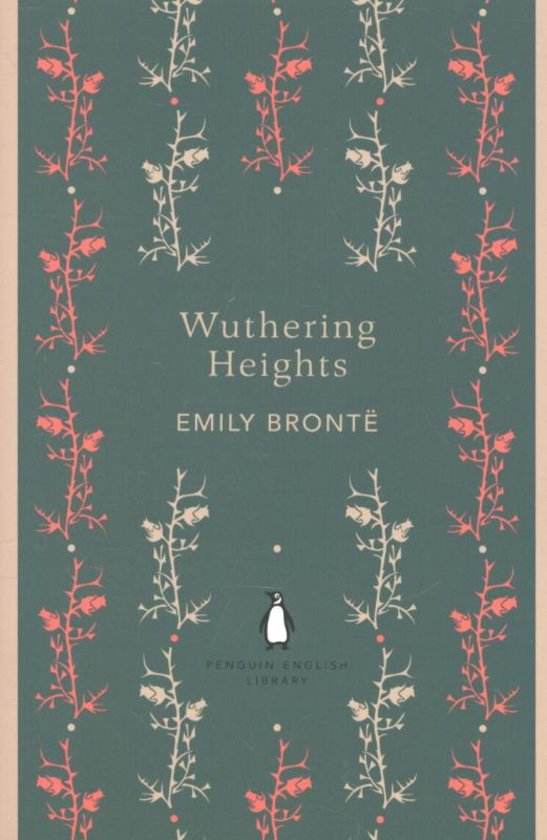
Boekverslag/Book report analysis Wuthering
Heights – Emily Brontë
B. General information
1.
a. Wuthering Heights
b. The title refers to the name of an isolated house built on the top of a hill at
the Yorkshire moors. It is a centuries old farmhouse. The name describes the
stormy weather around the house. It is a metaphor for the wild and passionate
characters, who live there.
c. The title fits the book well, because the house is the childhood home of the
many of the book’s main characters.
2.
a. The author is Emily Brontë. In the beginning her pseudonym was Ellis Bell, a
men’s name.
b. Emily Brontë (1818-1848) was born in Yorkshire. She and her sisters went to
a harsh boarding school. Later in life Emily lived with her siblings in their home
on the Yorkshire moors. She was an English novelist and poet. She wrote only
one novel. She and her siblings endured great tragedies. Five of the six of
them died young. Two of her sisters, Charlotte and Anne, are also respected
writers.
3.
a. She published this book in 1947 at the age of twenty-nine, one year before
she died of tuberculosis.
b. It is written in the Victorian period. Many novels in that time were about people
overcoming their difficulties and had a happy ending. Victorian novels were
often about social distinction between classes.
Generally people were born into a class and stayed there. Because of the
isolated location, the Yorkshire moors, it seems that the characters are
disconnected from society. Class distinctions are constantly changing. This
book is more about the strong inner feelings of the main persons.
It is a Gothic Romantic novel, because of the presence of ghosts and other
mysterious dark elements of peoples nature.
, 4.
a. The genre of the book is romanticism, realism and gothic.
b. It belongs to the gothic genre, because it is a story full of ghosts and spirits.
For example the ghost of Catherine wants to come inside of her old sleeping
room. Heathcliff seeks contact with the spirit of his beloved Cathy.
The genre is realism, because it is about family relationships, and their
problems.
Its genre is romanticism, because it is about two families and their passionate
love stories.
Motto: this book does not have a motto.
5.
a. Wuthering Heights has the combined the themes of passionate love and
revenge. The destructiveness of a love that never changes.
b. The nature and civilization is also a theme
c. Passionate love: a quote from Heathcliff about Catherine: ‘’Last night, I was on
the threshold of hell. Today, I am within sight of my heaven. I have my eyes on
it: hardly three feet to sever me!’’. (p.351) Heathcliff is refusing to eat.
Heathcliff knows he will die soon and he wants to be reunited with Catherine.
Revenge: revenge for example drives most of the decisions Heathcliff makes.
He seems to get satisfaction from causing others pain. He treats his wife
Isabele very cruel, and makes from “gentleman” Hareton a common servant.
Nature and civilization: some characters are more civilised for example Edgar,
Cathy and Nelly. Some characters like, Hindley, Catherine and Heathcliff are
more wild and dangerous like nature.
6.
a. This story takes place in Yorkshire. It plays late 18th to early 19th century. The
locations are Wuthering Heights and Thrushcross Grange and the moors
nearby Gimmerton.
b. Years and dates are mentioned in the book. The story begins in 1801 with a
visit from Lockwood to his Landlord Heathcliff. Then the story goes back 23
years earlier to 1778. And the story ends on 1 January 1803, “New Year’s
Day” (p. 359), when Cathy due to marry Hareton.
A quote where the surroundings are described: “I bounded, leaped, and flew
down the steep road; then, quitting its windings, shot direct across the moor,
rolling over banks, and wading through marshes: precipitating myself, in fact,
towards the beacon-light of the Grange.” (p196) Isabela leaves Heathcliff and
flees from Wuthering Heights to Thrushcross Grange.
7.
a. At the beginning the reader sees everything through the eyes of the visitor Mr
Lockwood. “As the story continuous from another angle with Nelly Dean as
narrator and Mr Lockwood as interlocutor, and commentator.” (Moll, 1995).
2
Heights – Emily Brontë
B. General information
1.
a. Wuthering Heights
b. The title refers to the name of an isolated house built on the top of a hill at
the Yorkshire moors. It is a centuries old farmhouse. The name describes the
stormy weather around the house. It is a metaphor for the wild and passionate
characters, who live there.
c. The title fits the book well, because the house is the childhood home of the
many of the book’s main characters.
2.
a. The author is Emily Brontë. In the beginning her pseudonym was Ellis Bell, a
men’s name.
b. Emily Brontë (1818-1848) was born in Yorkshire. She and her sisters went to
a harsh boarding school. Later in life Emily lived with her siblings in their home
on the Yorkshire moors. She was an English novelist and poet. She wrote only
one novel. She and her siblings endured great tragedies. Five of the six of
them died young. Two of her sisters, Charlotte and Anne, are also respected
writers.
3.
a. She published this book in 1947 at the age of twenty-nine, one year before
she died of tuberculosis.
b. It is written in the Victorian period. Many novels in that time were about people
overcoming their difficulties and had a happy ending. Victorian novels were
often about social distinction between classes.
Generally people were born into a class and stayed there. Because of the
isolated location, the Yorkshire moors, it seems that the characters are
disconnected from society. Class distinctions are constantly changing. This
book is more about the strong inner feelings of the main persons.
It is a Gothic Romantic novel, because of the presence of ghosts and other
mysterious dark elements of peoples nature.
, 4.
a. The genre of the book is romanticism, realism and gothic.
b. It belongs to the gothic genre, because it is a story full of ghosts and spirits.
For example the ghost of Catherine wants to come inside of her old sleeping
room. Heathcliff seeks contact with the spirit of his beloved Cathy.
The genre is realism, because it is about family relationships, and their
problems.
Its genre is romanticism, because it is about two families and their passionate
love stories.
Motto: this book does not have a motto.
5.
a. Wuthering Heights has the combined the themes of passionate love and
revenge. The destructiveness of a love that never changes.
b. The nature and civilization is also a theme
c. Passionate love: a quote from Heathcliff about Catherine: ‘’Last night, I was on
the threshold of hell. Today, I am within sight of my heaven. I have my eyes on
it: hardly three feet to sever me!’’. (p.351) Heathcliff is refusing to eat.
Heathcliff knows he will die soon and he wants to be reunited with Catherine.
Revenge: revenge for example drives most of the decisions Heathcliff makes.
He seems to get satisfaction from causing others pain. He treats his wife
Isabele very cruel, and makes from “gentleman” Hareton a common servant.
Nature and civilization: some characters are more civilised for example Edgar,
Cathy and Nelly. Some characters like, Hindley, Catherine and Heathcliff are
more wild and dangerous like nature.
6.
a. This story takes place in Yorkshire. It plays late 18th to early 19th century. The
locations are Wuthering Heights and Thrushcross Grange and the moors
nearby Gimmerton.
b. Years and dates are mentioned in the book. The story begins in 1801 with a
visit from Lockwood to his Landlord Heathcliff. Then the story goes back 23
years earlier to 1778. And the story ends on 1 January 1803, “New Year’s
Day” (p. 359), when Cathy due to marry Hareton.
A quote where the surroundings are described: “I bounded, leaped, and flew
down the steep road; then, quitting its windings, shot direct across the moor,
rolling over banks, and wading through marshes: precipitating myself, in fact,
towards the beacon-light of the Grange.” (p196) Isabela leaves Heathcliff and
flees from Wuthering Heights to Thrushcross Grange.
7.
a. At the beginning the reader sees everything through the eyes of the visitor Mr
Lockwood. “As the story continuous from another angle with Nelly Dean as
narrator and Mr Lockwood as interlocutor, and commentator.” (Moll, 1995).
2