1
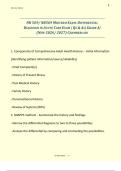
NR 569/ NR569
NR 569/ NR569 MIDTERM EXAM: DIFFERENTIAL
DIAGNOSIS IN ACUTE CARE EXAM | QS & AS| GRADE A|
(NEW 2026/ 2027) CHAMBERLAIN
1. Components of Comprehensive Adult Health History: - Initial information
(Identifying patient information/source/reliability)
- Chief Complaint(s)
- History of Present Illness
- Past Medical History
- Family History
- Personal/Social History
- Review of Systems (ROS)
2. SNAPPS method: - Summarize the history and findings.
- Narrow the differential diagnosis to two to three possibilities.
- Analyze the differential by comparing and contrasting the possibilities.
NR 569/ NR569
, 2
NR 569/ NR569
- Probe the preceptor by asking questions about alternative approaches or
uncertainties.
- Plan the management of the patient's health issues.
- Select an issue from the case for self-directed learning.
3.Creating a Differential Diagnosis
*Hoofbeats = Horses NOT Zebras*: - The differential diagnosis process
involves using clinical reasoning to distinguish between two or more
conditions that share similar signs and symptoms. Based on the CC the NP
gathers information through PMH (subjective data) and physical examination
(objective data) to establish a broad list of common & uncommon diagnosis.
As the provider collects more data, competing hypotheses are either
confirmed, disproved, or their priority changes.
4.Steps for Creating a Differential Diagnosis: 1. Initially start with a broad list
of diagnoses until further information or data is obtained.
NR 569/ NR569
, 3
NR 569/ NR569
2. List your top diagnosis FIRST followed by other potential diagnoses for a
specific problem *but keep it problem oriented until you have an actual
diagnosis.*
3. Aggressively prioritize work up of the most likely and most harmful (ie,
life threatening) diagnoses under consideration.
4. Prioritize the work up of ACUTE and REVERSIBLE diseases followed by
CHRONIC and IRREVERSIBLE (eg, delirium r/t a medical cause vs. chronic,
progressive dementia).
5. As information or data that effectively rules out a particular diagnosis for
a chief complaint becomes available, remove that diagnosis from your list &
focus your attention on remaining possibilities.
6. Once a diagnosis has been confirmed, the problem list should be
diagnosis-oriented rather than problem-oriented. 9. Pertinent Positive: -
Symptoms or signs that are present that you would expect to find if a possible
cause for for a patient's problem were true, which then supports the diagnosis.
NR 569/ NR569
, 4
NR 569/ NR569
7. Pertinent Negative: Expected symptoms or signs that are not present, facts
that you would expect to find if a possible cause for a patient's problem were
true, which then weaken this diagnosis by their absence.
8. Principles of Good Documentation
**Checklist to Ensure a Quality Clinical Record.**: 1. Is the organization clear?
- Make the headings clear.
- Accent your organization with indentations and spacing.
- Arrange the HPI in chronologic order, starting with the current episode, the
filling in relevant background information.
2. Does the included information contribute directly to the Assessment?
- Spell out the supporting evidence, both positive and negative, or each
problem or diagnosis. Make sure there is sufficient detail to support your
differential diagnosis and plan.
3. Are pertinent negatives specifically described?
- Often portions of the history or examination suggest that an abnormality
might exist or develop in that area. For example, for the pt with notable
NR 569/ NR569
NR 569/ NR569
NR 569/ NR569 MIDTERM EXAM: DIFFERENTIAL
DIAGNOSIS IN ACUTE CARE EXAM | QS & AS| GRADE A|
(NEW 2026/ 2027) CHAMBERLAIN
1. Components of Comprehensive Adult Health History: - Initial information
(Identifying patient information/source/reliability)
- Chief Complaint(s)
- History of Present Illness
- Past Medical History
- Family History
- Personal/Social History
- Review of Systems (ROS)
2. SNAPPS method: - Summarize the history and findings.
- Narrow the differential diagnosis to two to three possibilities.
- Analyze the differential by comparing and contrasting the possibilities.
NR 569/ NR569
, 2
NR 569/ NR569
- Probe the preceptor by asking questions about alternative approaches or
uncertainties.
- Plan the management of the patient's health issues.
- Select an issue from the case for self-directed learning.
3.Creating a Differential Diagnosis
*Hoofbeats = Horses NOT Zebras*: - The differential diagnosis process
involves using clinical reasoning to distinguish between two or more
conditions that share similar signs and symptoms. Based on the CC the NP
gathers information through PMH (subjective data) and physical examination
(objective data) to establish a broad list of common & uncommon diagnosis.
As the provider collects more data, competing hypotheses are either
confirmed, disproved, or their priority changes.
4.Steps for Creating a Differential Diagnosis: 1. Initially start with a broad list
of diagnoses until further information or data is obtained.
NR 569/ NR569
, 3
NR 569/ NR569
2. List your top diagnosis FIRST followed by other potential diagnoses for a
specific problem *but keep it problem oriented until you have an actual
diagnosis.*
3. Aggressively prioritize work up of the most likely and most harmful (ie,
life threatening) diagnoses under consideration.
4. Prioritize the work up of ACUTE and REVERSIBLE diseases followed by
CHRONIC and IRREVERSIBLE (eg, delirium r/t a medical cause vs. chronic,
progressive dementia).
5. As information or data that effectively rules out a particular diagnosis for
a chief complaint becomes available, remove that diagnosis from your list &
focus your attention on remaining possibilities.
6. Once a diagnosis has been confirmed, the problem list should be
diagnosis-oriented rather than problem-oriented. 9. Pertinent Positive: -
Symptoms or signs that are present that you would expect to find if a possible
cause for for a patient's problem were true, which then supports the diagnosis.
NR 569/ NR569
, 4
NR 569/ NR569
7. Pertinent Negative: Expected symptoms or signs that are not present, facts
that you would expect to find if a possible cause for a patient's problem were
true, which then weaken this diagnosis by their absence.
8. Principles of Good Documentation
**Checklist to Ensure a Quality Clinical Record.**: 1. Is the organization clear?
- Make the headings clear.
- Accent your organization with indentations and spacing.
- Arrange the HPI in chronologic order, starting with the current episode, the
filling in relevant background information.
2. Does the included information contribute directly to the Assessment?
- Spell out the supporting evidence, both positive and negative, or each
problem or diagnosis. Make sure there is sufficient detail to support your
differential diagnosis and plan.
3. Are pertinent negatives specifically described?
- Often portions of the history or examination suggest that an abnormality
might exist or develop in that area. For example, for the pt with notable
NR 569/ NR569