
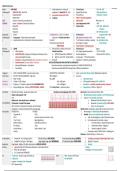
CARDIOVASCULAR
Dilated ID BIG MAPS 1. Systolic dysfunction → ventricular 1. S3 Heart Sound First - BB + ACEI
Cardiomyopath IDIOPATHIC (MC) - Men 20-60 enlargement → Systolic HF (MC - Left) 2. Elevated JVP with rales Then, Spironolactone
y Drugs/Doxorubicin 2. Low ejection fraction (LVEF <40%) 3. Pleural effusion Hydralazine + Nitrates
Beriberi (Wet) 3. LV Dilation 4. Mitral or tricuspid regurgitation
MOST Infection - Enterovirus (Coxsackievirus B) 5. LBBB and Afib NYHA class II – IV
COMMON Genetic - Thyroidism, Thiamine (B1) deficiency 6. Lateral displacement of PMI ARNI
Myocarditis 7. Cheynes Stokes LVEF < 35% - Aldosterone
Alcoholism antagonist
Postpartum DM - Mineralocorticoid
Hypertrophic 1. Genetic LV wall thickness > 1.5 cm → LV outflow 1. S4 Heart Sound antagonist if LVEF < 40%
Cardiomyopath 2. Young people - “athlete with syncopal episode” obstruction → Diastolic heart failure 2. High pitched mid-systolic at LLSB 2nd line - Digoxin
y 3. Autosomal dominant on chromosome 14 (sarcomere proteins) Normal EF 3. ↑ with Valsalva + standing, ↓ squatting AA - Hydralazine-nitrate
Ventricles are hypercontractile 4. MC complaint - Dyspnea combo therapy
ARRHYTHMIAS 5. Pulsus bisferiens + triple apical pulse
Restrictive 1. LASHER 1. Stiff ventricles → Dilation of the atria → 1. S4 Heart Sound Surgery
Cardiomyopath a. Loffler syndrome Diastolic heart failure 2. Echo - Bright speckled myocardium ICD if EF <35-30%
y b. AMYLODOSIS (MC) - Apple-green birefringence with Congo red stain a. WITHOUT hypertrophy = NORMAL EF 3. Bi-atrial enlargement Obstructive HCM - Myotomy
under polarized light microscopy b. Right HF > over left HF - SLOW FILLING 4. Kussmaul sign - ↑ JVP with respirations
c. Sarcoidosis - Young with heart blocks (Can cause dilated + restrictive) 2. Normal EF 5. Amyloidosis - Technetium pyrophosphate
d. Hemochromatosis (Can cause dilated + restrictive) MUST BE DISTINGUISHED FROM CONSTRICTIVE PERICARDITIS
e. Endocardial fibroelastosis - Scleroderma Ventricular interaction accentuated with respiration in CP, ABSENT IN RESTRICTIVE CM
f. Post-radiation Constrictive pericarditis DOES NOT have high levels of BNP or pericardial knock
Congestive 1. HFrEF: EF ≤40% (ECCENTRIC + Low mass:volume ratio) DILATED PUPILS + RALES ON PE 1. Acute - Loop diuretic, Nitrate, Inotrope (Dobutamine, Dopamine)
Heart Failure 2. HFmrEF: EF 40-50% (CONCENTRIC + High ratio) BNP >100pg/mL 2. Long Term
3. HFpEF: EF ≥50% NT-proBNP a. LOOP Diuretic PLUS
Ventricular 4. LV failure → SOB + fatigue <50y: >450 pg/mL b. ARNI (sacubitril-valsartan), ACEI, or ARB PLUS
Dysfunction 5. RV failure → ↑ Peripheral + abdominal fluid (PULMONARY HTN) >75y: >1800 pg/mL c. Beta blocker - carvedilol, metoprolol succinate, bisoprolol
6. MC precipitating cause - Infection; HYPERTHYROIDISM + ANEMIA CXR - Kerley B Lines +/- pulmonary edema d. Spironolactone - NYHA 2-4 / Stage C HF
Atrial Flutter Rheumatic heart disease, valvular heart disease, CHD Transthoracic echocardiography (TTE) - INITIAL Rate control - ASX with persistent AFIB or >80yo
Dilated cardiomyopathy + ASD 1. BBs (Metoprolol, Atenolol, Esmolol) or non-DHP CCBs (verapamil, diltiazem)
HTN 2. Long term - Procainamide, Amiodarone
Holiday heart - Acute alcohol excess + withdrawal a. Mechanical Valve, MS, Kidney DX - Warfarin
Atrial Fibrillation Thyrotoxicosis - Exclude if first episode b. Nonvalvular - Apixaban 5mg BID (CI WITH MECH. VALVE)
AFib - Persistent or Paroxysmal (>2 episodes, self-terminating) c. <65yo - No anticoagulation
Complication - Thrombus formation MC left atrial appendage Rhythm Control - Symptomatic, <65yo, High-risk within 12mo of onset
Scoring Scales CHA2DS2-VASc HAS-BLED 1. Pharmacologic - IV ibutilide (Class III antiarrhythmic)
Congestive HF, 1 HTN, 1 2. Unstable - Direct current (synchronized) cardioversion
HTN, 1 Abnormal renal or liver function, 1 each a. <48h - No anticoagulation, except if mitral valve disease
>75y, 2 🡪 >65, 1 Bleeding diathesis, 1 b. Post-cardioversion AC continued x 4 weeks
Diabetes mellitus, 1 Labile INR (on warfarin), 1 i. Factor Xa inhibitors - Apixaban (Eliquis), Rivaroxaban
Prior Stroke, 2 >65y, 1 ii. Antithrombin inhibitor - Dabigatran
Vascular disease, 1 Drugs or alcohol, 1 each iii. Vitamin K antagonist - Warfarin
Female, 1 c. Continuation >4wks if CHA2DS2-VASc ≥1 🡪 Bleeding risk (HAS-BLED)
Refractory - Ablation (MC Injury - Phrenic nerve)
AV Heart Blocks 1. Constant PR - 1st + 2nd Degree Type II If the R is far from P, FIRST DEGREE If some Ps don’t get through, MOBITZ II 1. 1st degree can progress to higher degree block, especially inferior MI
2. Variable PR - 2nd Type I + Third Degree Longer, longer, longer, drop! WENCKEBACH If Ps and Qs don’t agree, THIRD DEGREE 2. Mobitz II 🡪 Pacemaker
Bradycardia Drug induced - Digitalis, CCBs, BBs, antiarrhythmics; ANOREXIA NERVOSA 1. Atropine
Sick Sinus 1. Degenerative fibrosis 🡪 Alternating bradycardia + Atrial tachyarrhythmias Atropine
2. Meds - BB, CCBs, Digoxin No etiology - Permanent pacemaker
3. DX - 24 hour Holter (TRANSIENT)
SVT ↑ Vagal tone - Valsalva, cough, hold breath, etc. WAP WAP = 3 letters, 3 diff P waves
IV Adenosine NO TREATMENT
Long term - Amlodipine; 2nd - Metoprolol
MCC - Digoxin toxicity
,Bundle Branch 1. Left - RR’ in V5 or V6 (THINK MI) MAT 1. Same as wandering atrial pacemaker except the HR is >100bpm
Block 2. Right - RR’ in V1 or V2 (THINK NO HEART DZ) 2. THINK COPD!
3. Verapamil or BBs
Ventricular 1. WIDE QRS COMPLEX TACHY WITH 3 PVCs Torsades de PROLONGED QT INTERVAL
Tachycardia 2. Complication of MI + dilated cardiomyopathy Pointes Drug Induced - Digoxin, PROCAINAMIDE, Sotalol, Quinidine, Macrolides, Antipsychotics,
3. Unstable - Cardioversion Antidepressants, Antiemetics
4. Stable - Amiodarone, lidocaine, or procainamide HYPOCALCEMIA, HYPERKALEMIA, HYPOMAGNESEMIA, + FH OF DEAFNESS
5. Long term - BBs, non-DHP CCB (Amlodipine) IV magnesium sulfate + KCl
Wolff-Parkinson 1. Procainamide (class Ia), ibutilide (class III) PAC 1. Can precipitate sustained atrial tachycardia/flutter/fibrillation
White (WPW) 2. Accessory pathway, connects atria to ventricles 2. ASX - Observation / SX - Beta Blockers
3. Bundle of Kent “excites” ventricles → Delta wave 3. “Young patients with jolt in chest”
Ventricular 1. Unsynchronized cardioversion (defibrillation) PVC BBs, CCBs first line; if no response, catheter ablation
Fibrillation 2. Brugada syndrome
Atrial Septal 1. Ostium secundum - Foramen ovale + ostium secudum (MC!) 1. Pulmonary HTN symptoms Echo - Left to right shunt 1. 3-6mm - Close on own
Defect 2. Ostium primum - TV/MV 2. Fixed, widely split S2, LLSB, radiates to back Cath / Angiogram - GOLD 2. Symptomatic- Surgery
3. Sinus venosus - SVC or IVC 3. Can also sometimes have mitral regurgitation
Coarctation of 1. Congenital, acquired for Takayasu arteritis 1. Lower LE BP than UE CXR - Figure 3 sign 1. Prostaglandin E2 - Keeps DA open
the Aorta 2. Left ventricular pressure overload 2. DIMINISHED FEMORAL PULSES ECHO - GOLD 2. End organ damage distally - BB
3. Females 🡪 Turner Syndrome Mandatory exercise testing 3. Balloon angioplasty
Patent Ductus MC in preterm infants <1500 grams + high altitudes >10,000ft 1. Continuous machinery blow at 2nd L ICS into back + axilla 1. Echo 1. Spontaneous closure up to 1 year
Arteriosus Prostaglandin E2 keeps the DA open in the fetus 2. Wide pulse pressure + bounding peripheral pulses 2. >1y - Transcatheter closure
3. INDOMETHACIN FOR PRETERM ONLY
Tetralogy of 1. MC cyanotic heart defect 1. Systolic, ejection murmur at LSB in the 3rd ICS 1. CXR - Boot shaped heart Tet Spells - O2, Morphine, Bicarb, + knee to
Fallot 2. Shunt through VSD from R 🡪 L causing IMMEDIATE cyanosis 2. TET SPELLS - When crying or feeding or exercise in older chest 🡪 Propranolol
3. VSD, PULMONARY STENOSIS, OVERRIDING AORTA, RVH <2yo - Complete repair
Ventricular Membranous - Upper septum (MC!) 1. Holosystolic/pansystolic harsh murmur at LSB MC congenital heart defect 1. Most close on own by age 2-6yo
Septal Defect Inlet - Beneath tricuspid valve 2. Small - Normal; Large - LVH Echo - FIRST 2. Large (6-10mm) - Repair + diuretics
Muscular - Lower septum 3. Long standing shunt - RVH Cath/Angiography - GOLD
Acute Coronary 1. Septal: V1-V2, proximal LAD 1. EKG - 10 min STAT 1. MONA
Syndrome (MI) 2. Anterior: V3-V4, LAD 2. Door to thrombolytics - 30 min First 24 1. BB - CI in HF, bradycardia, heart block, asthma
3. Lateral: I, aVL, V5, V6, L circumflex 3. Door to PCI - 90min (+/- 30min) hours 2. ACEI, esp. in HF pts
4. Inferior: II, III, aVF, RCA 4. New LBBB - STEMI equivalent 3. 80mg atorvastatin (preferably before PCI)
5. Cardiac enzymes - 3 sets, 8h apart STEMI 1. Ticagrelor + UFH
5. STEMI - Transmural 6. (+) SX, (-) Diagnostics 🡪 Stress Test 2. Coronary angiography w/ PCI within 90m
6. NSTEMI - Subendocardial 7. Q WAVE = OLD MI minutes
8. NSTEMI 🡪 Echo 3. PCI unavailable in 120min - Plavix + Enoxaparin
9. Pain at rest = 90% occlusion NSTEMI Plavix + UFH
Long 1. ACEI, beta blocker, aspirin 81mg, high-dose statin
Term 2. Clopidogrel/ticagrelor continued x12mo
Angina 1. NYHA Classifications Stable - ↑ Exertion, ↓ Nitro CRP >3 mg/L - RF for IHD Beta Blockers - FIRST LINE
Class I - No limitations of activity <10 minutes Unstable - ST depressions 1mm+ If unable to use 🡪 CCBs
Class II - Slight limitation of activity Unstable - ↑ Rest, Less responsive to Nitro Prinzmetal - Transient ST elevation ASA
Class III - Marked limitation; Usually More than 10 minutes T wave inversions Nitroglycerin SL - 3 dose max
daily activity Prinzmetal - Variant Troponins not usually ↑ in stable angina Statin
Class IV - Unable to do any activity F>M, morning, stress, hyperventilation NONEXERTIONAL CP / COCAINE - Inverted U waves Prinzmetal - CCB (NO PROPRANOLOL)
2. MCC - CAD EXERCISE DOESN'T PROVOKE PE Normal HTN, DM, ↓ LVEF <40%, CKD - ACEI/ARBs
3. MC RF of Prinzmetal Angina - Smoking ACh, ergonovine, histamine, serotonin Chronic angina - Ranolazine
4. ↑ myocardial O2 demand (↑ afterload) Atypical - Women, diabetics, elderly Stable angina - Nitroglycerin
Stress Echo - Dopamine or dobutamine if can’t exercise (Think arthritis, broken bones, etc.) 🡪 CI to inotropes - LV outflow obstruction (e.g., aortic stenosis), ventricular arrhythmias, recent MI (1-3d), severe HTN
HTN Normal: <120/<80 1. Step 1: ACEI/ARB or CCB or thiazide diuretic 1. African American - CCB, Diuretic Goals of treatment:
Elevated BP: 120-129/<80 2. Step 2: ACEI/ARB + (CCB or thiazide diuretic) 2. Pregnant - Labetalol, Nifedipine, Methyldopa 1. 60+ y.o. – <150/90
Stage I HTN: 130-139/80-89 3. Step 3: ACEI/ARB + CCB + thiazide diuretic 3. DM / CKD - ACEI/ARB, Loop Diuretics 2. 30-59 – <140/90
Stage II HTN: ≥140/≥90 4. Step 4: ACEI/ARB + CCB + thiazide diuretic + spironolactone 4. Osteoporosis - Thiazides improve bone density 3. Two drugs if >150/90
1. MCC - Idiopathic (Sympathetic + mineralocorticoid activity) 🡪 MCC Secondary - Renal artery stenosis (MC) , Pheochromocytome, NSAIDs, OCPs, Cushings, PRIMARY ALDOSTERONISM
HTN Urgency 1. BP >180/120 with goal BP: ≤160/100 Clonidine (DOC), Captopril, Labetalol, Nicardipine, Furosemide / Neurologic symptoms = Nicardipine or Cleridipine, Labetalol
2. HEADACHE = MC SYMPTOM Reduction of MAP by no more than 25% over 24-48hrs
HTN Emergency BP >180/120 + signs of end-organ damage 1. Sodium nitroprusside - ADE cyanide toxicity 🡪 Treat with sodium thiosulfate
, 2. Goal 20-25% reduction in MAP in 1-2 hours - ↓ 10% in first hour, additional 15% in next 2-3 hours using IV agents
1. Malignant HTN - Diastolic reading >140mmHg with PAPILLEDEMA; RF - MAOI DRUGS (TX - Hydralazine)
Cardiogenic 1. Associated with MI, myocarditis, valvular disease, cardiomyopathy, arrhythmia ↑ PCWP 1. Oxygen
Shock 2. Isotonic fluids
3. Dobutamine, epinephrine
Orthostatic 1. Drop of >20mm systolic, 10mm diastolic + 15 bpm ↑ in pulse 2-5 min If HR >15 bpm, think low blood volume 1. Vasopressors
Hypotension 2. Think diuretics, vasodilators, antidepressants, volume depletion, autonomic failure 2. IVF
Vasovagal 1. Upright tilt-table study
Hypotension
Etiology Clinical Manifestations Screening Guidelines Treatment
HLD 1. Hypercholesterolemia Hypertriglyceridemia 🡪 pancreatitis Higher risk = Age 25 for males and 1. ↓LDL 🡪 Statins HIGH INTENSITY MODERATE LOW INTENSITY
a. Hypothyroidism Xanthomas (e.g., Achilles’ tendon) 35 females 2. ↓ triglycerides 🡪 Fibrates Atorvastatin 40, 80 Atorvastatin 10, 20 -------------------
b. Pregnancy Xanthelasma (lipid plaque on eyes) (>1 RF: HTN, smoking, 3. ↑ HDL 🡪 Niacin Rosuvastatin 20, 40 Rosuvastatin 5, 10 -------------------
c. CKD FH) 4. DM2 🡪 Statins, Fibrates ------------------- Simvastatin 20, 40 Simvastatin 5, 10
2. Hypertriglyceridemia ------------------- Pravastatin 40, 80 Pravastatin 10,
a. Steroids Low risk = Age 35 males, 45 ------------------- Lovastatin 40 20
b. Estrogen females Fluvastatin 40 BID Lovastatin 20
c. DM, Obesity, ETOH Fluvastatin 20-40
Desirable Borderline High Risk ↑
Total < 200 200-239 > 240 Hyperlipoproteinemia Wait AT LEAST 6 WEEKS AFTER illness or pregnancy to measure.
LDL < 130 130-156 > 160 Type 2 HLD Temporarily low during acute illness (i.e. MI, stress, etc.)
HDL > 45 Men: 40-50 / Women: 50-59 Men: < 40 / Women: < 50 Lower risk of heart disease Drug Induced - Anabolic CCS, BB, epinephrine, OCPs, & Vitamin D
Triglycerides < 150 150-199 200-499 CVD, Pancreatitis
Rheumatic 1. GAS Infection “JONES-FAR” Minor Major Corticosteroids
Fever 2. Autoimmune reaction 2 major OR Fever 1. J – Joint ( polyarthritis) E – Erythema marginatum Penicillin G
3. Ages 5-15 MC 1 major + 2 minor Arthralgia 2. O – Oh my heart (active carditis) S – Sydenham’s chorea Erythromycin if PCN-allergy
HX RF 3. N – Nodules (subcutaneous)
Rheumatic 1. Complication of RF 1. Early stage: valve regurgitation ↑ antistreptolysin O (ASO) titers Penicillin x 10 years or until age
Heart Disease 2. MC affects mitral valve > A > T 2. Later stage: valve stenosis Aschoff bodies (granulomas giant cells) 40
Endocarditis Acute - Normal valves affected (MC - Right side) 1. Staphylococcus aureus (MC) 1. Nafcillin + Gentamicin OR MC valve - Mitral; M>A>T>P
IVDU (Tricuspid valves) 2. Vancomycin + Gentamicin Blood cultures before ABX – 3 sets 10mL 1 hr apart
THINK IF NEW 3. IVDU - Vancomycin TEE = gold > TTE
ONSET Subacute - Damaged valves affected (MC - Left) 1. Streptococcus viridans 1. Penicillin or Ampicillin AND Complications - Emboli, Glomerulonephritis
MURMUR Poor dentition “Vulnerable = Viridans” 2. Gentamicin Treatment is 4 to 6 weeks
Dental procedures
1. Prosthetic Valve 1. Staphylococcus epidermidis 1. Vancomycin + Gentamicin +
Rifampin
1. GI or GU procedures Enterococcus
Endocarditis & negative cultures 1. HACEK organisms Concern for VRE - Daptomycin or Linezolid
1. Colon cancer or ulcerative colitis 1. Streptococcus bovis
1. Surgery Prophylaxis - Dental, Respiratory, Skin, MSK 1. Amoxicillin
tissues 2. Clindamycin if allergic
Dresslers 1. Autoimmune response 1-8 weeks AFTER acute MI 1. Central chest pain worse with lying down 1. Aspirin → CCS
Myocarditis Similar to dilated (systolic HF) cardiomyopathy, but 1. Parvovirus Systolic HF tx: ACEI, diuretics, BBs Endomyocardial biopsy - GOLD
tachycardia disproportionate to fever / discomfort 2. HHV6 Myocardial tissue necrosis + cellular infiltrates
Meds - Clozapine, Doxorubicin, Methyldopa 3. Enteroviruses 2 weeks - 3 months post URI + Fever + HF + NO MURMURS
Pericarditis 1. Fibrinous or serofibrinous 1. Coxsackievirus 1. NSAIDS or ASA 1. Chest pain relieved with leaning forward
2. DX - CT SCAN (GOLD) 2. MCC Noninfectious - SLE 2. Dressler’s Syndrome - NO NSAIDS! 2. Diffuse ST segment elevation without reciprocal depression
3. Pericardial friction rub (muffled heart) + pericardial effusion
Constrictive 1. Restriction of ventricular diastolic filling TB MCC Diuretics 1. Pericardial knock - High pitched diastolic sound similar to S3
Pericarditis 2. DX - CT SCAN Pericardiectomy - Definitive 2. Kussmaul’s sign - ↑ in jugular vein pressure w/ inspiration
3. “Square root” sign
Cardiac 1. Fluid build-up around the heart Pericardiocentesis 1. Beck’s Triad - Hypotension, Increased JVP, muffled heart sounds
Tamponade 2. Associated with tension pneumothorax + pericarditis 2. Electrical alternans + Pulsus paradoxus
, Pericardial 1. Normally, about 5-15 mL of fluid is in the pericardial 1. Advanced stage lung CA 1. Pericardiocentesis 1. Cyanotic, muffled heart sounds, JVD
Effusion space 2. Small (<50 ml) = Observe 2. “Water bottle” heart on CXR
AV 1. MCC intracerebral hemorrhage in
Malformation children
Aortic Aneurysm RF - CAD (MCC), Marfan, >60, syphilis 1. Back pain, pulsatile mass (MC FINDING), hypotension 1. >3.0cm - Aneurysmal 1. Beta Blockers
Protective factor - moderate ETOH use 2. Rupture - Back pain, hemodynamic instability, and abdominal distension 2. >5.5cm or ↑ >0.5cm/year - Surgery
All 3 layers - Intima, media, adventitia 3. Abdominal bruit, especially renal artery stenosis 2. Abdominal US 3. Monitor annual if >3cm, q6mo >4cm
MC location - Infrarenal 4. Aortoenteric fistula - Acute GI bleed + prior aortic graft (MC lower 1/3 duodenum) 3. Rupture, STABLE - CT 4. Screening US if male >65 + ever
smoked
Aortic Dissection 1. RF - Turner’s + Marfan’s, >50yo Sudden onset of severe, tearing (ripping, knife life) + asymmetrical pulses 1. CT angiography Ascending - Surgery
2. Just 2 layers – intima, media Ascending (MC) - Anterior chest pain + NEW AORTIC REGURG. 2. UNSTABLE - TEE at Descending - Beta Blockers
3. DeBakey (Type I - III) Aortic arch - Neck/jaw pain bedside SBP rapidly lowered to a goal of 100-120
Descending - Interscapular pain 3. MRI - GOLD within 20min
Arterial 1. MC site = Common femoral artery 1. 6 p's: pain, paralysis, pallor, paresthesia, poikilothermia, pulselessness 1. Doppler US 1. IV Heparin
Embolism / 2. Sources: Heart (MC AFib), aneurysms, 2. POST REFUSION LOOK FOR: Compartment syndrome, hyperkalemia, renal failure 2. Embolectomy
Thrombosis atheromatous plaque from myoglobinuria, MI
DVT Virchow’s triad: stasis, trauma, 1. Doppler US 1. Heparin to Coumadin bridge
hypercoagulability (OCP, cancer, 2. Well’s Criteria a. Minimum of three months
surgery, factor V leiden
Giant Cell 1. Temporal, occipital, ophthalmic, + 1. Jaw claudication, amaurosis fugax, + temporal HA 1. Temporal biopsy High dose CCS (IV prednisone /
Arteritis posterior ciliary artery 2. Fundoscopic exam may be NL for 24-48h 2. ESR >100 methylprednisolone)
2. Associated polymyalgia rheumatica 3. MC women >50yo ASA
Vascular Disease Buttock, hip, groin pain = Aortoiliac 🡪 Thigh + upper calf = Femoral Peripheral Arterial Disease Peripheral Venous Disease
Leriche syndrome - Claudication, impotence, ↓ femoral pulses 1. Better w/ dependency, rest Worse w/ dependency, standing/prolonged sitting
Varicose veins >3mm, Reticular (Spider) veins 1-3mm 2. Worse w/ walking, elevation, cold Improves w/ walking, elevation
Great Saphenous Vein = MC for varicose veins 3. Redness w/ dependency; RUBOR + cyanosis w/ elevation Cyanosis w/ dependency
Trousseau sign - Thrombophlebitis s/p malignancy (MC site - Pancreas) 4. Leg ulcers – LATERAL MALLEOLUS, clean margins Leg ulcers – MEDIAL MALLEOLUS, uneven margins
Pain + palpable cord along vein - Superficial Thrombophlebitis 5. Atrophic skin changes; thin, shiny skin, loss of hair, thick nails Stasis dermatitis; eczematous rash, thickening of skin
MCC - Factor V Leiden 6. Livedo reticularis (mottled appearance) Brownish pigmentation
IV catheterization, pregnancy, varicose veins 7. ↓ pulses, cool to touch; minimal/no edema pulses/temp normal, prominent edema
NSAIDS or phlebectomy
Aortic Stenosis 1. Degenerative heart disease (MC in >70) 1. Harsh, crescendo-decrescendo systolic ejection click 1. ECHO - Diagnostic ASX - Observation
2. Congenital = Bicuspid AV (MC in <70) 2. Heard best at RUSB or 2nd RIGHT intercostal space 2. CXR - Ascending aorta dilation +/- calcification SX - Surgery if aortic valve <0.6 cm, mean
3. Complications - Infective endocarditis, CHF 3. RADIATES TO THE CAROTIDS 3. Pulsus parvus et tardus - Delayed carotid pulse gradient >60 mmHg, LVEF <50%
4. AVOID NITRATES 4. S4 Heart Sound - LVH due to ↑ afterload 4. Narrowed pulse pressure - Not getting blood out Porcine valve if >75 (Mechanical for <75)
Valvular Disorder Reminders
Systole Diastole
1. S1 - Closure of the mitral & tricuspid valve 1. S3: LV filling (>40 🡪 ↓ LV contractility, myocardial failure, volume overload)
2. S2 - Aortic & pulmonic valves 2. S4: dull, low sound s/p increased resistance to LV filling
3. S2 Splitting - Physiologic: INSPIRATION / Paradoxical: EXPIRATION (Aortic stenosis, LBBB) 3. Opening Snap: opening of stenotic MV = MS; best heard at apex
Diastolic Murmurs Midsystolic Murmurs (Ejection murmurs) Pansystolic (H
1. Almost always mean heart disease MC kind of heart murmur; stop before S2 Begins with S1 and continues
2. AR - Soft, high pitched, blowing along LSB, leaning forward after exhaling AS - Ejection click MR - S3 gallop + wide split S2
a. Pulsus biferiens “water hammer” - Rapid, prominent upstroke + descent PS - Hard ejection crescendo-decrescendo; split S2 at LSB; radiates to left TR - High pitched holosystolic
3. MS - Low pitched decrescendo with opening snap; THINK RHEUMATIC FEVER HCOM - Medium-pitched, decreases with squatting and increases with straining; S4 gallop and Carvallo’s Sign – increa
4. PR - High pitch, decrescendo murmur at LUSB, increases with inspiration apical lift with thick, stiff left ventricle distinguish from M
5. TS - Mid diastolic rumbling at LLSB with opening snap MVP - Ejection click at apex; THINK MARFAN'S + EHLERS DANLOS VSD - Holosystolic at LSB; fixed
Harsh/rumble sounds = STENOSIS Blow sound = REGURGITATION Cyanotic Cong
Right-sided murmurs best heard with inspiration Left-sided murmurs best heard after maximal expiration Tetralogy of Fallot
Aortic - Sitting up & leaning forward accentuates Mitral - Lying on left side accentuates Transposition
Mitral regurgitation (MCC - MVP) - d/t papillary muscle rupture (MI) Aortic regurgitation - Aneurysm / Dissection / Root dilation → AFib TAPVR, Tricuspid Atresia, Trun
Ebstein’s anomaly
HEMATOLOGY
Dilated ID BIG MAPS 1. Systolic dysfunction → ventricular 1. S3 Heart Sound First - BB + ACEI
Cardiomyopath IDIOPATHIC (MC) - Men 20-60 enlargement → Systolic HF (MC - Left) 2. Elevated JVP with rales Then, Spironolactone
y Drugs/Doxorubicin 2. Low ejection fraction (LVEF <40%) 3. Pleural effusion Hydralazine + Nitrates
Beriberi (Wet) 3. LV Dilation 4. Mitral or tricuspid regurgitation
MOST Infection - Enterovirus (Coxsackievirus B) 5. LBBB and Afib NYHA class II – IV
COMMON Genetic - Thyroidism, Thiamine (B1) deficiency 6. Lateral displacement of PMI ARNI
Myocarditis 7. Cheynes Stokes LVEF < 35% - Aldosterone
Alcoholism antagonist
Postpartum DM - Mineralocorticoid
Hypertrophic 1. Genetic LV wall thickness > 1.5 cm → LV outflow 1. S4 Heart Sound antagonist if LVEF < 40%
Cardiomyopath 2. Young people - “athlete with syncopal episode” obstruction → Diastolic heart failure 2. High pitched mid-systolic at LLSB 2nd line - Digoxin
y 3. Autosomal dominant on chromosome 14 (sarcomere proteins) Normal EF 3. ↑ with Valsalva + standing, ↓ squatting AA - Hydralazine-nitrate
Ventricles are hypercontractile 4. MC complaint - Dyspnea combo therapy
ARRHYTHMIAS 5. Pulsus bisferiens + triple apical pulse
Restrictive 1. LASHER 1. Stiff ventricles → Dilation of the atria → 1. S4 Heart Sound Surgery
Cardiomyopath a. Loffler syndrome Diastolic heart failure 2. Echo - Bright speckled myocardium ICD if EF <35-30%
y b. AMYLODOSIS (MC) - Apple-green birefringence with Congo red stain a. WITHOUT hypertrophy = NORMAL EF 3. Bi-atrial enlargement Obstructive HCM - Myotomy
under polarized light microscopy b. Right HF > over left HF - SLOW FILLING 4. Kussmaul sign - ↑ JVP with respirations
c. Sarcoidosis - Young with heart blocks (Can cause dilated + restrictive) 2. Normal EF 5. Amyloidosis - Technetium pyrophosphate
d. Hemochromatosis (Can cause dilated + restrictive) MUST BE DISTINGUISHED FROM CONSTRICTIVE PERICARDITIS
e. Endocardial fibroelastosis - Scleroderma Ventricular interaction accentuated with respiration in CP, ABSENT IN RESTRICTIVE CM
f. Post-radiation Constrictive pericarditis DOES NOT have high levels of BNP or pericardial knock
Congestive 1. HFrEF: EF ≤40% (ECCENTRIC + Low mass:volume ratio) DILATED PUPILS + RALES ON PE 1. Acute - Loop diuretic, Nitrate, Inotrope (Dobutamine, Dopamine)
Heart Failure 2. HFmrEF: EF 40-50% (CONCENTRIC + High ratio) BNP >100pg/mL 2. Long Term
3. HFpEF: EF ≥50% NT-proBNP a. LOOP Diuretic PLUS
Ventricular 4. LV failure → SOB + fatigue <50y: >450 pg/mL b. ARNI (sacubitril-valsartan), ACEI, or ARB PLUS
Dysfunction 5. RV failure → ↑ Peripheral + abdominal fluid (PULMONARY HTN) >75y: >1800 pg/mL c. Beta blocker - carvedilol, metoprolol succinate, bisoprolol
6. MC precipitating cause - Infection; HYPERTHYROIDISM + ANEMIA CXR - Kerley B Lines +/- pulmonary edema d. Spironolactone - NYHA 2-4 / Stage C HF
Atrial Flutter Rheumatic heart disease, valvular heart disease, CHD Transthoracic echocardiography (TTE) - INITIAL Rate control - ASX with persistent AFIB or >80yo
Dilated cardiomyopathy + ASD 1. BBs (Metoprolol, Atenolol, Esmolol) or non-DHP CCBs (verapamil, diltiazem)
HTN 2. Long term - Procainamide, Amiodarone
Holiday heart - Acute alcohol excess + withdrawal a. Mechanical Valve, MS, Kidney DX - Warfarin
Atrial Fibrillation Thyrotoxicosis - Exclude if first episode b. Nonvalvular - Apixaban 5mg BID (CI WITH MECH. VALVE)
AFib - Persistent or Paroxysmal (>2 episodes, self-terminating) c. <65yo - No anticoagulation
Complication - Thrombus formation MC left atrial appendage Rhythm Control - Symptomatic, <65yo, High-risk within 12mo of onset
Scoring Scales CHA2DS2-VASc HAS-BLED 1. Pharmacologic - IV ibutilide (Class III antiarrhythmic)
Congestive HF, 1 HTN, 1 2. Unstable - Direct current (synchronized) cardioversion
HTN, 1 Abnormal renal or liver function, 1 each a. <48h - No anticoagulation, except if mitral valve disease
>75y, 2 🡪 >65, 1 Bleeding diathesis, 1 b. Post-cardioversion AC continued x 4 weeks
Diabetes mellitus, 1 Labile INR (on warfarin), 1 i. Factor Xa inhibitors - Apixaban (Eliquis), Rivaroxaban
Prior Stroke, 2 >65y, 1 ii. Antithrombin inhibitor - Dabigatran
Vascular disease, 1 Drugs or alcohol, 1 each iii. Vitamin K antagonist - Warfarin
Female, 1 c. Continuation >4wks if CHA2DS2-VASc ≥1 🡪 Bleeding risk (HAS-BLED)
Refractory - Ablation (MC Injury - Phrenic nerve)
AV Heart Blocks 1. Constant PR - 1st + 2nd Degree Type II If the R is far from P, FIRST DEGREE If some Ps don’t get through, MOBITZ II 1. 1st degree can progress to higher degree block, especially inferior MI
2. Variable PR - 2nd Type I + Third Degree Longer, longer, longer, drop! WENCKEBACH If Ps and Qs don’t agree, THIRD DEGREE 2. Mobitz II 🡪 Pacemaker
Bradycardia Drug induced - Digitalis, CCBs, BBs, antiarrhythmics; ANOREXIA NERVOSA 1. Atropine
Sick Sinus 1. Degenerative fibrosis 🡪 Alternating bradycardia + Atrial tachyarrhythmias Atropine
2. Meds - BB, CCBs, Digoxin No etiology - Permanent pacemaker
3. DX - 24 hour Holter (TRANSIENT)
SVT ↑ Vagal tone - Valsalva, cough, hold breath, etc. WAP WAP = 3 letters, 3 diff P waves
IV Adenosine NO TREATMENT
Long term - Amlodipine; 2nd - Metoprolol
MCC - Digoxin toxicity
,Bundle Branch 1. Left - RR’ in V5 or V6 (THINK MI) MAT 1. Same as wandering atrial pacemaker except the HR is >100bpm
Block 2. Right - RR’ in V1 or V2 (THINK NO HEART DZ) 2. THINK COPD!
3. Verapamil or BBs
Ventricular 1. WIDE QRS COMPLEX TACHY WITH 3 PVCs Torsades de PROLONGED QT INTERVAL
Tachycardia 2. Complication of MI + dilated cardiomyopathy Pointes Drug Induced - Digoxin, PROCAINAMIDE, Sotalol, Quinidine, Macrolides, Antipsychotics,
3. Unstable - Cardioversion Antidepressants, Antiemetics
4. Stable - Amiodarone, lidocaine, or procainamide HYPOCALCEMIA, HYPERKALEMIA, HYPOMAGNESEMIA, + FH OF DEAFNESS
5. Long term - BBs, non-DHP CCB (Amlodipine) IV magnesium sulfate + KCl
Wolff-Parkinson 1. Procainamide (class Ia), ibutilide (class III) PAC 1. Can precipitate sustained atrial tachycardia/flutter/fibrillation
White (WPW) 2. Accessory pathway, connects atria to ventricles 2. ASX - Observation / SX - Beta Blockers
3. Bundle of Kent “excites” ventricles → Delta wave 3. “Young patients with jolt in chest”
Ventricular 1. Unsynchronized cardioversion (defibrillation) PVC BBs, CCBs first line; if no response, catheter ablation
Fibrillation 2. Brugada syndrome
Atrial Septal 1. Ostium secundum - Foramen ovale + ostium secudum (MC!) 1. Pulmonary HTN symptoms Echo - Left to right shunt 1. 3-6mm - Close on own
Defect 2. Ostium primum - TV/MV 2. Fixed, widely split S2, LLSB, radiates to back Cath / Angiogram - GOLD 2. Symptomatic- Surgery
3. Sinus venosus - SVC or IVC 3. Can also sometimes have mitral regurgitation
Coarctation of 1. Congenital, acquired for Takayasu arteritis 1. Lower LE BP than UE CXR - Figure 3 sign 1. Prostaglandin E2 - Keeps DA open
the Aorta 2. Left ventricular pressure overload 2. DIMINISHED FEMORAL PULSES ECHO - GOLD 2. End organ damage distally - BB
3. Females 🡪 Turner Syndrome Mandatory exercise testing 3. Balloon angioplasty
Patent Ductus MC in preterm infants <1500 grams + high altitudes >10,000ft 1. Continuous machinery blow at 2nd L ICS into back + axilla 1. Echo 1. Spontaneous closure up to 1 year
Arteriosus Prostaglandin E2 keeps the DA open in the fetus 2. Wide pulse pressure + bounding peripheral pulses 2. >1y - Transcatheter closure
3. INDOMETHACIN FOR PRETERM ONLY
Tetralogy of 1. MC cyanotic heart defect 1. Systolic, ejection murmur at LSB in the 3rd ICS 1. CXR - Boot shaped heart Tet Spells - O2, Morphine, Bicarb, + knee to
Fallot 2. Shunt through VSD from R 🡪 L causing IMMEDIATE cyanosis 2. TET SPELLS - When crying or feeding or exercise in older chest 🡪 Propranolol
3. VSD, PULMONARY STENOSIS, OVERRIDING AORTA, RVH <2yo - Complete repair
Ventricular Membranous - Upper septum (MC!) 1. Holosystolic/pansystolic harsh murmur at LSB MC congenital heart defect 1. Most close on own by age 2-6yo
Septal Defect Inlet - Beneath tricuspid valve 2. Small - Normal; Large - LVH Echo - FIRST 2. Large (6-10mm) - Repair + diuretics
Muscular - Lower septum 3. Long standing shunt - RVH Cath/Angiography - GOLD
Acute Coronary 1. Septal: V1-V2, proximal LAD 1. EKG - 10 min STAT 1. MONA
Syndrome (MI) 2. Anterior: V3-V4, LAD 2. Door to thrombolytics - 30 min First 24 1. BB - CI in HF, bradycardia, heart block, asthma
3. Lateral: I, aVL, V5, V6, L circumflex 3. Door to PCI - 90min (+/- 30min) hours 2. ACEI, esp. in HF pts
4. Inferior: II, III, aVF, RCA 4. New LBBB - STEMI equivalent 3. 80mg atorvastatin (preferably before PCI)
5. Cardiac enzymes - 3 sets, 8h apart STEMI 1. Ticagrelor + UFH
5. STEMI - Transmural 6. (+) SX, (-) Diagnostics 🡪 Stress Test 2. Coronary angiography w/ PCI within 90m
6. NSTEMI - Subendocardial 7. Q WAVE = OLD MI minutes
8. NSTEMI 🡪 Echo 3. PCI unavailable in 120min - Plavix + Enoxaparin
9. Pain at rest = 90% occlusion NSTEMI Plavix + UFH
Long 1. ACEI, beta blocker, aspirin 81mg, high-dose statin
Term 2. Clopidogrel/ticagrelor continued x12mo
Angina 1. NYHA Classifications Stable - ↑ Exertion, ↓ Nitro CRP >3 mg/L - RF for IHD Beta Blockers - FIRST LINE
Class I - No limitations of activity <10 minutes Unstable - ST depressions 1mm+ If unable to use 🡪 CCBs
Class II - Slight limitation of activity Unstable - ↑ Rest, Less responsive to Nitro Prinzmetal - Transient ST elevation ASA
Class III - Marked limitation; Usually More than 10 minutes T wave inversions Nitroglycerin SL - 3 dose max
daily activity Prinzmetal - Variant Troponins not usually ↑ in stable angina Statin
Class IV - Unable to do any activity F>M, morning, stress, hyperventilation NONEXERTIONAL CP / COCAINE - Inverted U waves Prinzmetal - CCB (NO PROPRANOLOL)
2. MCC - CAD EXERCISE DOESN'T PROVOKE PE Normal HTN, DM, ↓ LVEF <40%, CKD - ACEI/ARBs
3. MC RF of Prinzmetal Angina - Smoking ACh, ergonovine, histamine, serotonin Chronic angina - Ranolazine
4. ↑ myocardial O2 demand (↑ afterload) Atypical - Women, diabetics, elderly Stable angina - Nitroglycerin
Stress Echo - Dopamine or dobutamine if can’t exercise (Think arthritis, broken bones, etc.) 🡪 CI to inotropes - LV outflow obstruction (e.g., aortic stenosis), ventricular arrhythmias, recent MI (1-3d), severe HTN
HTN Normal: <120/<80 1. Step 1: ACEI/ARB or CCB or thiazide diuretic 1. African American - CCB, Diuretic Goals of treatment:
Elevated BP: 120-129/<80 2. Step 2: ACEI/ARB + (CCB or thiazide diuretic) 2. Pregnant - Labetalol, Nifedipine, Methyldopa 1. 60+ y.o. – <150/90
Stage I HTN: 130-139/80-89 3. Step 3: ACEI/ARB + CCB + thiazide diuretic 3. DM / CKD - ACEI/ARB, Loop Diuretics 2. 30-59 – <140/90
Stage II HTN: ≥140/≥90 4. Step 4: ACEI/ARB + CCB + thiazide diuretic + spironolactone 4. Osteoporosis - Thiazides improve bone density 3. Two drugs if >150/90
1. MCC - Idiopathic (Sympathetic + mineralocorticoid activity) 🡪 MCC Secondary - Renal artery stenosis (MC) , Pheochromocytome, NSAIDs, OCPs, Cushings, PRIMARY ALDOSTERONISM
HTN Urgency 1. BP >180/120 with goal BP: ≤160/100 Clonidine (DOC), Captopril, Labetalol, Nicardipine, Furosemide / Neurologic symptoms = Nicardipine or Cleridipine, Labetalol
2. HEADACHE = MC SYMPTOM Reduction of MAP by no more than 25% over 24-48hrs
HTN Emergency BP >180/120 + signs of end-organ damage 1. Sodium nitroprusside - ADE cyanide toxicity 🡪 Treat with sodium thiosulfate
, 2. Goal 20-25% reduction in MAP in 1-2 hours - ↓ 10% in first hour, additional 15% in next 2-3 hours using IV agents
1. Malignant HTN - Diastolic reading >140mmHg with PAPILLEDEMA; RF - MAOI DRUGS (TX - Hydralazine)
Cardiogenic 1. Associated with MI, myocarditis, valvular disease, cardiomyopathy, arrhythmia ↑ PCWP 1. Oxygen
Shock 2. Isotonic fluids
3. Dobutamine, epinephrine
Orthostatic 1. Drop of >20mm systolic, 10mm diastolic + 15 bpm ↑ in pulse 2-5 min If HR >15 bpm, think low blood volume 1. Vasopressors
Hypotension 2. Think diuretics, vasodilators, antidepressants, volume depletion, autonomic failure 2. IVF
Vasovagal 1. Upright tilt-table study
Hypotension
Etiology Clinical Manifestations Screening Guidelines Treatment
HLD 1. Hypercholesterolemia Hypertriglyceridemia 🡪 pancreatitis Higher risk = Age 25 for males and 1. ↓LDL 🡪 Statins HIGH INTENSITY MODERATE LOW INTENSITY
a. Hypothyroidism Xanthomas (e.g., Achilles’ tendon) 35 females 2. ↓ triglycerides 🡪 Fibrates Atorvastatin 40, 80 Atorvastatin 10, 20 -------------------
b. Pregnancy Xanthelasma (lipid plaque on eyes) (>1 RF: HTN, smoking, 3. ↑ HDL 🡪 Niacin Rosuvastatin 20, 40 Rosuvastatin 5, 10 -------------------
c. CKD FH) 4. DM2 🡪 Statins, Fibrates ------------------- Simvastatin 20, 40 Simvastatin 5, 10
2. Hypertriglyceridemia ------------------- Pravastatin 40, 80 Pravastatin 10,
a. Steroids Low risk = Age 35 males, 45 ------------------- Lovastatin 40 20
b. Estrogen females Fluvastatin 40 BID Lovastatin 20
c. DM, Obesity, ETOH Fluvastatin 20-40
Desirable Borderline High Risk ↑
Total < 200 200-239 > 240 Hyperlipoproteinemia Wait AT LEAST 6 WEEKS AFTER illness or pregnancy to measure.
LDL < 130 130-156 > 160 Type 2 HLD Temporarily low during acute illness (i.e. MI, stress, etc.)
HDL > 45 Men: 40-50 / Women: 50-59 Men: < 40 / Women: < 50 Lower risk of heart disease Drug Induced - Anabolic CCS, BB, epinephrine, OCPs, & Vitamin D
Triglycerides < 150 150-199 200-499 CVD, Pancreatitis
Rheumatic 1. GAS Infection “JONES-FAR” Minor Major Corticosteroids
Fever 2. Autoimmune reaction 2 major OR Fever 1. J – Joint ( polyarthritis) E – Erythema marginatum Penicillin G
3. Ages 5-15 MC 1 major + 2 minor Arthralgia 2. O – Oh my heart (active carditis) S – Sydenham’s chorea Erythromycin if PCN-allergy
HX RF 3. N – Nodules (subcutaneous)
Rheumatic 1. Complication of RF 1. Early stage: valve regurgitation ↑ antistreptolysin O (ASO) titers Penicillin x 10 years or until age
Heart Disease 2. MC affects mitral valve > A > T 2. Later stage: valve stenosis Aschoff bodies (granulomas giant cells) 40
Endocarditis Acute - Normal valves affected (MC - Right side) 1. Staphylococcus aureus (MC) 1. Nafcillin + Gentamicin OR MC valve - Mitral; M>A>T>P
IVDU (Tricuspid valves) 2. Vancomycin + Gentamicin Blood cultures before ABX – 3 sets 10mL 1 hr apart
THINK IF NEW 3. IVDU - Vancomycin TEE = gold > TTE
ONSET Subacute - Damaged valves affected (MC - Left) 1. Streptococcus viridans 1. Penicillin or Ampicillin AND Complications - Emboli, Glomerulonephritis
MURMUR Poor dentition “Vulnerable = Viridans” 2. Gentamicin Treatment is 4 to 6 weeks
Dental procedures
1. Prosthetic Valve 1. Staphylococcus epidermidis 1. Vancomycin + Gentamicin +
Rifampin
1. GI or GU procedures Enterococcus
Endocarditis & negative cultures 1. HACEK organisms Concern for VRE - Daptomycin or Linezolid
1. Colon cancer or ulcerative colitis 1. Streptococcus bovis
1. Surgery Prophylaxis - Dental, Respiratory, Skin, MSK 1. Amoxicillin
tissues 2. Clindamycin if allergic
Dresslers 1. Autoimmune response 1-8 weeks AFTER acute MI 1. Central chest pain worse with lying down 1. Aspirin → CCS
Myocarditis Similar to dilated (systolic HF) cardiomyopathy, but 1. Parvovirus Systolic HF tx: ACEI, diuretics, BBs Endomyocardial biopsy - GOLD
tachycardia disproportionate to fever / discomfort 2. HHV6 Myocardial tissue necrosis + cellular infiltrates
Meds - Clozapine, Doxorubicin, Methyldopa 3. Enteroviruses 2 weeks - 3 months post URI + Fever + HF + NO MURMURS
Pericarditis 1. Fibrinous or serofibrinous 1. Coxsackievirus 1. NSAIDS or ASA 1. Chest pain relieved with leaning forward
2. DX - CT SCAN (GOLD) 2. MCC Noninfectious - SLE 2. Dressler’s Syndrome - NO NSAIDS! 2. Diffuse ST segment elevation without reciprocal depression
3. Pericardial friction rub (muffled heart) + pericardial effusion
Constrictive 1. Restriction of ventricular diastolic filling TB MCC Diuretics 1. Pericardial knock - High pitched diastolic sound similar to S3
Pericarditis 2. DX - CT SCAN Pericardiectomy - Definitive 2. Kussmaul’s sign - ↑ in jugular vein pressure w/ inspiration
3. “Square root” sign
Cardiac 1. Fluid build-up around the heart Pericardiocentesis 1. Beck’s Triad - Hypotension, Increased JVP, muffled heart sounds
Tamponade 2. Associated with tension pneumothorax + pericarditis 2. Electrical alternans + Pulsus paradoxus
, Pericardial 1. Normally, about 5-15 mL of fluid is in the pericardial 1. Advanced stage lung CA 1. Pericardiocentesis 1. Cyanotic, muffled heart sounds, JVD
Effusion space 2. Small (<50 ml) = Observe 2. “Water bottle” heart on CXR
AV 1. MCC intracerebral hemorrhage in
Malformation children
Aortic Aneurysm RF - CAD (MCC), Marfan, >60, syphilis 1. Back pain, pulsatile mass (MC FINDING), hypotension 1. >3.0cm - Aneurysmal 1. Beta Blockers
Protective factor - moderate ETOH use 2. Rupture - Back pain, hemodynamic instability, and abdominal distension 2. >5.5cm or ↑ >0.5cm/year - Surgery
All 3 layers - Intima, media, adventitia 3. Abdominal bruit, especially renal artery stenosis 2. Abdominal US 3. Monitor annual if >3cm, q6mo >4cm
MC location - Infrarenal 4. Aortoenteric fistula - Acute GI bleed + prior aortic graft (MC lower 1/3 duodenum) 3. Rupture, STABLE - CT 4. Screening US if male >65 + ever
smoked
Aortic Dissection 1. RF - Turner’s + Marfan’s, >50yo Sudden onset of severe, tearing (ripping, knife life) + asymmetrical pulses 1. CT angiography Ascending - Surgery
2. Just 2 layers – intima, media Ascending (MC) - Anterior chest pain + NEW AORTIC REGURG. 2. UNSTABLE - TEE at Descending - Beta Blockers
3. DeBakey (Type I - III) Aortic arch - Neck/jaw pain bedside SBP rapidly lowered to a goal of 100-120
Descending - Interscapular pain 3. MRI - GOLD within 20min
Arterial 1. MC site = Common femoral artery 1. 6 p's: pain, paralysis, pallor, paresthesia, poikilothermia, pulselessness 1. Doppler US 1. IV Heparin
Embolism / 2. Sources: Heart (MC AFib), aneurysms, 2. POST REFUSION LOOK FOR: Compartment syndrome, hyperkalemia, renal failure 2. Embolectomy
Thrombosis atheromatous plaque from myoglobinuria, MI
DVT Virchow’s triad: stasis, trauma, 1. Doppler US 1. Heparin to Coumadin bridge
hypercoagulability (OCP, cancer, 2. Well’s Criteria a. Minimum of three months
surgery, factor V leiden
Giant Cell 1. Temporal, occipital, ophthalmic, + 1. Jaw claudication, amaurosis fugax, + temporal HA 1. Temporal biopsy High dose CCS (IV prednisone /
Arteritis posterior ciliary artery 2. Fundoscopic exam may be NL for 24-48h 2. ESR >100 methylprednisolone)
2. Associated polymyalgia rheumatica 3. MC women >50yo ASA
Vascular Disease Buttock, hip, groin pain = Aortoiliac 🡪 Thigh + upper calf = Femoral Peripheral Arterial Disease Peripheral Venous Disease
Leriche syndrome - Claudication, impotence, ↓ femoral pulses 1. Better w/ dependency, rest Worse w/ dependency, standing/prolonged sitting
Varicose veins >3mm, Reticular (Spider) veins 1-3mm 2. Worse w/ walking, elevation, cold Improves w/ walking, elevation
Great Saphenous Vein = MC for varicose veins 3. Redness w/ dependency; RUBOR + cyanosis w/ elevation Cyanosis w/ dependency
Trousseau sign - Thrombophlebitis s/p malignancy (MC site - Pancreas) 4. Leg ulcers – LATERAL MALLEOLUS, clean margins Leg ulcers – MEDIAL MALLEOLUS, uneven margins
Pain + palpable cord along vein - Superficial Thrombophlebitis 5. Atrophic skin changes; thin, shiny skin, loss of hair, thick nails Stasis dermatitis; eczematous rash, thickening of skin
MCC - Factor V Leiden 6. Livedo reticularis (mottled appearance) Brownish pigmentation
IV catheterization, pregnancy, varicose veins 7. ↓ pulses, cool to touch; minimal/no edema pulses/temp normal, prominent edema
NSAIDS or phlebectomy
Aortic Stenosis 1. Degenerative heart disease (MC in >70) 1. Harsh, crescendo-decrescendo systolic ejection click 1. ECHO - Diagnostic ASX - Observation
2. Congenital = Bicuspid AV (MC in <70) 2. Heard best at RUSB or 2nd RIGHT intercostal space 2. CXR - Ascending aorta dilation +/- calcification SX - Surgery if aortic valve <0.6 cm, mean
3. Complications - Infective endocarditis, CHF 3. RADIATES TO THE CAROTIDS 3. Pulsus parvus et tardus - Delayed carotid pulse gradient >60 mmHg, LVEF <50%
4. AVOID NITRATES 4. S4 Heart Sound - LVH due to ↑ afterload 4. Narrowed pulse pressure - Not getting blood out Porcine valve if >75 (Mechanical for <75)
Valvular Disorder Reminders
Systole Diastole
1. S1 - Closure of the mitral & tricuspid valve 1. S3: LV filling (>40 🡪 ↓ LV contractility, myocardial failure, volume overload)
2. S2 - Aortic & pulmonic valves 2. S4: dull, low sound s/p increased resistance to LV filling
3. S2 Splitting - Physiologic: INSPIRATION / Paradoxical: EXPIRATION (Aortic stenosis, LBBB) 3. Opening Snap: opening of stenotic MV = MS; best heard at apex
Diastolic Murmurs Midsystolic Murmurs (Ejection murmurs) Pansystolic (H
1. Almost always mean heart disease MC kind of heart murmur; stop before S2 Begins with S1 and continues
2. AR - Soft, high pitched, blowing along LSB, leaning forward after exhaling AS - Ejection click MR - S3 gallop + wide split S2
a. Pulsus biferiens “water hammer” - Rapid, prominent upstroke + descent PS - Hard ejection crescendo-decrescendo; split S2 at LSB; radiates to left TR - High pitched holosystolic
3. MS - Low pitched decrescendo with opening snap; THINK RHEUMATIC FEVER HCOM - Medium-pitched, decreases with squatting and increases with straining; S4 gallop and Carvallo’s Sign – increa
4. PR - High pitch, decrescendo murmur at LUSB, increases with inspiration apical lift with thick, stiff left ventricle distinguish from M
5. TS - Mid diastolic rumbling at LLSB with opening snap MVP - Ejection click at apex; THINK MARFAN'S + EHLERS DANLOS VSD - Holosystolic at LSB; fixed
Harsh/rumble sounds = STENOSIS Blow sound = REGURGITATION Cyanotic Cong
Right-sided murmurs best heard with inspiration Left-sided murmurs best heard after maximal expiration Tetralogy of Fallot
Aortic - Sitting up & leaning forward accentuates Mitral - Lying on left side accentuates Transposition
Mitral regurgitation (MCC - MVP) - d/t papillary muscle rupture (MI) Aortic regurgitation - Aneurysm / Dissection / Root dilation → AFib TAPVR, Tricuspid Atresia, Trun
Ebstein’s anomaly
HEMATOLOGY


