Contents
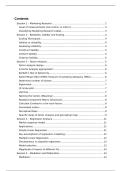
Session 1 – Marketing Research..........................................................................2
Level of measurements (non-metric vs metric)................................................3
Classifying Marketing Research (data).............................................................3
Session 2 – Reliability, Validity and Scaling.........................................................4
Scaling Techniques:.......................................................................................... 4
Validity vs reliability......................................................................................... 4
Assessing reliability:......................................................................................... 4
Construct Validity:............................................................................................ 4
Content Validity:............................................................................................... 5
Criterion Validity:.............................................................................................. 5
Session 3 – Factor Analysis.................................................................................. 5
Factor analysis design...................................................................................... 6
Is Factor Analysis appropriate?.........................................................................6
Bartlett’s Test of Sphericity.............................................................................. 6
Kaiser-Meyer-Olkin (KMO) measure of sampling adequacy (MSA)....................6
Determine number of factors:..........................................................................7
Eigenvalue....................................................................................................... 7
Or Scree plot:................................................................................................... 7
Varimax............................................................................................................ 7
Naming the factors (Meaning):.........................................................................8
Rotated Component Matrix (Structure):...........................................................8
Calculate Cronbach’s a for each factor:...........................................................8
Summated scales:............................................................................................ 8
Perceptual Maps............................................................................................... 8
Specific steps of factor analysis and perceptual map:.....................................9
Session 4 – Regression Analysis........................................................................11
Market response model.................................................................................. 11
Applications:................................................................................................... 11
Simple Linear Regression............................................................................... 11
Key assumptions of regression modelling:.....................................................12
Multiple Linear Regression............................................................................. 12
Simultaneous vs stepwise regression:............................................................13
Model selection.............................................................................................. 13
Magnitude of impact of different IVs..............................................................14
Session 5 – Mediation and Moderation..............................................................14
Mediation:...................................................................................................... 14
, Total effect / c-path........................................................................................ 14
Moderation:.................................................................................................... 15
Interaction:..................................................................................................... 15
Session 6 & 7 – Logistic Regression...................................................................16
Data Preprocessing:....................................................................................... 16
RFM Analysis:................................................................................................. 16
Advantages:................................................................................................... 17
Disadvantages:.............................................................................................. 17
Logistic Regression:........................................................................................ 17
Interpretation of Output:................................................................................ 17
Calculating probability................................................................................... 18
Session 8 & 9 – Conjoint Analysis......................................................................19
Conjoint analysis............................................................................................ 19
Objectives:..................................................................................................... 19
Utility:............................................................................................................. 19
Decompositional technique:...........................................................................19
Choosing attributes and levels:......................................................................20
Create a set of product concepts...................................................................20
Rescaling regression coefficients...................................................................21
Session 1 – Marketing Research
Marketing Research – planning, collecting and analyzing data relevant to
marketing decision making
- Decreased uncertainty
, - Increased likelihood of correct decisions
- Improved marketing performance and resulting higher profits
4 P’s: Product, Price, Promotion, Placement
Marketing Decision Problem <-> Marketing Research Problem
Action oriented, Information oriented,
Asks what the decision-maker needs to do Asks what information is needed and
how it can
best be obtained
Level of measurements (non-metric vs metric)
Nominal/categorical – 2 categories, yes or no region, gender, city of birth, car
brands
Ordinal – variables can be ranked by order very dissatisfied to satisfied, top 5
medalists, social class, small/medium/large
Interval – numbers can be ordered with equal distances + no true zero
temperature, test scores
Ratio – true zero point height, weight, age, hours, income, sales, market share
Classifying Marketing Research (data)
- By type of data (quantitative and qualitative data)
- By research design (exploratory, descriptive, casual)
- By data source (secondary and primary data)
Quantitative data: numbers-based, countable, or measurable -> online survey
Qualitative data: interpretation-based, descriptive, and relating to language ->
interviews
Exploratory research: Research in which the major emphasis is on gaining ideas
and insights (increase familiarity with problem, gain ideas and insights)
Descriptive research: often guided by initial hypothesis, merely looking at things
people said (reveals associations between variables)
Causal research: Research in which the major emphasis is on determining a
cause-and-effect relationship (reveals associations between changes in variables)
Secondary: Data previously collected for purposes other than research at hand
(Customer transaction database, sales invoices etc.) – Syndicated Research is
being created independently and sold by market research providers (research
firms) -> The reports contain information on issues such as purchase behaviors.
Session 1 – Marketing Research..........................................................................2
Level of measurements (non-metric vs metric)................................................3
Classifying Marketing Research (data).............................................................3
Session 2 – Reliability, Validity and Scaling.........................................................4
Scaling Techniques:.......................................................................................... 4
Validity vs reliability......................................................................................... 4
Assessing reliability:......................................................................................... 4
Construct Validity:............................................................................................ 4
Content Validity:............................................................................................... 5
Criterion Validity:.............................................................................................. 5
Session 3 – Factor Analysis.................................................................................. 5
Factor analysis design...................................................................................... 6
Is Factor Analysis appropriate?.........................................................................6
Bartlett’s Test of Sphericity.............................................................................. 6
Kaiser-Meyer-Olkin (KMO) measure of sampling adequacy (MSA)....................6
Determine number of factors:..........................................................................7
Eigenvalue....................................................................................................... 7
Or Scree plot:................................................................................................... 7
Varimax............................................................................................................ 7
Naming the factors (Meaning):.........................................................................8
Rotated Component Matrix (Structure):...........................................................8
Calculate Cronbach’s a for each factor:...........................................................8
Summated scales:............................................................................................ 8
Perceptual Maps............................................................................................... 8
Specific steps of factor analysis and perceptual map:.....................................9
Session 4 – Regression Analysis........................................................................11
Market response model.................................................................................. 11
Applications:................................................................................................... 11
Simple Linear Regression............................................................................... 11
Key assumptions of regression modelling:.....................................................12
Multiple Linear Regression............................................................................. 12
Simultaneous vs stepwise regression:............................................................13
Model selection.............................................................................................. 13
Magnitude of impact of different IVs..............................................................14
Session 5 – Mediation and Moderation..............................................................14
Mediation:...................................................................................................... 14
, Total effect / c-path........................................................................................ 14
Moderation:.................................................................................................... 15
Interaction:..................................................................................................... 15
Session 6 & 7 – Logistic Regression...................................................................16
Data Preprocessing:....................................................................................... 16
RFM Analysis:................................................................................................. 16
Advantages:................................................................................................... 17
Disadvantages:.............................................................................................. 17
Logistic Regression:........................................................................................ 17
Interpretation of Output:................................................................................ 17
Calculating probability................................................................................... 18
Session 8 & 9 – Conjoint Analysis......................................................................19
Conjoint analysis............................................................................................ 19
Objectives:..................................................................................................... 19
Utility:............................................................................................................. 19
Decompositional technique:...........................................................................19
Choosing attributes and levels:......................................................................20
Create a set of product concepts...................................................................20
Rescaling regression coefficients...................................................................21
Session 1 – Marketing Research
Marketing Research – planning, collecting and analyzing data relevant to
marketing decision making
- Decreased uncertainty
, - Increased likelihood of correct decisions
- Improved marketing performance and resulting higher profits
4 P’s: Product, Price, Promotion, Placement
Marketing Decision Problem <-> Marketing Research Problem
Action oriented, Information oriented,
Asks what the decision-maker needs to do Asks what information is needed and
how it can
best be obtained
Level of measurements (non-metric vs metric)
Nominal/categorical – 2 categories, yes or no region, gender, city of birth, car
brands
Ordinal – variables can be ranked by order very dissatisfied to satisfied, top 5
medalists, social class, small/medium/large
Interval – numbers can be ordered with equal distances + no true zero
temperature, test scores
Ratio – true zero point height, weight, age, hours, income, sales, market share
Classifying Marketing Research (data)
- By type of data (quantitative and qualitative data)
- By research design (exploratory, descriptive, casual)
- By data source (secondary and primary data)
Quantitative data: numbers-based, countable, or measurable -> online survey
Qualitative data: interpretation-based, descriptive, and relating to language ->
interviews
Exploratory research: Research in which the major emphasis is on gaining ideas
and insights (increase familiarity with problem, gain ideas and insights)
Descriptive research: often guided by initial hypothesis, merely looking at things
people said (reveals associations between variables)
Causal research: Research in which the major emphasis is on determining a
cause-and-effect relationship (reveals associations between changes in variables)
Secondary: Data previously collected for purposes other than research at hand
(Customer transaction database, sales invoices etc.) – Syndicated Research is
being created independently and sold by market research providers (research
firms) -> The reports contain information on issues such as purchase behaviors.