W5 - Ch 6 Quiz
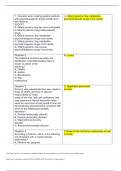
1. ______ is the process of planning, organizing, leading, and controlling an enterprise's
financial, physical, human, and information resources to achieve the organization's
goals
● Management
2. is achieving the greatest level of output with a given amount of input, while ____ is
achieving the organizational goals that have been set
● Efficiency; effectiveness
3. is the process of determining the firm's goals and developing a strategy for achieving
them.
● Planning
4. is the process of monitoring a firm's performance and making adjustments to make
sure it is meeting its goals.
● Controlling
5. involves mobilizing the resources required to complete a particular task.
● Organizing
6. ____are those managers responsible for a firm's overall performance and effectiveness
and for developing long-range plans for the company
● Top managers
7. ___ managers are responsible for the production systems that create goods and
services
● Operations
8. _____ managers are responsible for the production systems that create goods and
services labour unions
● Human resource
9. managers are responsible for designing and implementing various systems to gather,
process, and disseminate information.
● Information
10.involves the interactions between managers and their subordinates as they both work
to meet the firm's objectives.
● Leading
11.Top managers depend most on ____ skills, while ____ skills are important at all levels
of management.
● conceptual; human relations
12.The leading causes of wasted time at work include all of the following except:
● Brainstorming
13.help managers define problems or opportunities and select the best course of action.
● Decision-making skills
14.In 2007, QT Inc., a biomedical company based in Vancouver, was trying to maximize
shareholder value. It was considering a number of options, including selling parts of
the company. The stage that best describes the stage of decision making of the
company is ____. Source: PharmaMarketletter, December 13, 2007, n.p.
1. ______ is the process of planning, organizing, leading, and controlling an enterprise's
financial, physical, human, and information resources to achieve the organization's
goals
● Management
2. is achieving the greatest level of output with a given amount of input, while ____ is
achieving the organizational goals that have been set
● Efficiency; effectiveness
3. is the process of determining the firm's goals and developing a strategy for achieving
them.
● Planning
4. is the process of monitoring a firm's performance and making adjustments to make
sure it is meeting its goals.
● Controlling
5. involves mobilizing the resources required to complete a particular task.
● Organizing
6. ____are those managers responsible for a firm's overall performance and effectiveness
and for developing long-range plans for the company
● Top managers
7. ___ managers are responsible for the production systems that create goods and
services
● Operations
8. _____ managers are responsible for the production systems that create goods and
services labour unions
● Human resource
9. managers are responsible for designing and implementing various systems to gather,
process, and disseminate information.
● Information
10.involves the interactions between managers and their subordinates as they both work
to meet the firm's objectives.
● Leading
11.Top managers depend most on ____ skills, while ____ skills are important at all levels
of management.
● conceptual; human relations
12.The leading causes of wasted time at work include all of the following except:
● Brainstorming
13.help managers define problems or opportunities and select the best course of action.
● Decision-making skills
14.In 2007, QT Inc., a biomedical company based in Vancouver, was trying to maximize
shareholder value. It was considering a number of options, including selling parts of
the company. The stage that best describes the stage of decision making of the
company is ____. Source: PharmaMarketletter, December 13, 2007, n.p.