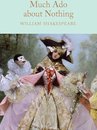
Much ado about nothing
Love
- End of 16th century, dichotomy between idea of romantic love and the reality of contemporary
courtship and marriage
- In this patriarchal society the male head of the family made matches for financial or dynastic
reasons rather than romantic reasons
- These attitudes along w ben’s initial portrayal as a romantic sceptic are variously presented in
the play
- “I had rather hear a dog bark at a crow than hear a man say he loves me." - Beatrice, Act I
Scene I
- She would rather be subjected to a repeatedly annoying sound than bear the annoyance
of a man declaring his love to her
- The audience are aware that Beatrice and Benedick are known to each other
- Their insults continue, establishing that their wit is equal and they are actually well suited
- Bea can be seen to act like the shrew because she subverts the expectations of
femininity
- Perhaps, links may be made between bea and queen elizabeth and she was also
different to typical women > she never got married and at the time of this play many of
Shakespeare’s audience wanted her to get married
- So although elizabeth never got married, shakespeare’s audience may have felt a sense
of catharsis as the character that was rebelling against the societal norms did eventually
conform
- Her tendency to decry love to anyone who will listen suggests that she is trying to
convince herself most of all. Though her denial is humorous, we can see why the ruse is
so important to her. Beatrice defines herself by her independence, so the idea of giving
oneself over to another would feel like a defeat to her.
- In Elizabethan society, women were often expected to be passive recipients of romantic
affection. Beatrice's rejection of this expectation challenges traditional gender roles
- By expressing her preference for the discordant sound of a dog barking at a crow,
Beatrice rejects the societal norm that women should eagerly accept declarations of love
from men.
- S uses claudio to present an overtly naive attitude towards romance which places a love interest
on an unrealistic pedestal which is in keeping with the courtly tradition
- Shakespeare portrays Claudio and Hero as a pair of conventional lovers who go through an
unadventurous and predictive courtship. Through this relationship he shows the modern
audience how women were largely dominated by men.
- As Claudio asks, “can the world buy such a jewel” act 1 scene 1Hero is portrayed as
an object and someone to possess and a commodity to be bought
- this metaphor shows us that Hero's beauty is the only reason as to why he wants to
be with her, her beauty is what makes her valuable.
- He has formed an idealised, unrealistic perception of hero: he sees her as
otherworldly
- Shakespeare may be critiquing the tendency to idealise romantic partners,
suggesting that such idealisation can lead to unrealistic expectations and
disappointment. Society may be encouraged to approach relationships with a
more balanced and realistic perspective.
- This is the first time that C has encountered H, this ‘love at first sight’ is in the
tradition of courtly love and establishes C as naive and credulous
, - The rhetorical question also presents a wistful tone, that even the courageous
soldier Claudio who would have been regarded as high status to the contemporary
audience felt unworthy of hero
- Despite being so in love with her, he refused to humanise her
- The word ‘world’ hints at claudio speaking on behalf of a broader society -
suggesting that his view on women was a commonly held view at the time which
hindered women being accepted as equals
- Asks benedick to “speak in sober judgement” when has own judgement seems
to be highly questionable
- 'in mine eye she is the sweetest lady i ever looked upon' act 1 scene 1
- superlative 'sweetest' suggests he is lovestruck & doesn't just see hero at surface
level (her looks)
- - shows him to be superficial as he initially only liked her for her looks suggesting
claudio himself potentially lacks substance
- eye' and 'looked' shows how he is materialistic and superficial, only cares about
appearance and what people think of her
- Claudio's declaration reflects the idealisation of romantic love, wherein he views
Hero as the epitome of sweetness and beauty.
- His statement underscores the intensity of his infatuation and his belief in the
perfection of his beloved.
- Only valued her for her beauty, in this time period men worshipped women for
their beauty and grace yet silenced them at the same time
- In the elizabethan era, people strongly believed in superstition, fate and destiny si
their seemingly sudden love may have been viewed as predetermined by God
and the stars. Their ‘love at first sight’ may have been received differently
- As a result of elevating hero to a nearly goddess status, claudio’s approach to romance becomes
fraught w nerves and insecurity
- C often interjects nervously into ben’s facetious speeches hoping for his friend’s approval
and guidance
- “Is she not a modest lady?” “tell me truly how much thou likest her”
- This is right at the start of the play, by making c alr seem somewhat insecure S
may be presenting how these ‘idealistic’ relationships based simply on beauty are a
fabrication and aren’t true love
- Claudio's question reflects the societal expectations placed on women in the
Elizabethan era. Modesty was considered a desirable trait in women, associated
with purity, virtue, and femininity.
- Claudio favours subservient, ‘perfect’ women which hero is represented as; her
meek nature and menial words paired with her beauty makes her a desirable
eligible woman in elizabethan england
- However, this untainted love quickly becomes corrupted, with c quickly turning against his so
called lover
- “She knows the heat of a luxurious bed” act 4 scene 1
- false accusations
- thinks she's impure and uses shame to control Hero
- The word "heat" conveys intensity, passion, and desire. It implies a fervent,
burning sensation, suggesting a physical and emotional connection between Hero
and the other man.
- The use of "heat" also carries connotations of impropriety and scandal, hinting at
illicit or forbidden desires.
- Shakespeare explores the double standards and gender expectations prevalent in
society. Claudio holds Hero to an unrealistic standard of purity and chastity,
reflecting societal attitudes towards women's sexuality.
, - The quote exposes the unfair treatment of women and the consequences of
conforming to rigid gender roles.
- Dramatic irony as we know she is innocent
- Believe don john even though they fighted on opposite sides of the war, sheds
light on his gullibility
- Hero’s public disgrace is more emphatic as a result of claudio exalting her to such
a high position, so when she collapses, this metaphorically represents Hero’s
idyllic standing being challenged- her pedestal in Claudio’s mind has deteriorated
dramatically and forcefully due to the accusations tarnishing her honour and
maiden virtue
- His insults are particularly scathing because any expression of female sexuality or
feminine desire was considered to be deeply disturbing; many people even
thought that women could not control their lustful desired
- Use of dramatic irony highlights how claudio’s visceral, angry reaction is cruel and
harsh
- He compares her to animals “that rage in savage sensuality,
- The phrase "savage sensuality" conjures vivid imagery of unrestrained and primal
desires. It suggests that Hero's actions, as perceived by Claudio, are driven by
raw and untamed impulses rather than reason or morality.
- The repetition of the "s" sound in "savage sensuality" creates a sense of rhythm
and emphasis, drawing attention to Claudio's accusatory tone and intensifying the
impact of his words.
- Although claudio is meant to be a romantic hero, we see how quickly he turns on
Hero, who has given him no reason to believe that she would be infidel, believing
Don John instead
- Shakespeare uses their relationship arc to explore the unfair societal norms which
allow women like Hero, who could be considered the most ideal products of their
system- the silent, submissive
- Hero, the ideal Renaissance woman, is accused falsely and suffers at the hands
of men in authority in vain. In this way, Hero metaphorically becomes the voice of
Renaissance women, by extension, of women all over the world.
- A modern audience critiques claudio, a contemporary audience has some
sympathy as at the time there was an unfair stereotype that women were
incapable of being faithful> if a woman cheated on her husband it was a sign that
he wasn’t ‘strong’ enough to keep his woman under control, as a man of high
status, this would have been bad for his reputation
- Claudio’s need to be powerful would be shake way of critiquing the way that these
shallow views reduce people to maintaining an ‘image’ in society
- “Sweet hero, now thy image doth appear In the rare semblance that I loved it
first” Act 5 scene 1
- her image has returned to the beautiful one he experienced when he first met her,
now she is proved as innocent again
- Adjective “rare” suggests uniqueness, Claudio is now viewing her differently, not
as a commodity as before, but now for the quality of her character
- Claudio’s love for Hero is perhaps not as true as it could be, as it is dependent on
Hero’s reputation and the image that others have of her
- This further reinforces the idea of Hero as an object to be looked upon rather than
heard
- Alternate interpretation > His sincere lamentation and profuse apology to
Leonato, asking him to punish him however he desires, finally show that Claudio,
while may not understand the motivations of people, is otherwise a good man.
Love
- End of 16th century, dichotomy between idea of romantic love and the reality of contemporary
courtship and marriage
- In this patriarchal society the male head of the family made matches for financial or dynastic
reasons rather than romantic reasons
- These attitudes along w ben’s initial portrayal as a romantic sceptic are variously presented in
the play
- “I had rather hear a dog bark at a crow than hear a man say he loves me." - Beatrice, Act I
Scene I
- She would rather be subjected to a repeatedly annoying sound than bear the annoyance
of a man declaring his love to her
- The audience are aware that Beatrice and Benedick are known to each other
- Their insults continue, establishing that their wit is equal and they are actually well suited
- Bea can be seen to act like the shrew because she subverts the expectations of
femininity
- Perhaps, links may be made between bea and queen elizabeth and she was also
different to typical women > she never got married and at the time of this play many of
Shakespeare’s audience wanted her to get married
- So although elizabeth never got married, shakespeare’s audience may have felt a sense
of catharsis as the character that was rebelling against the societal norms did eventually
conform
- Her tendency to decry love to anyone who will listen suggests that she is trying to
convince herself most of all. Though her denial is humorous, we can see why the ruse is
so important to her. Beatrice defines herself by her independence, so the idea of giving
oneself over to another would feel like a defeat to her.
- In Elizabethan society, women were often expected to be passive recipients of romantic
affection. Beatrice's rejection of this expectation challenges traditional gender roles
- By expressing her preference for the discordant sound of a dog barking at a crow,
Beatrice rejects the societal norm that women should eagerly accept declarations of love
from men.
- S uses claudio to present an overtly naive attitude towards romance which places a love interest
on an unrealistic pedestal which is in keeping with the courtly tradition
- Shakespeare portrays Claudio and Hero as a pair of conventional lovers who go through an
unadventurous and predictive courtship. Through this relationship he shows the modern
audience how women were largely dominated by men.
- As Claudio asks, “can the world buy such a jewel” act 1 scene 1Hero is portrayed as
an object and someone to possess and a commodity to be bought
- this metaphor shows us that Hero's beauty is the only reason as to why he wants to
be with her, her beauty is what makes her valuable.
- He has formed an idealised, unrealistic perception of hero: he sees her as
otherworldly
- Shakespeare may be critiquing the tendency to idealise romantic partners,
suggesting that such idealisation can lead to unrealistic expectations and
disappointment. Society may be encouraged to approach relationships with a
more balanced and realistic perspective.
- This is the first time that C has encountered H, this ‘love at first sight’ is in the
tradition of courtly love and establishes C as naive and credulous
, - The rhetorical question also presents a wistful tone, that even the courageous
soldier Claudio who would have been regarded as high status to the contemporary
audience felt unworthy of hero
- Despite being so in love with her, he refused to humanise her
- The word ‘world’ hints at claudio speaking on behalf of a broader society -
suggesting that his view on women was a commonly held view at the time which
hindered women being accepted as equals
- Asks benedick to “speak in sober judgement” when has own judgement seems
to be highly questionable
- 'in mine eye she is the sweetest lady i ever looked upon' act 1 scene 1
- superlative 'sweetest' suggests he is lovestruck & doesn't just see hero at surface
level (her looks)
- - shows him to be superficial as he initially only liked her for her looks suggesting
claudio himself potentially lacks substance
- eye' and 'looked' shows how he is materialistic and superficial, only cares about
appearance and what people think of her
- Claudio's declaration reflects the idealisation of romantic love, wherein he views
Hero as the epitome of sweetness and beauty.
- His statement underscores the intensity of his infatuation and his belief in the
perfection of his beloved.
- Only valued her for her beauty, in this time period men worshipped women for
their beauty and grace yet silenced them at the same time
- In the elizabethan era, people strongly believed in superstition, fate and destiny si
their seemingly sudden love may have been viewed as predetermined by God
and the stars. Their ‘love at first sight’ may have been received differently
- As a result of elevating hero to a nearly goddess status, claudio’s approach to romance becomes
fraught w nerves and insecurity
- C often interjects nervously into ben’s facetious speeches hoping for his friend’s approval
and guidance
- “Is she not a modest lady?” “tell me truly how much thou likest her”
- This is right at the start of the play, by making c alr seem somewhat insecure S
may be presenting how these ‘idealistic’ relationships based simply on beauty are a
fabrication and aren’t true love
- Claudio's question reflects the societal expectations placed on women in the
Elizabethan era. Modesty was considered a desirable trait in women, associated
with purity, virtue, and femininity.
- Claudio favours subservient, ‘perfect’ women which hero is represented as; her
meek nature and menial words paired with her beauty makes her a desirable
eligible woman in elizabethan england
- However, this untainted love quickly becomes corrupted, with c quickly turning against his so
called lover
- “She knows the heat of a luxurious bed” act 4 scene 1
- false accusations
- thinks she's impure and uses shame to control Hero
- The word "heat" conveys intensity, passion, and desire. It implies a fervent,
burning sensation, suggesting a physical and emotional connection between Hero
and the other man.
- The use of "heat" also carries connotations of impropriety and scandal, hinting at
illicit or forbidden desires.
- Shakespeare explores the double standards and gender expectations prevalent in
society. Claudio holds Hero to an unrealistic standard of purity and chastity,
reflecting societal attitudes towards women's sexuality.
, - The quote exposes the unfair treatment of women and the consequences of
conforming to rigid gender roles.
- Dramatic irony as we know she is innocent
- Believe don john even though they fighted on opposite sides of the war, sheds
light on his gullibility
- Hero’s public disgrace is more emphatic as a result of claudio exalting her to such
a high position, so when she collapses, this metaphorically represents Hero’s
idyllic standing being challenged- her pedestal in Claudio’s mind has deteriorated
dramatically and forcefully due to the accusations tarnishing her honour and
maiden virtue
- His insults are particularly scathing because any expression of female sexuality or
feminine desire was considered to be deeply disturbing; many people even
thought that women could not control their lustful desired
- Use of dramatic irony highlights how claudio’s visceral, angry reaction is cruel and
harsh
- He compares her to animals “that rage in savage sensuality,
- The phrase "savage sensuality" conjures vivid imagery of unrestrained and primal
desires. It suggests that Hero's actions, as perceived by Claudio, are driven by
raw and untamed impulses rather than reason or morality.
- The repetition of the "s" sound in "savage sensuality" creates a sense of rhythm
and emphasis, drawing attention to Claudio's accusatory tone and intensifying the
impact of his words.
- Although claudio is meant to be a romantic hero, we see how quickly he turns on
Hero, who has given him no reason to believe that she would be infidel, believing
Don John instead
- Shakespeare uses their relationship arc to explore the unfair societal norms which
allow women like Hero, who could be considered the most ideal products of their
system- the silent, submissive
- Hero, the ideal Renaissance woman, is accused falsely and suffers at the hands
of men in authority in vain. In this way, Hero metaphorically becomes the voice of
Renaissance women, by extension, of women all over the world.
- A modern audience critiques claudio, a contemporary audience has some
sympathy as at the time there was an unfair stereotype that women were
incapable of being faithful> if a woman cheated on her husband it was a sign that
he wasn’t ‘strong’ enough to keep his woman under control, as a man of high
status, this would have been bad for his reputation
- Claudio’s need to be powerful would be shake way of critiquing the way that these
shallow views reduce people to maintaining an ‘image’ in society
- “Sweet hero, now thy image doth appear In the rare semblance that I loved it
first” Act 5 scene 1
- her image has returned to the beautiful one he experienced when he first met her,
now she is proved as innocent again
- Adjective “rare” suggests uniqueness, Claudio is now viewing her differently, not
as a commodity as before, but now for the quality of her character
- Claudio’s love for Hero is perhaps not as true as it could be, as it is dependent on
Hero’s reputation and the image that others have of her
- This further reinforces the idea of Hero as an object to be looked upon rather than
heard
- Alternate interpretation > His sincere lamentation and profuse apology to
Leonato, asking him to punish him however he desires, finally show that Claudio,
while may not understand the motivations of people, is otherwise a good man.