Robbins & Cotran 10th Ed. Pathology Test Bank | Chapter-
by-Chapter Questions & Verified Solutions
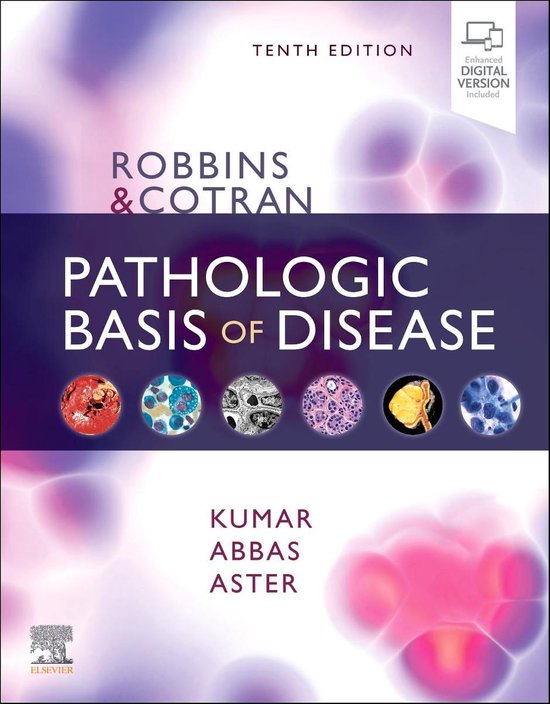
Robbins & Cotran Pathologic Basis of Disease
10th Edition
• Author(s)Vinay Kumar; Abul K. Abbas; Jon C. Aster
Chapter Reference – Chapter 1: The Cell as a Unit of Health and
Disease — The Genome; Cellular Housekeeping; Cellular
Metabolism and Mitochondrial Function; Cellular Activation;
Growth Factors and Receptors; Extracellular Matrix;
Maintaining Cell Populations
Stem: A 6-month-old infant presents with failure to thrive and
recurrent infections. Lab shows lactic acidosis and elevated
serum alanine. Muscle biopsy reveals ragged-red fibers. Which
defect most likely explains these findings?
A. Defect in nuclear DNA mismatch repair
B. Mutation in mitochondrial tRNA genes impairing oxidative
phosphorylation
C. Deficiency of peroxisomal β-oxidation enzymes
D. Impaired lysosomal acid hydrolase function
Answer: B
,Rationale — Correct: Mutations in mitochondrial tRNA genes
disrupt mitochondrial protein synthesis and electron transport,
causing defective oxidative phosphorylation, lactic acidosis, and
ragged-red fibers.
Incorrect A: Nuclear mismatch repair defects cause genomic
instability and cancer predisposition, not primary lactic acidosis
or ragged-red fibers.
Incorrect C: Peroxisomal β-oxidation defects lead to very-long-
chain fatty acid accumulation and neurological signs but not
classic ragged-red fibers with lactic acidosis.
Incorrect D: Lysosomal hydrolase deficiencies produce storage
diseases with substrate accumulation, not primary mitochondrial
respiratory chain failure.
Teaching Point: Mitochondrial tRNA mutations impair oxidative
phosphorylation causing lactic acidosis and ragged-red fibers.
2.
Chapter Reference – Chapter 1: The Cell as a Unit of Health and
Disease — The Genome; Cellular Housekeeping; Cellular
Metabolism and Mitochondrial Function; Cellular Activation;
Growth Factors and Receptors; Extracellular Matrix;
Maintaining Cell Populations
Stem: A patient treated with a high dose of a new drug develops
acute liver injury. Electron microscopy shows swollen
mitochondria with disrupted cristae. Which immediate cellular
consequence most likely precipitates cell injury?
A. Increased NADPH production in cytosol
,B. Loss of ATP production from impaired oxidative
phosphorylation
C. Hyperactivation of ribosomal protein synthesis
D. Enhanced peroxisomal hydrogen peroxide detoxification
Answer: B
Rationale — Correct: Damage to mitochondrial cristae disrupts
electron transport and oxidative phosphorylation, leading to
decreased ATP synthesis and energy failure, the proximate
cause of acute cell injury.
Incorrect A: NADPH formation in the cytosol is unrelated to
immediate mitochondrial structural damage causing ATP
depletion.
Incorrect C: Ribosomal hyperactivity would increase protein
synthesis demand but does not explain acute mitochondrial
structural failure.
Incorrect D: Enhanced peroxisomal detoxification would be
protective, not a cause of injury.
Teaching Point: Mitochondrial structural damage causes ATP
depletion and energy failure leading to cell injury.
3.
Chapter Reference – Chapter 1: The Cell as a Unit of Health and
Disease — The Genome; Cellular Housekeeping; Cellular
Metabolism and Mitochondrial Function; Cellular Activation;
Growth Factors and Receptors; Extracellular Matrix;
Maintaining Cell Populations
, Stem: A 45-year-old man has progressive muscle weakness.
Genetic testing shows a trinucleotide repeat expansion in a
nuclear gene leading to abnormal polyglutamine protein
aggregation in nuclei. Which cellular process is primarily
disrupted?
A. Mitochondrial protein synthesis
B. Proteasomal degradation of misfolded proteins
C. Peroxisomal fatty acid oxidation
D. Autocrine growth factor signaling
Answer: B
Rationale — Correct: Expanded polyglutamine proteins resist
normal ubiquitin–proteasome degradation, leading to nuclear
protein aggregates that impair proteasomal clearance and
cellular function.
Incorrect A: While mitochondrial function may be secondarily
affected, the direct defect involves protein quality control, not
mitochondrial translation.
Incorrect C: Peroxisomal β-oxidation is unrelated to nuclear
protein aggregation disorders.
Incorrect D: Autocrine growth factor signaling is not the
primary mechanism in trinucleotide repeat aggregation diseases.
Teaching Point: Polyglutamine expansions impair proteasomal
clearance, causing toxic intracellular aggregates.
4.
by-Chapter Questions & Verified Solutions
Robbins & Cotran Pathologic Basis of Disease
10th Edition
• Author(s)Vinay Kumar; Abul K. Abbas; Jon C. Aster
Chapter Reference – Chapter 1: The Cell as a Unit of Health and
Disease — The Genome; Cellular Housekeeping; Cellular
Metabolism and Mitochondrial Function; Cellular Activation;
Growth Factors and Receptors; Extracellular Matrix;
Maintaining Cell Populations
Stem: A 6-month-old infant presents with failure to thrive and
recurrent infections. Lab shows lactic acidosis and elevated
serum alanine. Muscle biopsy reveals ragged-red fibers. Which
defect most likely explains these findings?
A. Defect in nuclear DNA mismatch repair
B. Mutation in mitochondrial tRNA genes impairing oxidative
phosphorylation
C. Deficiency of peroxisomal β-oxidation enzymes
D. Impaired lysosomal acid hydrolase function
Answer: B
,Rationale — Correct: Mutations in mitochondrial tRNA genes
disrupt mitochondrial protein synthesis and electron transport,
causing defective oxidative phosphorylation, lactic acidosis, and
ragged-red fibers.
Incorrect A: Nuclear mismatch repair defects cause genomic
instability and cancer predisposition, not primary lactic acidosis
or ragged-red fibers.
Incorrect C: Peroxisomal β-oxidation defects lead to very-long-
chain fatty acid accumulation and neurological signs but not
classic ragged-red fibers with lactic acidosis.
Incorrect D: Lysosomal hydrolase deficiencies produce storage
diseases with substrate accumulation, not primary mitochondrial
respiratory chain failure.
Teaching Point: Mitochondrial tRNA mutations impair oxidative
phosphorylation causing lactic acidosis and ragged-red fibers.
2.
Chapter Reference – Chapter 1: The Cell as a Unit of Health and
Disease — The Genome; Cellular Housekeeping; Cellular
Metabolism and Mitochondrial Function; Cellular Activation;
Growth Factors and Receptors; Extracellular Matrix;
Maintaining Cell Populations
Stem: A patient treated with a high dose of a new drug develops
acute liver injury. Electron microscopy shows swollen
mitochondria with disrupted cristae. Which immediate cellular
consequence most likely precipitates cell injury?
A. Increased NADPH production in cytosol
,B. Loss of ATP production from impaired oxidative
phosphorylation
C. Hyperactivation of ribosomal protein synthesis
D. Enhanced peroxisomal hydrogen peroxide detoxification
Answer: B
Rationale — Correct: Damage to mitochondrial cristae disrupts
electron transport and oxidative phosphorylation, leading to
decreased ATP synthesis and energy failure, the proximate
cause of acute cell injury.
Incorrect A: NADPH formation in the cytosol is unrelated to
immediate mitochondrial structural damage causing ATP
depletion.
Incorrect C: Ribosomal hyperactivity would increase protein
synthesis demand but does not explain acute mitochondrial
structural failure.
Incorrect D: Enhanced peroxisomal detoxification would be
protective, not a cause of injury.
Teaching Point: Mitochondrial structural damage causes ATP
depletion and energy failure leading to cell injury.
3.
Chapter Reference – Chapter 1: The Cell as a Unit of Health and
Disease — The Genome; Cellular Housekeeping; Cellular
Metabolism and Mitochondrial Function; Cellular Activation;
Growth Factors and Receptors; Extracellular Matrix;
Maintaining Cell Populations
, Stem: A 45-year-old man has progressive muscle weakness.
Genetic testing shows a trinucleotide repeat expansion in a
nuclear gene leading to abnormal polyglutamine protein
aggregation in nuclei. Which cellular process is primarily
disrupted?
A. Mitochondrial protein synthesis
B. Proteasomal degradation of misfolded proteins
C. Peroxisomal fatty acid oxidation
D. Autocrine growth factor signaling
Answer: B
Rationale — Correct: Expanded polyglutamine proteins resist
normal ubiquitin–proteasome degradation, leading to nuclear
protein aggregates that impair proteasomal clearance and
cellular function.
Incorrect A: While mitochondrial function may be secondarily
affected, the direct defect involves protein quality control, not
mitochondrial translation.
Incorrect C: Peroxisomal β-oxidation is unrelated to nuclear
protein aggregation disorders.
Incorrect D: Autocrine growth factor signaling is not the
primary mechanism in trinucleotide repeat aggregation diseases.
Teaching Point: Polyglutamine expansions impair proteasomal
clearance, causing toxic intracellular aggregates.
4.