Moving through the silent crowd - Stephen Spender
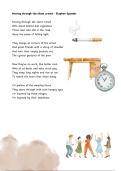
Moving through the silent crowd
Who stand behind dull cigarettes
Those men who idle in the road,
Ihave the sense of falling light.
They lounge at corners of the street
And greet friends with a shrug of shoulder
And turn their empty pockets out,
The cynical gestures of the poor.
Now they've no work, like better men
Who sit at desks and take much pay
They sleep long nights and rise at ten
To watch the hours that drain away.
I'm jealous of the weeping hours
They stare through with such hungry eyes.
I'm haunted by these images,
I'm haunted by their emptiness.
, - The title reflects the speaker observing a passive, quiet group.
Moving through the silent “Moving” contrasts with the crowd’s stillness, while “silent”
suggests isolation or resignation. It sets a reflective tone,
crowd
highlighting themes of social observation and marginalization.
- This opening line immediately establishes a sense of motion
against a backdrop of stillness. The speaker positions themselves
- as an observer navigating a “silent crowd,” implying both physical
and emotional distance. The adjective “silent” conveys more than
- just the absence of sound—it suggests isolation, disconnection, or
Moving through the silent perhaps unspoken resignation among the people observed. The
crowd crowd, though physically present, seems emotionally inert, setting
- a somber, reflective tone. The speaker’s movement contrasts with
the crowd’s stasis, hinting at an internal restlessness or awareness
- that others lack. The line also introduces the motif of observation
and social commentary that will continue throughout the poem.
- Here, the imagery of “dull cigarettes” evokes monotony and
lifelessness.
- Cigarettes, often symbols of routine or small indulgences, become
“dull,” suggesting that these people’s daily lives have lost vitality.
- The phrase implies a sense of resignation, as if the act of
Who standbehind dull smoking has become a mechanical, almost meaningless ritual.
cigarettes - There is also a tactile and visual layer; “stand behind” hints at a
partial concealment or withdrawal from engagement, as though
these individuals hide behind their habits.
- Spender uses this line to subtly critique societal stagnation and
the disenchantment of the lower classes, highlighting a life
constrained by circumstance and devoid of vibrancy.
- This line continues the depiction of inertia, emphasizing the
physical idleness of men “in the road.”
- The road, typically a symbol of movement, journey, or
opportunity, becomes a paradoxical stage for inactivity,
reinforcing their stagnation.
Those men who idle in the - By specifying “men,” Spender may be commenting on gendered
road, expectations of labor and societal roles, contrasting the
traditional notion of male productivity with the reality of
unemployment or aimlessness.
- “Idle” connotes not just physical inactivity but a lack of purpose
or opportunity, reinforcing the poem’s social critique.
Moving through the silent crowd
Who stand behind dull cigarettes
Those men who idle in the road,
Ihave the sense of falling light.
They lounge at corners of the street
And greet friends with a shrug of shoulder
And turn their empty pockets out,
The cynical gestures of the poor.
Now they've no work, like better men
Who sit at desks and take much pay
They sleep long nights and rise at ten
To watch the hours that drain away.
I'm jealous of the weeping hours
They stare through with such hungry eyes.
I'm haunted by these images,
I'm haunted by their emptiness.
, - The title reflects the speaker observing a passive, quiet group.
Moving through the silent “Moving” contrasts with the crowd’s stillness, while “silent”
suggests isolation or resignation. It sets a reflective tone,
crowd
highlighting themes of social observation and marginalization.
- This opening line immediately establishes a sense of motion
against a backdrop of stillness. The speaker positions themselves
- as an observer navigating a “silent crowd,” implying both physical
and emotional distance. The adjective “silent” conveys more than
- just the absence of sound—it suggests isolation, disconnection, or
Moving through the silent perhaps unspoken resignation among the people observed. The
crowd crowd, though physically present, seems emotionally inert, setting
- a somber, reflective tone. The speaker’s movement contrasts with
the crowd’s stasis, hinting at an internal restlessness or awareness
- that others lack. The line also introduces the motif of observation
and social commentary that will continue throughout the poem.
- Here, the imagery of “dull cigarettes” evokes monotony and
lifelessness.
- Cigarettes, often symbols of routine or small indulgences, become
“dull,” suggesting that these people’s daily lives have lost vitality.
- The phrase implies a sense of resignation, as if the act of
Who standbehind dull smoking has become a mechanical, almost meaningless ritual.
cigarettes - There is also a tactile and visual layer; “stand behind” hints at a
partial concealment or withdrawal from engagement, as though
these individuals hide behind their habits.
- Spender uses this line to subtly critique societal stagnation and
the disenchantment of the lower classes, highlighting a life
constrained by circumstance and devoid of vibrancy.
- This line continues the depiction of inertia, emphasizing the
physical idleness of men “in the road.”
- The road, typically a symbol of movement, journey, or
opportunity, becomes a paradoxical stage for inactivity,
reinforcing their stagnation.
Those men who idle in the - By specifying “men,” Spender may be commenting on gendered
road, expectations of labor and societal roles, contrasting the
traditional notion of male productivity with the reality of
unemployment or aimlessness.
- “Idle” connotes not just physical inactivity but a lack of purpose
or opportunity, reinforcing the poem’s social critique.