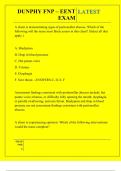
DUNPHY FNP – EENT LATEST
EXAM
A client is demonstrating signs of peritonsillar abscess. Which of the
following will the nurse most likely assess in this client? (Select all that
apply.)
A. Bradypnea
B. Drop in blood pressure
C. Hot potato voice
D. Trismus
E. Dysphagia
F. Sore throat - ANSWERS-C, D, E, F
Assessment findings consistent with peritonsillar abscess include: hot
potato voice; trismus, or difficulty fully opening the mouth; dysphagia,
or painful swallowing; and sore throat. Bradypnea and drop in blood
pressure are not assessment findings consistent with peritonsillar
abscess.
A client is experiencing epistaxis. Which of the following interventions
would the nurse complete?
END OF
PAGE
1
, DUNPHY FNP – EENT LATEST
EXAM
a. Call the doctor.
b. Check laboratory test results.
c. Obtain an emesis basin.
d. Show the patient how to pinch the nose. - ANSWERS-D
The initial intervention for a client with epistaxis is to show the client
how to lean forward and pinch the nose against the nasal septum for
about 5 to 10 minutes continuously. The other interventions are not
necessary at this time.
A woman who is in the second trimester of pregnancy mentions that she
has had more nosebleeds than ever since she became pregnant. The
nurse recognizes that this is a result of:
a. A problem with the patients coagulation system.
b. Increased vascularity in the upper respiratory tract as a result of the
pregnancy.
c. Increased susceptibility to colds and nasal irritation.
d. Inappropriate use of nasal sprays. - ANSWERS-B
END OF
PAGE
2
, DUNPHY FNP – EENT LATEST
EXAM
Nasal stuffiness and epistaxis may occur during pregnancy as a result of
increased vascularity in the upper respiratory tract.
A client is diagnosed with strabismus. Which of the following will the
client most likely experience with this disorder?
1. Nystagmus
2. Diplopia
3. Aphakic vision
4. Ptosis - ANSWERS-2
Diplopia, or double vision, is the primary symptom of strabismus.
Nystagmus is a disorder that causes involuntarily rhythmic movements
in the eye. Aphakic vision occurs when the lens of the eye is removed.
Ptosis is drooping of the eyelid.
A client is experiencing a gradual blurring of vision in both eyes not
associated with any pain. The nurse suspects the client is experiencing:
1. glaucoma.
2. cataracts.
3. macular degeneration.
4. retinal detachment. - ANSWERS-2
END OF
PAGE
3
, DUNPHY FNP – EENT LATEST
EXAM
Cataracts occur as the opacity of the lens becomes cloudy, blurring the
vision. It occurs in both eyes but is usually worse in one eye. Gradual
eye blurring is not associated with glaucoma, macular degeneration, or
retinal detachment.
The nurse should instruct a client, diagnosed with glaucoma, that the
purpose of medication is to: 1. help dry up excess secretions.
2. lower the intraocular pressure.
3. strengthen the muscles of the eye.
4. improve the vision in the eye. - ANSWERS-2
Glaucoma is a disease that relates to the increase of intraocular pressure.
The medication given will decrease this intraocular pressure. Medication
for glaucoma is not used to help dry up excess
secretions, strengthen the eye muscles, or improve vision.
After surgery to remove a cataract, which of the following should the
nurse instruct the client? 1. Be sure to follow the schedule for the
prescribed eyedrop medication.
2. Sleep on the right side to promote drainage.
3. It is okay to rub the eye because the surgery was on the inside.
END OF
PAGE
4
EXAM
A client is demonstrating signs of peritonsillar abscess. Which of the
following will the nurse most likely assess in this client? (Select all that
apply.)
A. Bradypnea
B. Drop in blood pressure
C. Hot potato voice
D. Trismus
E. Dysphagia
F. Sore throat - ANSWERS-C, D, E, F
Assessment findings consistent with peritonsillar abscess include: hot
potato voice; trismus, or difficulty fully opening the mouth; dysphagia,
or painful swallowing; and sore throat. Bradypnea and drop in blood
pressure are not assessment findings consistent with peritonsillar
abscess.
A client is experiencing epistaxis. Which of the following interventions
would the nurse complete?
END OF
PAGE
1
, DUNPHY FNP – EENT LATEST
EXAM
a. Call the doctor.
b. Check laboratory test results.
c. Obtain an emesis basin.
d. Show the patient how to pinch the nose. - ANSWERS-D
The initial intervention for a client with epistaxis is to show the client
how to lean forward and pinch the nose against the nasal septum for
about 5 to 10 minutes continuously. The other interventions are not
necessary at this time.
A woman who is in the second trimester of pregnancy mentions that she
has had more nosebleeds than ever since she became pregnant. The
nurse recognizes that this is a result of:
a. A problem with the patients coagulation system.
b. Increased vascularity in the upper respiratory tract as a result of the
pregnancy.
c. Increased susceptibility to colds and nasal irritation.
d. Inappropriate use of nasal sprays. - ANSWERS-B
END OF
PAGE
2
, DUNPHY FNP – EENT LATEST
EXAM
Nasal stuffiness and epistaxis may occur during pregnancy as a result of
increased vascularity in the upper respiratory tract.
A client is diagnosed with strabismus. Which of the following will the
client most likely experience with this disorder?
1. Nystagmus
2. Diplopia
3. Aphakic vision
4. Ptosis - ANSWERS-2
Diplopia, or double vision, is the primary symptom of strabismus.
Nystagmus is a disorder that causes involuntarily rhythmic movements
in the eye. Aphakic vision occurs when the lens of the eye is removed.
Ptosis is drooping of the eyelid.
A client is experiencing a gradual blurring of vision in both eyes not
associated with any pain. The nurse suspects the client is experiencing:
1. glaucoma.
2. cataracts.
3. macular degeneration.
4. retinal detachment. - ANSWERS-2
END OF
PAGE
3
, DUNPHY FNP – EENT LATEST
EXAM
Cataracts occur as the opacity of the lens becomes cloudy, blurring the
vision. It occurs in both eyes but is usually worse in one eye. Gradual
eye blurring is not associated with glaucoma, macular degeneration, or
retinal detachment.
The nurse should instruct a client, diagnosed with glaucoma, that the
purpose of medication is to: 1. help dry up excess secretions.
2. lower the intraocular pressure.
3. strengthen the muscles of the eye.
4. improve the vision in the eye. - ANSWERS-2
Glaucoma is a disease that relates to the increase of intraocular pressure.
The medication given will decrease this intraocular pressure. Medication
for glaucoma is not used to help dry up excess
secretions, strengthen the eye muscles, or improve vision.
After surgery to remove a cataract, which of the following should the
nurse instruct the client? 1. Be sure to follow the schedule for the
prescribed eyedrop medication.
2. Sleep on the right side to promote drainage.
3. It is okay to rub the eye because the surgery was on the inside.
END OF
PAGE
4