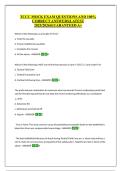
TCCC MOCK EXAM QUESTIONS AND 100%
CORRECT ANSWERS|LATEST
2025/2026|GUARANTEED A+
Which of the following is a principle of TCCC?
B B B B B B B B B
a. Treat the casualty
B B B B
b. Prevent additional casualties
B B B B
c. Complete the mission
B B B B
d. All the above - ANSWER-
B B B B B D
Which of the following is NOT one of the three phases of care in TCCC? a. Care Under Fire
B B B B B B B B B B B B B B B B B B B
b. Tactical Field Care
B B B B
c. Tactical Evacuation Care
B B B B
d. Combat Life Saving Care - ANSWER-
B B B B B B D
The preferred pain medication for someone who has wounds that are moderately painful but
B B B B B B B B B B B B B B
not life-threatening and that do not keep him from functioning effectively as a combatant:
B B B B B B B B B B B B B
B a. OTFC B B
b. Ketamine IM
B B B
c. Meloxicam and Tylenol ER
B B B B B
d. Aspirin - ANSWER-
B B B C
. True or False: The most common cause of potentially preventable death on the battlefield is
B B B B B B B B B B B B B B B B
blood loss from non-compressible hemorrhage - ANSWER-
B B B B B B T
. The best battlefield indicators of shock during Tactical Field Care are: a. Heart rate and face c
B B B B B B B B B B B B B B B B B
olor b. State of consciousness and quality of the radial pulse c. Rapid heart rate d. None of the
B B B B B B B B B B B B B B B B B B B
above - ANSWER- B B B
,True or False: All combat casualties should have an IV started as soon as possible. - ANSWER-
B B B B B B B B B B B B B B B B
F
True or False: A casualty has sustained a gunshot wound to the chest. She should be allowed t
B B B B B B B B B B B B B B B B B
o take fluids by mouth if she is conscious and able to swallow. - ANSWER-
B B B B B B B B B B B B B B T
True or False: Administering large quantities of fluids to a casualty who has bleeding sites insid
B B B B B B B B B B B B B B B
e the chest or abdomen may worsen his or her hemorrhage by diluting clotting factors or by in
B B B B B B B B B B B B B B B B B
terfering with clot formation at the bleeding site. - ANSWER-
B B B B B B B B B T
Antibiotics are recommended for all combat casualties who sustain open wounds. - ANSWER-
B B B B B B B B B B B B
T
Which of the following is NOT appropriate to the Care Under Fire phase? a. Starting an IV b. Co
B B B B B B B B B B B B B B B B B B
ntrolling life- B
threatening extremity bleeding with a limb tourniquet c. Returning fire as necessary d. All the
B B B B B B B B B B B B B B B
above - ANSWER- B B A
To be most effective at preventing infections, moxifloxacin should be given when after woundi
B B B B B B B B B B B B B
ng: a. As soon as possible b. Whenever c. Within 4 hours d. None of the above - ANSWER-
B B B B B B B B B B B B B B B B B B
A
What is the next step in airway management for a corpsman who has just used the chin-
B B B B B B B B B B B B B B B B
lift/jaw-
thrust method to successfully open the airway of a casualty who is unconscious from a blast in
B B B B B B B B B B B B B B B B
jury during the Tactical Field Care phase: a. Nasopharyngeal airway b. Surgical airway c. Trache
B B B B B B B B B B B B B B
al intubation d. None of the above - ANSWER-
B B B B B B B B A
As a corpsman, you are confronted with the following three casualties. Which one should be c
B B B B B B B B B B B B B B B
ared for first? a. Casualty A - shot in the head and unconscious
B B B B B B B B B B B B B
b. Casualty B - shot in the abdomen - awake and alert
B B B B B B B B B B B B
c. Casualty C - heavy bleeding from a thigh wound - ANSWER-
B B B B B B B B B B B C
, True or False: The ideal management of a casualty in a combat setting is not necessarily the sa
B B B B B B B B B B B B B B B B B
me as for the identical injury in a civilian setting. - ANSWER-
B B B B B B B B B B B T
True or False: The Tactical Combat Casualty Care guidelines presented in this course should be
B B B B B B B B B B B B B B B
followed exactly no matter what the tactical context in which the casualties must be treated. -
B B B B B B B B B B B B B B B
B ANSWER- F
A casualty has suffered a gunshot wound to the chest. As you watch him, he is having more an
B B B B B B B B B B B B B B B B B B
d more trouble with his breathing. What is the best next step:
B B B B B B B B B B B B
a. Endotracheal intubation
B B B
b. Put in a chest tube
B B B B B B
c. Needle decompression for a suspected tension pneumothorax
B B B B B B B B
d. Supraglottic airway - ANSWER-
B B B B C
A casualty has sustained a gunshot wound to the face. He is conscious and maintaining his air
B B B B B B B B B B B B B B B B
way by sitting up and leaning forward. A corpsman arrives on the scene. How should the casua
B B B B B B B B B B B B B B B B
lty's airway be managed? a. Place him in the supine position and intubate him b. Allow him to
B B B B B B B B B B B B B B B B B B
continue to sit up and lean forward as care is rendered c. Perform a surgical airway d. None of
B B B B B B B B B B B B B B B B B B B
the above - ANSWER-
B B B B
What is the best quick check for an adequate airway: a. Ask a question that requires a verbal r
B B B B B B B B B B B B B B B B B B
esponse from the casualty b. Check for a bluish color of the nail beds
B B B B B B B B B B B B B B
c. Determine the casualty's respiratory rate
B B B B B B
d. Auscultate the chest - ANSWER-
B B B B B A
The minimum amount of time in which a casualty could bleed to death from a femoral (thigh)
B B B B B B B B B B B B B B B B B
wound with heavy bleeding is approximately: a. 3 minutes
B B B B B B B B B
b. 10 minutes
B B B
c. 15 minutes
B B B
d. 30 minutes - ANSWER-
B B B B A
CORRECT ANSWERS|LATEST
2025/2026|GUARANTEED A+
Which of the following is a principle of TCCC?
B B B B B B B B B
a. Treat the casualty
B B B B
b. Prevent additional casualties
B B B B
c. Complete the mission
B B B B
d. All the above - ANSWER-
B B B B B D
Which of the following is NOT one of the three phases of care in TCCC? a. Care Under Fire
B B B B B B B B B B B B B B B B B B B
b. Tactical Field Care
B B B B
c. Tactical Evacuation Care
B B B B
d. Combat Life Saving Care - ANSWER-
B B B B B B D
The preferred pain medication for someone who has wounds that are moderately painful but
B B B B B B B B B B B B B B
not life-threatening and that do not keep him from functioning effectively as a combatant:
B B B B B B B B B B B B B
B a. OTFC B B
b. Ketamine IM
B B B
c. Meloxicam and Tylenol ER
B B B B B
d. Aspirin - ANSWER-
B B B C
. True or False: The most common cause of potentially preventable death on the battlefield is
B B B B B B B B B B B B B B B B
blood loss from non-compressible hemorrhage - ANSWER-
B B B B B B T
. The best battlefield indicators of shock during Tactical Field Care are: a. Heart rate and face c
B B B B B B B B B B B B B B B B B
olor b. State of consciousness and quality of the radial pulse c. Rapid heart rate d. None of the
B B B B B B B B B B B B B B B B B B B
above - ANSWER- B B B
,True or False: All combat casualties should have an IV started as soon as possible. - ANSWER-
B B B B B B B B B B B B B B B B
F
True or False: A casualty has sustained a gunshot wound to the chest. She should be allowed t
B B B B B B B B B B B B B B B B B
o take fluids by mouth if she is conscious and able to swallow. - ANSWER-
B B B B B B B B B B B B B B T
True or False: Administering large quantities of fluids to a casualty who has bleeding sites insid
B B B B B B B B B B B B B B B
e the chest or abdomen may worsen his or her hemorrhage by diluting clotting factors or by in
B B B B B B B B B B B B B B B B B
terfering with clot formation at the bleeding site. - ANSWER-
B B B B B B B B B T
Antibiotics are recommended for all combat casualties who sustain open wounds. - ANSWER-
B B B B B B B B B B B B
T
Which of the following is NOT appropriate to the Care Under Fire phase? a. Starting an IV b. Co
B B B B B B B B B B B B B B B B B B
ntrolling life- B
threatening extremity bleeding with a limb tourniquet c. Returning fire as necessary d. All the
B B B B B B B B B B B B B B B
above - ANSWER- B B A
To be most effective at preventing infections, moxifloxacin should be given when after woundi
B B B B B B B B B B B B B
ng: a. As soon as possible b. Whenever c. Within 4 hours d. None of the above - ANSWER-
B B B B B B B B B B B B B B B B B B
A
What is the next step in airway management for a corpsman who has just used the chin-
B B B B B B B B B B B B B B B B
lift/jaw-
thrust method to successfully open the airway of a casualty who is unconscious from a blast in
B B B B B B B B B B B B B B B B
jury during the Tactical Field Care phase: a. Nasopharyngeal airway b. Surgical airway c. Trache
B B B B B B B B B B B B B B
al intubation d. None of the above - ANSWER-
B B B B B B B B A
As a corpsman, you are confronted with the following three casualties. Which one should be c
B B B B B B B B B B B B B B B
ared for first? a. Casualty A - shot in the head and unconscious
B B B B B B B B B B B B B
b. Casualty B - shot in the abdomen - awake and alert
B B B B B B B B B B B B
c. Casualty C - heavy bleeding from a thigh wound - ANSWER-
B B B B B B B B B B B C
, True or False: The ideal management of a casualty in a combat setting is not necessarily the sa
B B B B B B B B B B B B B B B B B
me as for the identical injury in a civilian setting. - ANSWER-
B B B B B B B B B B B T
True or False: The Tactical Combat Casualty Care guidelines presented in this course should be
B B B B B B B B B B B B B B B
followed exactly no matter what the tactical context in which the casualties must be treated. -
B B B B B B B B B B B B B B B
B ANSWER- F
A casualty has suffered a gunshot wound to the chest. As you watch him, he is having more an
B B B B B B B B B B B B B B B B B B
d more trouble with his breathing. What is the best next step:
B B B B B B B B B B B B
a. Endotracheal intubation
B B B
b. Put in a chest tube
B B B B B B
c. Needle decompression for a suspected tension pneumothorax
B B B B B B B B
d. Supraglottic airway - ANSWER-
B B B B C
A casualty has sustained a gunshot wound to the face. He is conscious and maintaining his air
B B B B B B B B B B B B B B B B
way by sitting up and leaning forward. A corpsman arrives on the scene. How should the casua
B B B B B B B B B B B B B B B B
lty's airway be managed? a. Place him in the supine position and intubate him b. Allow him to
B B B B B B B B B B B B B B B B B B
continue to sit up and lean forward as care is rendered c. Perform a surgical airway d. None of
B B B B B B B B B B B B B B B B B B B
the above - ANSWER-
B B B B
What is the best quick check for an adequate airway: a. Ask a question that requires a verbal r
B B B B B B B B B B B B B B B B B B
esponse from the casualty b. Check for a bluish color of the nail beds
B B B B B B B B B B B B B B
c. Determine the casualty's respiratory rate
B B B B B B
d. Auscultate the chest - ANSWER-
B B B B B A
The minimum amount of time in which a casualty could bleed to death from a femoral (thigh)
B B B B B B B B B B B B B B B B B
wound with heavy bleeding is approximately: a. 3 minutes
B B B B B B B B B
b. 10 minutes
B B B
c. 15 minutes
B B B
d. 30 minutes - ANSWER-
B B B B A