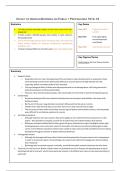
IMPACT OF GERMAN BOMBING ON PUBLIC + PROPAGANDA 1914-18
Statistics Key Dates
• 14 Gotha planes attacked London in their worst raid of the war, June 1917 Largest air raid on
killing 162 London
• In East London, 300,000 people took shelter in tube stations,
Dec 1917 First night-fighter
disrupting transit
aircraft deployed
• Out of all the Gotha planes lost in bombing raids, more than 2/3
over Britain
failed without British air defense interference (mechanical
problems, etc.) May 1918 Last German air raid
• Airships dropped 200 tons of bombs and killed nearly 600 people
Key Figures/Terms
Gotha plane: German heavy bomber
Summary
• Zeppelin Raids
o Especially common near the beginning of the war (before major developments in airplanes), these
were bombing runs that were particularly difficult to counter due to the high-altitude aircraft,
especially before incendiary bullets were invented
o The psychological effect of these was disproportionate to the damage done, with the government
fearing mass panic and thousands hiding
o However, they also fascinated people, who would walk into the street to watch the Zeppelins go by
• Gotha Raids
o As planes developed German airplane raids became more frequent and deadlier, like those with
Gotha bombers
o By the end of the war, huge bombers carrying 1,000-pound bombs were in action
o Initially most raids were by day, but as time went on air raids commenced at night
o The accuracy of these raids was limited, but the sight of planes still terrified civilians, and the planes
were difficult for air defense systems to counter
• Air Defense Systems
o Although systems were put in place, they were largely to act as deterrents and reassurance to the
public – they did little to actually counter the aircraft if they were determined to drop bombs
o Defenses included modified field artillery guns (AA guns), blackouts at night, floodlights (when night
bombing became more common), alerts for the public (not alarms, but police holding signs to take
cover), home defense squadrons (which were unable to stop many aircraft) and defense sectors being
developed throughout London to better distribute defenses
• Propaganda Impact
o Although the damage itself was often limited and downplayed by the government and in newspapers
in order to avoid mass panic, the bombings were used as anti-German propaganda, demonstrating
their ‘barbarity’
o Bombings also increased support, ironically, as the British public wanted retribution for their fears
• Total war: for the first time, British civilians were not isolated from war in Europe; the development of aerial
bombing had led to total war, which had a particular impact on the British who came to fear aerial bombing in
particular
, SIGNIFICANCE OF AERIAL COMBAT AND TACTICS 1914-1918
Statistics Key Dates
• By 1918, the Allies were outproducing the Germans by nearly 5:1 June 1918 The Independent Air
in aircraft Force (bombing
• By November 1918, Britain had over 3,000 front line aircraft on the force) created
Western Front
• In August 1918, the British lost 243 aircraft in 4 days trying to
destroy bridges during the Battle of Amiens
• Around 1 in 4 aircrew were killed (around the same as infantry)
Key Figures/Terms
Strafing: low flying to fire machine
guns at trenches and troops
Strategic bombing: long-range
bombing of enemy industry,
communications, and civilians
Summary
• Purpose and aerial superiority
o As planes’ purpose expanded to include combat, bombing, and scouting, Haig wanted to achieve
aerial superiority, both to support his ground offensives and to overtake German output
o In 1917, Lloyd George told parliament to prioritize airplane production in industry, and by 1918 the
British forces had surpassed German planes in number, an even larger advantage when paired with
the French
• Casualties
o Haig and Trenchard’s policy of aerial superiority led to heavy casualties, with pilots deployed having
little training
o Haig’s use of airplanes in combat, by ‘strafing’ to target troops and trenches, was risky for pilots, and
though it gained the British the upper hand, it meant heavy losses
• Air power in the Mediterranean
o At one point, British forces defeated all German and Turkish aircraft, then attacked retreating troops –
similar to what would happen in WWII and demonstrating the use of aircraft in a war of movement
• Strategic bombing
o Haig was against this tactic, as he believed it was not the right way to win the war, but many pushed
for the RFC/RAF to bomb Germany as they had Britain to weaken them
o Bombing did increase in frequency as planes were developed, but it was never very effective, with
many shells missing their target or failing to detonate
• Morale
o Many argued that the main role of planes was to demoralize enemy forces, as they made enemy
troops feel hunted and could intimidate civilians
o This was undertaken through bombing as well, although evidence suggests that it had little impact on
civilian morale and the war effort
• Post-WWI
o Disarmament followed WWI, as another major war was expected to be a long way off, and until the
1930s planes remained largely the same as they were in 1918
, AERIAL TECHNOLOGY 1914-1918
Statistics Key Dates
• From 1914-18, aircraft speeds had more than doubled 1915 Interrupter gear
• New pilots only had around 20 hours of training developed
• The ‘Red Baron’ achieved 80 victories before his death
Mid-1915 bombsight
developed
1916 Searchlights used in
aerial defense:
deterred planes
Key Figures/Terms
Bombsight: enabled aircrew to locate
targets with greater accuracy,
factoring in wind and aircraft speed
Summary
• Air arms race
o Early aircraft didn’t have any weaponry except for a pilot-carried pistol, limiting their use
o Attempts were made to fit machine guns to aircraft, but first they had to be made much lighter –
because the air was so cold at high altitude, this was done by removing the cooling system
o Once machine guns had been fitted, the problem was the layout and avoiding the (wooden) propeller,
usually at the front of the plane
o Some aircraft had the observer-gunner with a gun firing backwards (away from propeller) or tried
moving the propeller to the back of the plane, but one-seater craft needed a forward-facing gun the
pilot could operate
o The Germans developed the Fokker interrupter gear, which synced the engine to the guns and
prevented the gun from firing at certain points – the British developed a similar system independently
shortly after
o Soon aircraft, which were constantly evolving in model and make, could fire hundreds of rounds per
minute at enemies
o Planes also had to be relatively simple to understand and were easy to repair – pilots had very little
flight training, and repairs on wooden and fabric planes could be done in hangars
• Air-fighting and aces
o The ‘knights of the air’ achieved hero status depending on how many dogfight victories they had –
neither Trenchard nor Ludendorff approved of this, as the biggest priority was artillery spotting, but it
gained them fame on the home front and in the press
o Major aces included the ‘Red Baron’ (German, 80 victories) and ‘Mick’ Mannock (British, 73 victories)
• Air defense and bombing
o AA guns had to adapt as defenses became more sophisticated. Height-set fuses, modified field
artillery guns, and searchlights were used to deter bombers, which usually had to fly low to the ground
o To avoid this, bombers tried to fly at night, but this made them highly inaccurate, something not
helped much by the development of bombsight in 1915, although it did help a little
, DEVELOPMENT OF THE RFC 1914-1918
Statistics Key Dates
• In 1914, the RFC sent around 63 planes to France Aug 1914 RFC squadrons sent
• During the spring of 1917, the RFC lost more than 700 planes to France
• By the end of the war, the RAF had around 22,000 aircraft
1915 Airplanes begin
carrying wing racks
for bombs
Jan 1918 Air Ministry
established
April 1918 RFC and RNAS merge
Key Figures/Terms
Trenchard: RFC commander for most
of the war
Summary
• Early development was slow and difficult, as logistics had to be built from the ground up (including supply
depots, pilot training, plane building) and not everyone supported the move to airplanes or the way it was done
• Aircraft had an important impact on troop morale, invigorating their own troops and demoralizing enemy
troops, who described feeling hunted when they saw enemy planes overhead
o In addition to reconnaissance, morale was one of their major aims
• The RFC saw little early success, and the RNAS was much the same – still, Haig supported Trenchard’s regular
requests for more men and materials, leading to rapid growth
• Haig believed that achieving aerial superiority would win the war on the Western Front, a position helped by
the support of generals like Jan Smuts, who believed aircraft would soon outpace the infantry and become
their own, essential, military branch
• Haig and Trenchard were both criticized for the loss of men that occurred due to the push for aerial superiority,
however the plan did succeed
• By 1917, the RFC had outpaced the German and French air forces in number, and the merging of the RNAS and
the RFC in April 1918 only increased numbers
• In the Hundred Days’ Offensive, airplanes played a major role as decoy, in combat, and in reconnaissance,
helping Haig’s ‘all-arms’ attacks to lead to victory
Statistics Key Dates
• 14 Gotha planes attacked London in their worst raid of the war, June 1917 Largest air raid on
killing 162 London
• In East London, 300,000 people took shelter in tube stations,
Dec 1917 First night-fighter
disrupting transit
aircraft deployed
• Out of all the Gotha planes lost in bombing raids, more than 2/3
over Britain
failed without British air defense interference (mechanical
problems, etc.) May 1918 Last German air raid
• Airships dropped 200 tons of bombs and killed nearly 600 people
Key Figures/Terms
Gotha plane: German heavy bomber
Summary
• Zeppelin Raids
o Especially common near the beginning of the war (before major developments in airplanes), these
were bombing runs that were particularly difficult to counter due to the high-altitude aircraft,
especially before incendiary bullets were invented
o The psychological effect of these was disproportionate to the damage done, with the government
fearing mass panic and thousands hiding
o However, they also fascinated people, who would walk into the street to watch the Zeppelins go by
• Gotha Raids
o As planes developed German airplane raids became more frequent and deadlier, like those with
Gotha bombers
o By the end of the war, huge bombers carrying 1,000-pound bombs were in action
o Initially most raids were by day, but as time went on air raids commenced at night
o The accuracy of these raids was limited, but the sight of planes still terrified civilians, and the planes
were difficult for air defense systems to counter
• Air Defense Systems
o Although systems were put in place, they were largely to act as deterrents and reassurance to the
public – they did little to actually counter the aircraft if they were determined to drop bombs
o Defenses included modified field artillery guns (AA guns), blackouts at night, floodlights (when night
bombing became more common), alerts for the public (not alarms, but police holding signs to take
cover), home defense squadrons (which were unable to stop many aircraft) and defense sectors being
developed throughout London to better distribute defenses
• Propaganda Impact
o Although the damage itself was often limited and downplayed by the government and in newspapers
in order to avoid mass panic, the bombings were used as anti-German propaganda, demonstrating
their ‘barbarity’
o Bombings also increased support, ironically, as the British public wanted retribution for their fears
• Total war: for the first time, British civilians were not isolated from war in Europe; the development of aerial
bombing had led to total war, which had a particular impact on the British who came to fear aerial bombing in
particular
, SIGNIFICANCE OF AERIAL COMBAT AND TACTICS 1914-1918
Statistics Key Dates
• By 1918, the Allies were outproducing the Germans by nearly 5:1 June 1918 The Independent Air
in aircraft Force (bombing
• By November 1918, Britain had over 3,000 front line aircraft on the force) created
Western Front
• In August 1918, the British lost 243 aircraft in 4 days trying to
destroy bridges during the Battle of Amiens
• Around 1 in 4 aircrew were killed (around the same as infantry)
Key Figures/Terms
Strafing: low flying to fire machine
guns at trenches and troops
Strategic bombing: long-range
bombing of enemy industry,
communications, and civilians
Summary
• Purpose and aerial superiority
o As planes’ purpose expanded to include combat, bombing, and scouting, Haig wanted to achieve
aerial superiority, both to support his ground offensives and to overtake German output
o In 1917, Lloyd George told parliament to prioritize airplane production in industry, and by 1918 the
British forces had surpassed German planes in number, an even larger advantage when paired with
the French
• Casualties
o Haig and Trenchard’s policy of aerial superiority led to heavy casualties, with pilots deployed having
little training
o Haig’s use of airplanes in combat, by ‘strafing’ to target troops and trenches, was risky for pilots, and
though it gained the British the upper hand, it meant heavy losses
• Air power in the Mediterranean
o At one point, British forces defeated all German and Turkish aircraft, then attacked retreating troops –
similar to what would happen in WWII and demonstrating the use of aircraft in a war of movement
• Strategic bombing
o Haig was against this tactic, as he believed it was not the right way to win the war, but many pushed
for the RFC/RAF to bomb Germany as they had Britain to weaken them
o Bombing did increase in frequency as planes were developed, but it was never very effective, with
many shells missing their target or failing to detonate
• Morale
o Many argued that the main role of planes was to demoralize enemy forces, as they made enemy
troops feel hunted and could intimidate civilians
o This was undertaken through bombing as well, although evidence suggests that it had little impact on
civilian morale and the war effort
• Post-WWI
o Disarmament followed WWI, as another major war was expected to be a long way off, and until the
1930s planes remained largely the same as they were in 1918
, AERIAL TECHNOLOGY 1914-1918
Statistics Key Dates
• From 1914-18, aircraft speeds had more than doubled 1915 Interrupter gear
• New pilots only had around 20 hours of training developed
• The ‘Red Baron’ achieved 80 victories before his death
Mid-1915 bombsight
developed
1916 Searchlights used in
aerial defense:
deterred planes
Key Figures/Terms
Bombsight: enabled aircrew to locate
targets with greater accuracy,
factoring in wind and aircraft speed
Summary
• Air arms race
o Early aircraft didn’t have any weaponry except for a pilot-carried pistol, limiting their use
o Attempts were made to fit machine guns to aircraft, but first they had to be made much lighter –
because the air was so cold at high altitude, this was done by removing the cooling system
o Once machine guns had been fitted, the problem was the layout and avoiding the (wooden) propeller,
usually at the front of the plane
o Some aircraft had the observer-gunner with a gun firing backwards (away from propeller) or tried
moving the propeller to the back of the plane, but one-seater craft needed a forward-facing gun the
pilot could operate
o The Germans developed the Fokker interrupter gear, which synced the engine to the guns and
prevented the gun from firing at certain points – the British developed a similar system independently
shortly after
o Soon aircraft, which were constantly evolving in model and make, could fire hundreds of rounds per
minute at enemies
o Planes also had to be relatively simple to understand and were easy to repair – pilots had very little
flight training, and repairs on wooden and fabric planes could be done in hangars
• Air-fighting and aces
o The ‘knights of the air’ achieved hero status depending on how many dogfight victories they had –
neither Trenchard nor Ludendorff approved of this, as the biggest priority was artillery spotting, but it
gained them fame on the home front and in the press
o Major aces included the ‘Red Baron’ (German, 80 victories) and ‘Mick’ Mannock (British, 73 victories)
• Air defense and bombing
o AA guns had to adapt as defenses became more sophisticated. Height-set fuses, modified field
artillery guns, and searchlights were used to deter bombers, which usually had to fly low to the ground
o To avoid this, bombers tried to fly at night, but this made them highly inaccurate, something not
helped much by the development of bombsight in 1915, although it did help a little
, DEVELOPMENT OF THE RFC 1914-1918
Statistics Key Dates
• In 1914, the RFC sent around 63 planes to France Aug 1914 RFC squadrons sent
• During the spring of 1917, the RFC lost more than 700 planes to France
• By the end of the war, the RAF had around 22,000 aircraft
1915 Airplanes begin
carrying wing racks
for bombs
Jan 1918 Air Ministry
established
April 1918 RFC and RNAS merge
Key Figures/Terms
Trenchard: RFC commander for most
of the war
Summary
• Early development was slow and difficult, as logistics had to be built from the ground up (including supply
depots, pilot training, plane building) and not everyone supported the move to airplanes or the way it was done
• Aircraft had an important impact on troop morale, invigorating their own troops and demoralizing enemy
troops, who described feeling hunted when they saw enemy planes overhead
o In addition to reconnaissance, morale was one of their major aims
• The RFC saw little early success, and the RNAS was much the same – still, Haig supported Trenchard’s regular
requests for more men and materials, leading to rapid growth
• Haig believed that achieving aerial superiority would win the war on the Western Front, a position helped by
the support of generals like Jan Smuts, who believed aircraft would soon outpace the infantry and become
their own, essential, military branch
• Haig and Trenchard were both criticized for the loss of men that occurred due to the push for aerial superiority,
however the plan did succeed
• By 1917, the RFC had outpaced the German and French air forces in number, and the merging of the RNAS and
the RFC in April 1918 only increased numbers
• In the Hundred Days’ Offensive, airplanes played a major role as decoy, in combat, and in reconnaissance,
helping Haig’s ‘all-arms’ attacks to lead to victory