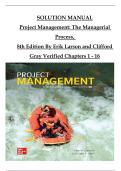
SOLUTION MANUAL
Project Management, The Managerial Process,
8th Edition by Erik W. Larson, Clifford F. Gray
All Chapters 1 - 16
,TABLE OF CONTENTS 13 13
Ch. 1 Modern Project Management
13 13 13 13
Ch. 2 Organization Strategy and Project Selection
13 13 13 13 13 13
Ch. 3 Organization: Structure and Culture
13 13 13 13 13
Ch. 4 Defining the Project
13 13 13 13
Ch. 5 Estimating Project Times and Costs
13 13 13 13 13 13
Ch. 6 Developing a Project Schedule
13 13 13 13 13
Ch. 7 Managing Risk
13 13 13
Ch. 8 Scheduling Resources and Costs
13 13 13 13 13
Ch. 9 Reducing Project Duration
13 13 13 13
Ch. 10 Being an Effective Project Manager
13 13 13 13 13 13
Ch. 11 Managing Project Teams
13 13 13 13
Ch. 12 Outsourcing: Managing Interorganizational Relations
13 13 13 13 13
Ch. 13 Progress and Performance Measurement and Evaluation
13 13 13 13 13 13 13
Ch. 14 Project Closure
13 13 13
Ch. 15 Agile Project Management
13 13 13 13
Ch. 16 International Projects
13 13 13
, Chapter131
Modern13Project13Management
Chapter13Outline
1. What13Is13a13Project?
A. What13a13Project13Is13Not
B. Program13versus13Project
C. The13Project13Life13Cycle
D. The13Project13Manager
E. Being13Part13of13a13Project13Team
2. Agile13Project13Management
3. Current13Drivers13of13Project13Management
A. Compression13of13the13Product13Life13Cycle
B. Knowledge13Explosion
C. Triple13Bottom13Line13(Planet,13People,13Profit)
D. Increased13Customer13Focus
E. Small13Projects13Represent13Big13Problems
4. Project13Management13Today:13A13Socio-Technical13Approach
5. Summary
6. Text13Overview
7. Key13Terms
8. Review13Questions
9. Snapshot13from13Practice:13Discussion13Questions
10. Exercises
11. Case131.1:13A13Day13in13the13Life—2019
12. Case131.2:13The13Hokies13Lunch13Group
, Chapter13Learning13Objectives
After13reading13this13chapter13you13should13be13able13to:
LO131-1 Understand13why13project13management13is13crucial13in13today’s13world.
LO131-2 Distinguish13a13project13from13routine13operations.
LO131-3 Identify13the13different13stages13of13a13project13life13cycle.
LO131-4 Describe13how13Agile13PM13is13different13from13traditional13PM.
LO131-5 Understand13that13managing13projects13involves13balancing13the13technical13and13
sociocultural13dimensions13of13the13project.
Review13Questions
1. Define13a13project.13What13are13five13characteristics13which13help13differentiate13proje
cts31from13other13functions13carried13out13in13the13daily13operations13of13the13organizati
on?
A13project13is13a13complex,13non-routine,13one-
time13effort13limited13by13time,13budget,13resource,a13 nd13specifications.13Differentiating13char
acteristics13of13projects13from13routine,13repetitive13daily13work13are13below:
a. A13defined13lifespan
b. A13well-defined13objective
c. Typically13involves13people13from13several13disciplines
d. A13project13life13cycle
e. Specific13time,13cost,13and13performance13requirements.
2. What13are13some13of13the13key13environmental13forces13that13have13changed13the13
way31projects13are13managed?13What13has13been13the13effect13of13these13forces13on1
3the13management13of13projects?
Some13environmental13forces13that13have13changed13the13way13we13manage13projects13are13t
he13product13life13cycle,13knowledge13growth,13global13competition,13organization13downsi
zing,1t3 echnology13changes,13time-to-
market.13The13impact13of13these13forces13is13more13projects13per1o
3 rganization,13project13tea
ms13responsible13for13implementing13projects,13accountability,13changing13organization13st
ructures,13need13for13rapid13completion13of13projects,13linking13projects13to13organization13
strategy13and13customers,13prioritizing13projects13to13conserve13organization13resources,13al
liances13with13external13organizations,13and13so13on.
3. Describe13the13four13phases13of13the13traditional13project13life13cycle.13Which13phase13do
13you31think13would13 be13most13the13difficult13one13to13complete?
Project Management, The Managerial Process,
8th Edition by Erik W. Larson, Clifford F. Gray
All Chapters 1 - 16
,TABLE OF CONTENTS 13 13
Ch. 1 Modern Project Management
13 13 13 13
Ch. 2 Organization Strategy and Project Selection
13 13 13 13 13 13
Ch. 3 Organization: Structure and Culture
13 13 13 13 13
Ch. 4 Defining the Project
13 13 13 13
Ch. 5 Estimating Project Times and Costs
13 13 13 13 13 13
Ch. 6 Developing a Project Schedule
13 13 13 13 13
Ch. 7 Managing Risk
13 13 13
Ch. 8 Scheduling Resources and Costs
13 13 13 13 13
Ch. 9 Reducing Project Duration
13 13 13 13
Ch. 10 Being an Effective Project Manager
13 13 13 13 13 13
Ch. 11 Managing Project Teams
13 13 13 13
Ch. 12 Outsourcing: Managing Interorganizational Relations
13 13 13 13 13
Ch. 13 Progress and Performance Measurement and Evaluation
13 13 13 13 13 13 13
Ch. 14 Project Closure
13 13 13
Ch. 15 Agile Project Management
13 13 13 13
Ch. 16 International Projects
13 13 13
, Chapter131
Modern13Project13Management
Chapter13Outline
1. What13Is13a13Project?
A. What13a13Project13Is13Not
B. Program13versus13Project
C. The13Project13Life13Cycle
D. The13Project13Manager
E. Being13Part13of13a13Project13Team
2. Agile13Project13Management
3. Current13Drivers13of13Project13Management
A. Compression13of13the13Product13Life13Cycle
B. Knowledge13Explosion
C. Triple13Bottom13Line13(Planet,13People,13Profit)
D. Increased13Customer13Focus
E. Small13Projects13Represent13Big13Problems
4. Project13Management13Today:13A13Socio-Technical13Approach
5. Summary
6. Text13Overview
7. Key13Terms
8. Review13Questions
9. Snapshot13from13Practice:13Discussion13Questions
10. Exercises
11. Case131.1:13A13Day13in13the13Life—2019
12. Case131.2:13The13Hokies13Lunch13Group
, Chapter13Learning13Objectives
After13reading13this13chapter13you13should13be13able13to:
LO131-1 Understand13why13project13management13is13crucial13in13today’s13world.
LO131-2 Distinguish13a13project13from13routine13operations.
LO131-3 Identify13the13different13stages13of13a13project13life13cycle.
LO131-4 Describe13how13Agile13PM13is13different13from13traditional13PM.
LO131-5 Understand13that13managing13projects13involves13balancing13the13technical13and13
sociocultural13dimensions13of13the13project.
Review13Questions
1. Define13a13project.13What13are13five13characteristics13which13help13differentiate13proje
cts31from13other13functions13carried13out13in13the13daily13operations13of13the13organizati
on?
A13project13is13a13complex,13non-routine,13one-
time13effort13limited13by13time,13budget,13resource,a13 nd13specifications.13Differentiating13char
acteristics13of13projects13from13routine,13repetitive13daily13work13are13below:
a. A13defined13lifespan
b. A13well-defined13objective
c. Typically13involves13people13from13several13disciplines
d. A13project13life13cycle
e. Specific13time,13cost,13and13performance13requirements.
2. What13are13some13of13the13key13environmental13forces13that13have13changed13the13
way31projects13are13managed?13What13has13been13the13effect13of13these13forces13on1
3the13management13of13projects?
Some13environmental13forces13that13have13changed13the13way13we13manage13projects13are13t
he13product13life13cycle,13knowledge13growth,13global13competition,13organization13downsi
zing,1t3 echnology13changes,13time-to-
market.13The13impact13of13these13forces13is13more13projects13per1o
3 rganization,13project13tea
ms13responsible13for13implementing13projects,13accountability,13changing13organization13st
ructures,13need13for13rapid13completion13of13projects,13linking13projects13to13organization13
strategy13and13customers,13prioritizing13projects13to13conserve13organization13resources,13al
liances13with13external13organizations,13and13so13on.
3. Describe13the13four13phases13of13the13traditional13project13life13cycle.13Which13phase13do
13you31think13would13 be13most13the13difficult13one13to13complete?