BSMH Advanced Arrhythmia Course Questions and Answers
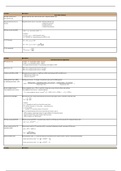
Blood flow through the heart - -SVC --> Rt purkinje fibers - ventricles
atria --> Tricuspid --> Rt ventricle --> Pulmonic
valve --> Lungs --> Lt atria --> Mitral valve --> Lt
ventricle --> aortic valve --> aorta --> Body Inherent rates - -SA node = 60-100
AV node = 40-60
Ventricle = 20-40
EKG Times - -6 second strip
1 small block = 0.04 secs
1 big block = 5 small boxes = 0.20 secs Atrial flutter - -Sawtooth pattern
15 big blocks = 3 seconds
Atrial fibrillation - -Waves between QRS
P Wave - -atrial depolarization
Supraventricular tachycardia - -No P wave,
PR Interval - -time it takes for the impulse rate > 150
to get from atrial to ventricles
0.12 - 0.20 seconds
Junctional rhythms - -P wave inverted or
absent
QRS Interval - -ventricular depolarization Junctional bradycardia: < 40
< 0.12 seconds Junctional rhythm: 40-60
Accelerated junctional: 60-100
Junctional tachycardia: > 100
ST Segment - -early depolarization of
ventricles
depression = myocardial infarction Ventricular tachycardia - -marching nuns
elevation = myocardial injury
Torsades de pointes - -Rate > 200, no P
T Wave - -repolarization of ventricles waves, wide QRS
Heart blocks - -No changes in PR Interval Ventricular fibrillation - -Rate cannot be
- QRS complexes present = 1st degree counted
- No QRS complexes = 2nd degree type II
Changes in PR Interval Idioventricular - -Rate 20-40
- R to R interval regular = 3rd degree T wave opposite QRS, no P wave, wide QRS
- R to R interval irregular = 2nd degree type I
Accelerated Idioventricular - -Rate 40-100
Conduction pathway - -Sinus node - T wave opposite QRS, no P wave, wide QRS
inerarterial tracts - atrium - intermodal tracts - AV
node - bundle of HIS - bundle branches -
1/2
Blood flow through the heart - -SVC --> Rt purkinje fibers - ventricles
atria --> Tricuspid --> Rt ventricle --> Pulmonic
valve --> Lungs --> Lt atria --> Mitral valve --> Lt
ventricle --> aortic valve --> aorta --> Body Inherent rates - -SA node = 60-100
AV node = 40-60
Ventricle = 20-40
EKG Times - -6 second strip
1 small block = 0.04 secs
1 big block = 5 small boxes = 0.20 secs Atrial flutter - -Sawtooth pattern
15 big blocks = 3 seconds
Atrial fibrillation - -Waves between QRS
P Wave - -atrial depolarization
Supraventricular tachycardia - -No P wave,
PR Interval - -time it takes for the impulse rate > 150
to get from atrial to ventricles
0.12 - 0.20 seconds
Junctional rhythms - -P wave inverted or
absent
QRS Interval - -ventricular depolarization Junctional bradycardia: < 40
< 0.12 seconds Junctional rhythm: 40-60
Accelerated junctional: 60-100
Junctional tachycardia: > 100
ST Segment - -early depolarization of
ventricles
depression = myocardial infarction Ventricular tachycardia - -marching nuns
elevation = myocardial injury
Torsades de pointes - -Rate > 200, no P
T Wave - -repolarization of ventricles waves, wide QRS
Heart blocks - -No changes in PR Interval Ventricular fibrillation - -Rate cannot be
- QRS complexes present = 1st degree counted
- No QRS complexes = 2nd degree type II
Changes in PR Interval Idioventricular - -Rate 20-40
- R to R interval regular = 3rd degree T wave opposite QRS, no P wave, wide QRS
- R to R interval irregular = 2nd degree type I
Accelerated Idioventricular - -Rate 40-100
Conduction pathway - -Sinus node - T wave opposite QRS, no P wave, wide QRS
inerarterial tracts - atrium - intermodal tracts - AV
node - bundle of HIS - bundle branches -
1/2