Question 4: Unseen Poetry
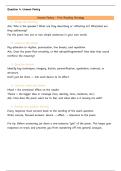
Unseen Poetry - First Reading Strategy
1. Grasp the meaning
Ask: Who is the speaker? What are they describing or reflecting on? Who/what are
they addressing?
Put the poem into one or two simple sentences in your own words.
2. Listen to the sound
Pay attention to rhythm, punctuation, line breaks, and repetition.
Ask: Does the poem flow smoothly, or feel abrupt/fragmented? How does that sound
reinforce the meaning?
3. Spot the devices
Identify key techniques: imagery, diction, personification, symbolism, contrast, or
structure.
Don’t just list them — link each device to its effect.
4. Uncover mood and theme
Mood = the emotional effect on the reader.
Theme = the bigger idea or message (loss, identity, time, resilience, etc.).
Ask: How does the poem want me to feel, and what idea is it leaving me with?
5. Answer the question directly
Every response must connect back to the wording of the exam question.
Write concise, focused answers: device → effect → relevance to the poem.
Pro tip: Before answering, jot down a one-sentence “gist” of the poem. This keeps your
responses on track and prevents you from wandering off into general analysis.
Unseen Poetry - First Reading Strategy
1. Grasp the meaning
Ask: Who is the speaker? What are they describing or reflecting on? Who/what are
they addressing?
Put the poem into one or two simple sentences in your own words.
2. Listen to the sound
Pay attention to rhythm, punctuation, line breaks, and repetition.
Ask: Does the poem flow smoothly, or feel abrupt/fragmented? How does that sound
reinforce the meaning?
3. Spot the devices
Identify key techniques: imagery, diction, personification, symbolism, contrast, or
structure.
Don’t just list them — link each device to its effect.
4. Uncover mood and theme
Mood = the emotional effect on the reader.
Theme = the bigger idea or message (loss, identity, time, resilience, etc.).
Ask: How does the poem want me to feel, and what idea is it leaving me with?
5. Answer the question directly
Every response must connect back to the wording of the exam question.
Write concise, focused answers: device → effect → relevance to the poem.
Pro tip: Before answering, jot down a one-sentence “gist” of the poem. This keeps your
responses on track and prevents you from wandering off into general analysis.