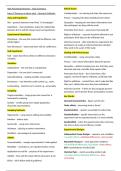
AQA Psychology Revision – Topic Summary Ethical issues:
Paper 2 (features in others also) – Research Methods Confidentiality – not sharing info data, like names etc.
Aims and Hypothesis: Privacy – keeping info about individual from others
Aim – general statement want find, “to investigate”. Deception – keeping aim and other information from
the participant, are they told the truth
Hypothesis – clear prediction, states the relationship
between the IV and DV, always have two hypotheses. Protection form harm – more harm than daily life
Experimental Hypothesis: Right to withdraw – a person should be allowed to not
participate, their data can be withdrawn too
Directional – the way the results will be different, one
will be higher. Informed consent – after educated on experiment the
participant can make an informed decision whether
Non-directional – states that there will be a difference.
they want to be a part of the study
Null Hypothesis:
Dealing with Ethical issues:
Null – states that there will be no difference between
Confidentiality – using anonymity codes
variables.
Privacy – don’t share information about the person
Variables:
Deception – debrief revealing true aim, that they were
Independent – the one that is manipulated.
deceived and why, and offer help support after
Dependant – the one that is measured.
Protection from harm – don’t hurt them, offer
Operationalising – making variables measurable. support, remind of right to withdraw, avoid high risks
Extraneous – may interfere could control e.g., noise. Right to withdraw – remind them, don’t make feel like
they can’t, delete data once they have withdrawn
Confounding – interfere can’t control e.g., personality.
Informed consent – if they are too young get parents’
Sampling: permission, don’t deceive them, presumptive consent
Target population – large group who researcher is Key Words:
interested in studying.
Demand Characteristics – figure out the aim
Sample – smaller group from target population,
should be representative. Order effects – becoming tired or bored
Sampling Methods: Randomisation – random as possible to reduce bias
Opportunity – using anyone willing and available. Standardisation – specific instructions so the
experiment can be repeated exactly, it is more reliable
Random – lottery style.
Double-Blind – when the experimenter does not know
Systematic – using every nth person. the aims so they cannot influence results
Volunteer – placing an advert somewhere. Experimental Designs:
Stratified – percentages of representation. Independent Group Designs – separate, one condition
GRAVE: +no order effects -individual differences, more people
Generalisability – sample representative? wide applied Repeated Measures – same pps both conditions
+no individual differences, less people -order effects
Reliability – consistency, can repeated similar results BUT counterbalance G1:AB G2:BA
Application to real life – purpose of the experiment Matched Pairs – match according similar traits
Validity – how well the study reflects what aims to do +no order effects/individual differences -time
consuming
Ethics – did it follow ethical guidelines
, Observations: Analysing data:
Naturalistic – no manipulation from experimenter Quantative = +objective, quick, easy analyse -limited,
+ecological validity -cannot control variables (cause) forced answers, decrease validity
Controlled – experimenter controls some of variables Qualitative = +depth, true, increase valid -subjective,
to ensure IV is causing changes (Internal validity) slower, hard analyse
+reliability -low ecological validity
Primary data – gather data yourself = +make accurate,
Overt – researcher is open about their presence only using needed data, new -slow, expensive, ethics
+ethically valid no deceive -demand characteristics
Secondary data – information already collected by
Covert – researcher not open about their presence someone else public = +quicker, cheaper, ethics
+behave naturally -no informed consent, deceived -question methods, useless, outdated
Participants – experimenter is part of the group Central Tendency and Dispersion:
+clear insight behaviour -because within miss things
Mean – average = +all scores used, only one -extreme
Non-participants – observe from a distance
Median – middle = +not extreme -how useful?
+no observer bias -interpret different external
Mode – most = +not extreme -multiple modes
Self-report Techniques:
Dispersion – spread? range (+1), standard deviation
Questionnaires – preset questions answered by
participants alone +cost effective, large volumes, Range – big take little = +easy – extreme
statistical analysis -social desirability, demand
characteristics, bias Standard deviation - how far from mean = +more
accurate and precise range -distorted uses all values
Open – no fixed answers, qualitative
Positive, Negative and Normal skews + correlation:
Closed – fixed answers, quantitative
Positive correlation – both increase
Good one – clarity, no ambiguity, no double-barrelled
questions, no technical jargon, no leading questions Negative correlation – one increases other decreases
Interviews – between two people, questions asked Normal skew – bell shape
Good one – record, don’t know interviewer, honesty, Positive (right) skew – going left, mode median mean
distractions, body language, schedule Negative (left) skew – going right, mean median mode
Structured – pre-determined questions, in fixed order Qualitative Analysis (content analysis)
+standardised -limit in depth and richness
Coding – qualitative dated assigned categories/themes
Unstructured – no set questions, conversational
+more flexibility and depth -hard to analyse, bias Content Analysis – Qualitative to Quantitative
Semi-structured – list of questions but pps elaborate - Technique analysing qualitative, no
preconceived ideas, data placed categories
Types of Experiment: count/analyse themes
Causes effect on DV through manipulation IV: Stages of Content Analysis
Laboratory – carefully controlled environment, 1. Observe recorded behaviour/read responses
participants aware taking part 2. Identify potential categories or themes
Field – more real-life setting, pps usual unaware 3. Watch/read again, count number examples
each theme (to produce quantitative data)
Doesn’t cause effect on DV through manipulation IV:
Thematic – Qualitative organised around themes
Natural – observe everyday setting, no variable control
- Preconceived themes, used to identify the
Quasi – independent variable can’t be manipulated, meanings within the qualitative data rather
naturally occurring than the number of times they occurred
Paper 2 (features in others also) – Research Methods Confidentiality – not sharing info data, like names etc.
Aims and Hypothesis: Privacy – keeping info about individual from others
Aim – general statement want find, “to investigate”. Deception – keeping aim and other information from
the participant, are they told the truth
Hypothesis – clear prediction, states the relationship
between the IV and DV, always have two hypotheses. Protection form harm – more harm than daily life
Experimental Hypothesis: Right to withdraw – a person should be allowed to not
participate, their data can be withdrawn too
Directional – the way the results will be different, one
will be higher. Informed consent – after educated on experiment the
participant can make an informed decision whether
Non-directional – states that there will be a difference.
they want to be a part of the study
Null Hypothesis:
Dealing with Ethical issues:
Null – states that there will be no difference between
Confidentiality – using anonymity codes
variables.
Privacy – don’t share information about the person
Variables:
Deception – debrief revealing true aim, that they were
Independent – the one that is manipulated.
deceived and why, and offer help support after
Dependant – the one that is measured.
Protection from harm – don’t hurt them, offer
Operationalising – making variables measurable. support, remind of right to withdraw, avoid high risks
Extraneous – may interfere could control e.g., noise. Right to withdraw – remind them, don’t make feel like
they can’t, delete data once they have withdrawn
Confounding – interfere can’t control e.g., personality.
Informed consent – if they are too young get parents’
Sampling: permission, don’t deceive them, presumptive consent
Target population – large group who researcher is Key Words:
interested in studying.
Demand Characteristics – figure out the aim
Sample – smaller group from target population,
should be representative. Order effects – becoming tired or bored
Sampling Methods: Randomisation – random as possible to reduce bias
Opportunity – using anyone willing and available. Standardisation – specific instructions so the
experiment can be repeated exactly, it is more reliable
Random – lottery style.
Double-Blind – when the experimenter does not know
Systematic – using every nth person. the aims so they cannot influence results
Volunteer – placing an advert somewhere. Experimental Designs:
Stratified – percentages of representation. Independent Group Designs – separate, one condition
GRAVE: +no order effects -individual differences, more people
Generalisability – sample representative? wide applied Repeated Measures – same pps both conditions
+no individual differences, less people -order effects
Reliability – consistency, can repeated similar results BUT counterbalance G1:AB G2:BA
Application to real life – purpose of the experiment Matched Pairs – match according similar traits
Validity – how well the study reflects what aims to do +no order effects/individual differences -time
consuming
Ethics – did it follow ethical guidelines
, Observations: Analysing data:
Naturalistic – no manipulation from experimenter Quantative = +objective, quick, easy analyse -limited,
+ecological validity -cannot control variables (cause) forced answers, decrease validity
Controlled – experimenter controls some of variables Qualitative = +depth, true, increase valid -subjective,
to ensure IV is causing changes (Internal validity) slower, hard analyse
+reliability -low ecological validity
Primary data – gather data yourself = +make accurate,
Overt – researcher is open about their presence only using needed data, new -slow, expensive, ethics
+ethically valid no deceive -demand characteristics
Secondary data – information already collected by
Covert – researcher not open about their presence someone else public = +quicker, cheaper, ethics
+behave naturally -no informed consent, deceived -question methods, useless, outdated
Participants – experimenter is part of the group Central Tendency and Dispersion:
+clear insight behaviour -because within miss things
Mean – average = +all scores used, only one -extreme
Non-participants – observe from a distance
Median – middle = +not extreme -how useful?
+no observer bias -interpret different external
Mode – most = +not extreme -multiple modes
Self-report Techniques:
Dispersion – spread? range (+1), standard deviation
Questionnaires – preset questions answered by
participants alone +cost effective, large volumes, Range – big take little = +easy – extreme
statistical analysis -social desirability, demand
characteristics, bias Standard deviation - how far from mean = +more
accurate and precise range -distorted uses all values
Open – no fixed answers, qualitative
Positive, Negative and Normal skews + correlation:
Closed – fixed answers, quantitative
Positive correlation – both increase
Good one – clarity, no ambiguity, no double-barrelled
questions, no technical jargon, no leading questions Negative correlation – one increases other decreases
Interviews – between two people, questions asked Normal skew – bell shape
Good one – record, don’t know interviewer, honesty, Positive (right) skew – going left, mode median mean
distractions, body language, schedule Negative (left) skew – going right, mean median mode
Structured – pre-determined questions, in fixed order Qualitative Analysis (content analysis)
+standardised -limit in depth and richness
Coding – qualitative dated assigned categories/themes
Unstructured – no set questions, conversational
+more flexibility and depth -hard to analyse, bias Content Analysis – Qualitative to Quantitative
Semi-structured – list of questions but pps elaborate - Technique analysing qualitative, no
preconceived ideas, data placed categories
Types of Experiment: count/analyse themes
Causes effect on DV through manipulation IV: Stages of Content Analysis
Laboratory – carefully controlled environment, 1. Observe recorded behaviour/read responses
participants aware taking part 2. Identify potential categories or themes
Field – more real-life setting, pps usual unaware 3. Watch/read again, count number examples
each theme (to produce quantitative data)
Doesn’t cause effect on DV through manipulation IV:
Thematic – Qualitative organised around themes
Natural – observe everyday setting, no variable control
- Preconceived themes, used to identify the
Quasi – independent variable can’t be manipulated, meanings within the qualitative data rather
naturally occurring than the number of times they occurred