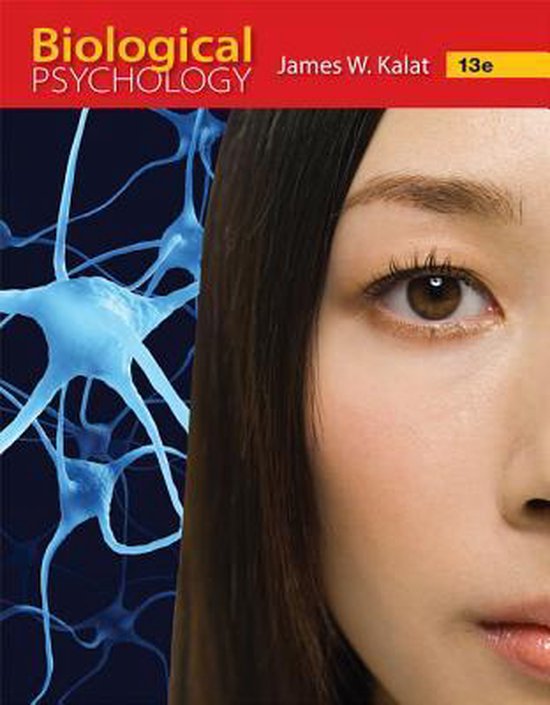
Test Bank For Biological Psychology,
13th Edition, James W. Kalat Complete
Guide A+
,True / False
1. Dendrites contain the nuclei, ribosomes, mitochondria, and other structures found in most cells.
a. True
b. False
ANSWER: False
DIFFICULTY: Bloom’s: Understand
REFERENCES: Neurons and Glia
LEARNING OBJECTIVES: KALA.BIOP.16.01.01 - Describe neurons and glia, the cells that constitute
the nervous system.
TOPICS: 1.1 The Cells of the Nervous System
2. Neurons receive information and transmit it to other cells.
a. True
b. False
ANSWER: True
DIFFICULTY: Bloom’s: Understand
REFERENCES: Neurons and Glia
LEARNING OBJECTIVES: KALA.BIOP.16.01.01 - Describe neurons and glia, the cells that constitute
the nervous system.
TOPICS: 1.1 The Cells of the Nervous System
3. An afferent axon brings information into a structure.
a. True
b. False
ANSWER: True
DIFFICULTY: Bloom’s: Understand
REFERENCES: Neurons and Glia
LEARNING OBJECTIVES: KALA.BIOP.16.01.01 - Describe neurons and glia, the cells that constitute
the nervous system.
TOPICS: 1.1 The Cells of the Nervous System
4. An efferent axon carries information away from a structure.
a. True
b. False
ANSWER: True
DIFFICULTY: Bloom’s: Understand
,REFERENCES: Neurons and Glia
LEARNING OBJECTIVES: KALA.BIOP.16.01.01 - Describe neurons and glia, the cells that constitute
the nervous system.
TOPICS: 1.1 The Cells of the Nervous System
5. The greater the surface area of a dendrite, the more information it can receive from other neurons.
a. True
b. False
ANSWER: True
DIFFICULTY: Bloom’s: Understand
REFERENCES: Neurons and Glia
LEARNING OBJECTIVES: KALA.BIOP.16.01.01 - Describe neurons and glia, the cells that constitute
the nervous system.
TOPICS: 1.1 The Cells of the Nervous System
6. Neurons are distinguished from other cells by their shape.
a. True
b. False
ANSWER: True
DIFFICULTY: Bloom’s: Understand
REFERENCES: Neurons and Glia
LEARNING OBJECTIVES: KALA.BIOP.16.01.01 - Describe neurons and glia, the cells that constitute
the nervous system.
TOPICS: 1.1 The Cells of the Nervous System
7. Glial cells serve many functions.
a. True
b. False
ANSWER: True
DIFFICULTY: Bloom’s: Understand
REFERENCES: Neurons and Glia
LEARNING OBJECTIVES: KALA.BIOP.16.01.01 - Describe neurons and glia, the cells that constitute
the nervous system.
TOPICS: 1.1 The Cells of the Nervous System
8. Glial cells transmit information across long distances.
a. True
b. False
ANSWER: False
DIFFICULTY: Bloom’s: Understand
REFERENCES: Neurons and Glia
LEARNING OBJECTIVES: KALA.BIOP.16.01.01 - Describe neurons and glia, the cells that constitute
, the nervous system.
TOPICS: 1.1 The Cells of the Nervous System
9. Schwann cells build the myelin sheaths in the periphery of the body.
a. True
b. False
ANSWER: True
DIFFICULTY: Bloom’s: Understand
REFERENCES: Neurons and Glia
LEARNING OBJECTIVES: KALA.BIOP.16.01.01 - Describe neurons and glia, the cells that constitute
the nervous system.
TOPICS: 1.1 The Cells of the Nervous System
10. The blood-brain barrier is made up of closely packed glial cells.
a. True
b. False
ANSWER: False
DIFFICULTY: Bloom’s: Understand
REFERENCES: The Blood-Brain Barrier
LEARNING OBJECTIVES: KALA.BIOP.16.01.02 - Summarize how the blood–brain barrier relates to
protection and nutrition of neurons.
TOPICS: 1.1 The Cells of the Nervous System
11. The difference in voltage in a resting neuron is called the resting potential.
a. True
b. False
ANSWER: True
DIFFICULTY: Bloom’s: Understand
REFERENCES: The Resting Potential of the Neuron
LEARNING OBJECTIVES: KALA.BIOP.16.01.03 - Explain how the sodium–potassium pump and the
properties of the membrane lead to the resting potential of a neuron.
TOPICS: 1.2 The Nerve Impulse
12. Increasing the electrical gradient for potassium will reduce the tendency for potassium ions to exit the
neuron.
a. True
b. False
ANSWER: True
DIFFICULTY: Bloom’s: Analyze
REFERENCES: The Resting Potential of the Neuron
LEARNING OBJECTIVES: KALA.BIOP.16.01.03 - Explain how the sodium–potassium pump and the
properties of the membrane lead to the resting potential of a neuron.
13th Edition, James W. Kalat Complete
Guide A+
,True / False
1. Dendrites contain the nuclei, ribosomes, mitochondria, and other structures found in most cells.
a. True
b. False
ANSWER: False
DIFFICULTY: Bloom’s: Understand
REFERENCES: Neurons and Glia
LEARNING OBJECTIVES: KALA.BIOP.16.01.01 - Describe neurons and glia, the cells that constitute
the nervous system.
TOPICS: 1.1 The Cells of the Nervous System
2. Neurons receive information and transmit it to other cells.
a. True
b. False
ANSWER: True
DIFFICULTY: Bloom’s: Understand
REFERENCES: Neurons and Glia
LEARNING OBJECTIVES: KALA.BIOP.16.01.01 - Describe neurons and glia, the cells that constitute
the nervous system.
TOPICS: 1.1 The Cells of the Nervous System
3. An afferent axon brings information into a structure.
a. True
b. False
ANSWER: True
DIFFICULTY: Bloom’s: Understand
REFERENCES: Neurons and Glia
LEARNING OBJECTIVES: KALA.BIOP.16.01.01 - Describe neurons and glia, the cells that constitute
the nervous system.
TOPICS: 1.1 The Cells of the Nervous System
4. An efferent axon carries information away from a structure.
a. True
b. False
ANSWER: True
DIFFICULTY: Bloom’s: Understand
,REFERENCES: Neurons and Glia
LEARNING OBJECTIVES: KALA.BIOP.16.01.01 - Describe neurons and glia, the cells that constitute
the nervous system.
TOPICS: 1.1 The Cells of the Nervous System
5. The greater the surface area of a dendrite, the more information it can receive from other neurons.
a. True
b. False
ANSWER: True
DIFFICULTY: Bloom’s: Understand
REFERENCES: Neurons and Glia
LEARNING OBJECTIVES: KALA.BIOP.16.01.01 - Describe neurons and glia, the cells that constitute
the nervous system.
TOPICS: 1.1 The Cells of the Nervous System
6. Neurons are distinguished from other cells by their shape.
a. True
b. False
ANSWER: True
DIFFICULTY: Bloom’s: Understand
REFERENCES: Neurons and Glia
LEARNING OBJECTIVES: KALA.BIOP.16.01.01 - Describe neurons and glia, the cells that constitute
the nervous system.
TOPICS: 1.1 The Cells of the Nervous System
7. Glial cells serve many functions.
a. True
b. False
ANSWER: True
DIFFICULTY: Bloom’s: Understand
REFERENCES: Neurons and Glia
LEARNING OBJECTIVES: KALA.BIOP.16.01.01 - Describe neurons and glia, the cells that constitute
the nervous system.
TOPICS: 1.1 The Cells of the Nervous System
8. Glial cells transmit information across long distances.
a. True
b. False
ANSWER: False
DIFFICULTY: Bloom’s: Understand
REFERENCES: Neurons and Glia
LEARNING OBJECTIVES: KALA.BIOP.16.01.01 - Describe neurons and glia, the cells that constitute
, the nervous system.
TOPICS: 1.1 The Cells of the Nervous System
9. Schwann cells build the myelin sheaths in the periphery of the body.
a. True
b. False
ANSWER: True
DIFFICULTY: Bloom’s: Understand
REFERENCES: Neurons and Glia
LEARNING OBJECTIVES: KALA.BIOP.16.01.01 - Describe neurons and glia, the cells that constitute
the nervous system.
TOPICS: 1.1 The Cells of the Nervous System
10. The blood-brain barrier is made up of closely packed glial cells.
a. True
b. False
ANSWER: False
DIFFICULTY: Bloom’s: Understand
REFERENCES: The Blood-Brain Barrier
LEARNING OBJECTIVES: KALA.BIOP.16.01.02 - Summarize how the blood–brain barrier relates to
protection and nutrition of neurons.
TOPICS: 1.1 The Cells of the Nervous System
11. The difference in voltage in a resting neuron is called the resting potential.
a. True
b. False
ANSWER: True
DIFFICULTY: Bloom’s: Understand
REFERENCES: The Resting Potential of the Neuron
LEARNING OBJECTIVES: KALA.BIOP.16.01.03 - Explain how the sodium–potassium pump and the
properties of the membrane lead to the resting potential of a neuron.
TOPICS: 1.2 The Nerve Impulse
12. Increasing the electrical gradient for potassium will reduce the tendency for potassium ions to exit the
neuron.
a. True
b. False
ANSWER: True
DIFFICULTY: Bloom’s: Analyze
REFERENCES: The Resting Potential of the Neuron
LEARNING OBJECTIVES: KALA.BIOP.16.01.03 - Explain how the sodium–potassium pump and the
properties of the membrane lead to the resting potential of a neuron.