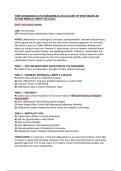
HOW CONVINCING IS UTILITARIANISM AS AN ACCOUNT OF WHAT MAKES AN
ACTION MORALLY RIGHT? (25 marks)
(pink = out of spec content)
LOA: Unconvincing
CR: Partiality shows utilitarianism doesn’t respect individuals
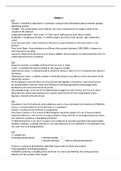
INTRO: Utilitarianism is a teleological, act-based, consequentialist, normative ethical theory,
which argues that the right actions are the ones which maximise happiness. On one hand,
this theory is good as it takes different situations into account individually, allowing us to
adapt our actions in each one. However, it faces issues, such as fairness, individual liberty
and rights, ignoring moral integrity, and explaining partiality. Therefore, I would argue that
utilitarianism is an unconvincing theory, which fails as an account of what makes an action
morally right. The crucial reason for this is the argument of partiality, which shows that
utilitarianism doesn’t respect or protect the individual.
PARA 1 - OUTLINE BENTHAM’S QUANTITATIVE UTILITARIANISM:
P) Outline Theory (our Motivation, Principle of Utility, Hedonic Calculus)
PARA 2 - FAIRNESS, INDIVIDUAL LIBERTY & RIGHTS:
P) Outline Issue (Tyranny of Majority Example)
A) Rule Utilitarianism: long term greatest happiness in a safe society
C) Unknown Torture is Still Wrong
E) Utilitarianism fails to protect individuals’ rights
PARA 3 - INTEGRITY:
P) Outline Issue (Tribe Example of Jim and the Indians) + Bernard Williams on Negative
Responsibility
A) Rule Utilitarianism: Rule Allowing Moral Integrity
C) Moral Integrity May Conflict with Maximising Happiness (Morality)
E) Utilitarianism doesn’t respect the moral values and integrity of individuals
PARA 4 - PARTIALITY (CR):
P) Outline Issue (Others vs Family Examples)
A) Mill: No Opportunities to Help Others
C) Now we have Charities
A) Rule Utilitarianism: Rule Allowing Partiality
C) Misunderstands point of Partiality & is Inhumane
E) Utilitarianism Doesn’t Respect Individual Needs and Humanity
CONCLUSION: In conclusion, I think that utilitarianism is an unconvincing theory, which fails
to protect or respect the individual, because of the way it links everything back to maximising
general happiness. The crucial reason for its failure is that it misunderstands partiality, and
the importance of human relationships.
ACTION MORALLY RIGHT? (25 marks)
(pink = out of spec content)
LOA: Unconvincing
CR: Partiality shows utilitarianism doesn’t respect individuals
INTRO: Utilitarianism is a teleological, act-based, consequentialist, normative ethical theory,
which argues that the right actions are the ones which maximise happiness. On one hand,
this theory is good as it takes different situations into account individually, allowing us to
adapt our actions in each one. However, it faces issues, such as fairness, individual liberty
and rights, ignoring moral integrity, and explaining partiality. Therefore, I would argue that
utilitarianism is an unconvincing theory, which fails as an account of what makes an action
morally right. The crucial reason for this is the argument of partiality, which shows that
utilitarianism doesn’t respect or protect the individual.
PARA 1 - OUTLINE BENTHAM’S QUANTITATIVE UTILITARIANISM:
P) Outline Theory (our Motivation, Principle of Utility, Hedonic Calculus)
PARA 2 - FAIRNESS, INDIVIDUAL LIBERTY & RIGHTS:
P) Outline Issue (Tyranny of Majority Example)
A) Rule Utilitarianism: long term greatest happiness in a safe society
C) Unknown Torture is Still Wrong
E) Utilitarianism fails to protect individuals’ rights
PARA 3 - INTEGRITY:
P) Outline Issue (Tribe Example of Jim and the Indians) + Bernard Williams on Negative
Responsibility
A) Rule Utilitarianism: Rule Allowing Moral Integrity
C) Moral Integrity May Conflict with Maximising Happiness (Morality)
E) Utilitarianism doesn’t respect the moral values and integrity of individuals
PARA 4 - PARTIALITY (CR):
P) Outline Issue (Others vs Family Examples)
A) Mill: No Opportunities to Help Others
C) Now we have Charities
A) Rule Utilitarianism: Rule Allowing Partiality
C) Misunderstands point of Partiality & is Inhumane
E) Utilitarianism Doesn’t Respect Individual Needs and Humanity
CONCLUSION: In conclusion, I think that utilitarianism is an unconvincing theory, which fails
to protect or respect the individual, because of the way it links everything back to maximising
general happiness. The crucial reason for its failure is that it misunderstands partiality, and
the importance of human relationships.