"ATI Predictor & NCLEX Practice Exam Bundle: High-Yield
Pharmacology, Leadership, Med-Surg, Peds/OB, Psych +
Answer Key"
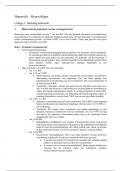
1.Management of Care (leadership, delegation, prioritization,
ethical/legal issues, disaster response, continuity of care)
2. Safety & Infection Control (standard vs. transmission
precautions, PPE sequence, device care, restraints, fall
prevention, fire safety, central lines, sterile technique)
3. Pharmacology (autonomic, cardiac, antibiotics, insulin,
anticoagulants, antidotes, psych meds)
4. Medical-Surgical Nursing I (cardiac + respiratory).
5. Medical-Surgical Nursing II (renal, neuro, endocrine).
6. Pediatric & Obstetric Nursing.
7. Psychiatric Nursing (therapeutic communication, crisis
intervention, depression, schizophrenia, bipolar, anxiety,
substance use, suicide precautions, psychopharmacology)
8. light review + practice set for the final prep day before the
ATI Predictor exam
,1) Leadership / Delegation — Single-best-answer MCQ
(Medium)
Stem: A 68-year-old male on a medical-surgical unit is 24 hours
post–left total hip arthroplasty. Setting: med-surg unit. Vitals: T
37.1°C, HR 82, BP 128/72, RR 16, SpO₂ 96% on room air. He
requests assistance to get out of bed to the bedside commode
for the first time. The team includes an RN, an LPN/LVN, and an
unlicensed assistive personnel (UAP). Which action should the
RN delegate to the LPN/LVN?
A. Teach the client how to use incentive spirometry.
B. Assist the client with first ambulation to bedside commode
using a gait belt and walker.
C. Perform the initial postoperative neurovascular assessment
of the operative leg.
D. Administer the PRN opioid analgesic to the client before
ambulation.
Metadata:
Topic/subtopic: Delegation — LPN/LVN scope for mobility
assistance
NCLEX Client Needs Category & Subcategory: Management of
Care — Assignment/Delegation
Cognitive level (Bloom): Application
Difficulty (1–5): 3
Learning objective: Decide which mobility-related tasks are
appropriate to delegate to an LPN/LVN following total hip
arthroplasty.
,Correct answer: B
Rationale (≈50 words): Assisting with ambulation using a gait
belt and walker is within many LPN/LVN skill scopes when the
client is stable and a plan is established. The RN retains
responsibilities for teaching (A), initial focused neurovascular
assessments (C), and medication administration decisions (D)
requiring nursing judgment and assessment prior to giving PRN
opioids.
Incorrect options:
A. Teach incentive spirometry — Teaching requires RN
education/assessment responsibilities.
C. Initial neurovascular assessment — Requires RN assessment
and interpretation for post-op baseline.
D. Administer PRN opioid — Medication administration may be
within LPN scope, but assessment and titration for ambulation
require RN judgment.
Test-taking tip: Match the task to the provider’s typical scope:
hands-on, stable procedures to LPN; initial assessments and
teaching to RN.
2) Leadership / Delegation — SATA (3 correct) (Hard)
Stem: A 45-year-old female with congestive heart failure (CHF)
is admitted to a step-down unit for acute exacerbation. Setting:
step-down unit. Vitals: T 36.8°C, HR 104, BP 138/88, RR 22,
SpO₂ 92% on 2 L NC. Current meds include IV furosemide 40 mg
, once, scheduled daily oral lisinopril, and oxygen. As the RN,
which tasks can you safely delegate to the UAP? Select all that
apply. (3 correct)
A. Measure and record hourly urine output for the next 4 hours.
B. Instruct the client on low-sodium meal choices prior to
discharge.
C. Assist the client to sit at edge of bed and help with
ambulation to chair.
D. Reassess the client's peripheral edema and document change
every shift.
E. Obtain and document the client’s weight on the facility scale
this morning.
Metadata:
Topic/subtopic: Delegation — UAP tasks for monitoring and
ADLs
NCLEX Client Needs Category & Subcategory: Management of
Care — Assignment/Delegation
Cognitive level (Bloom): Analysis
Difficulty (1–5): 5
Learning objective: Identify appropriate tasks for UAP that
support monitoring and activities of daily living in CHF.
Correct answers: A, C, E
Rationale (≈55 words): UAPs may measure and record
intake/output (A), assist with ambulation/ADLs (C), and obtain
weights (E) when protocols and measurement instructions are
clear. Teaching about low-sodium diets (B) is an RN/education
Pharmacology, Leadership, Med-Surg, Peds/OB, Psych +
Answer Key"
1.Management of Care (leadership, delegation, prioritization,
ethical/legal issues, disaster response, continuity of care)
2. Safety & Infection Control (standard vs. transmission
precautions, PPE sequence, device care, restraints, fall
prevention, fire safety, central lines, sterile technique)
3. Pharmacology (autonomic, cardiac, antibiotics, insulin,
anticoagulants, antidotes, psych meds)
4. Medical-Surgical Nursing I (cardiac + respiratory).
5. Medical-Surgical Nursing II (renal, neuro, endocrine).
6. Pediatric & Obstetric Nursing.
7. Psychiatric Nursing (therapeutic communication, crisis
intervention, depression, schizophrenia, bipolar, anxiety,
substance use, suicide precautions, psychopharmacology)
8. light review + practice set for the final prep day before the
ATI Predictor exam
,1) Leadership / Delegation — Single-best-answer MCQ
(Medium)
Stem: A 68-year-old male on a medical-surgical unit is 24 hours
post–left total hip arthroplasty. Setting: med-surg unit. Vitals: T
37.1°C, HR 82, BP 128/72, RR 16, SpO₂ 96% on room air. He
requests assistance to get out of bed to the bedside commode
for the first time. The team includes an RN, an LPN/LVN, and an
unlicensed assistive personnel (UAP). Which action should the
RN delegate to the LPN/LVN?
A. Teach the client how to use incentive spirometry.
B. Assist the client with first ambulation to bedside commode
using a gait belt and walker.
C. Perform the initial postoperative neurovascular assessment
of the operative leg.
D. Administer the PRN opioid analgesic to the client before
ambulation.
Metadata:
Topic/subtopic: Delegation — LPN/LVN scope for mobility
assistance
NCLEX Client Needs Category & Subcategory: Management of
Care — Assignment/Delegation
Cognitive level (Bloom): Application
Difficulty (1–5): 3
Learning objective: Decide which mobility-related tasks are
appropriate to delegate to an LPN/LVN following total hip
arthroplasty.
,Correct answer: B
Rationale (≈50 words): Assisting with ambulation using a gait
belt and walker is within many LPN/LVN skill scopes when the
client is stable and a plan is established. The RN retains
responsibilities for teaching (A), initial focused neurovascular
assessments (C), and medication administration decisions (D)
requiring nursing judgment and assessment prior to giving PRN
opioids.
Incorrect options:
A. Teach incentive spirometry — Teaching requires RN
education/assessment responsibilities.
C. Initial neurovascular assessment — Requires RN assessment
and interpretation for post-op baseline.
D. Administer PRN opioid — Medication administration may be
within LPN scope, but assessment and titration for ambulation
require RN judgment.
Test-taking tip: Match the task to the provider’s typical scope:
hands-on, stable procedures to LPN; initial assessments and
teaching to RN.
2) Leadership / Delegation — SATA (3 correct) (Hard)
Stem: A 45-year-old female with congestive heart failure (CHF)
is admitted to a step-down unit for acute exacerbation. Setting:
step-down unit. Vitals: T 36.8°C, HR 104, BP 138/88, RR 22,
SpO₂ 92% on 2 L NC. Current meds include IV furosemide 40 mg
, once, scheduled daily oral lisinopril, and oxygen. As the RN,
which tasks can you safely delegate to the UAP? Select all that
apply. (3 correct)
A. Measure and record hourly urine output for the next 4 hours.
B. Instruct the client on low-sodium meal choices prior to
discharge.
C. Assist the client to sit at edge of bed and help with
ambulation to chair.
D. Reassess the client's peripheral edema and document change
every shift.
E. Obtain and document the client’s weight on the facility scale
this morning.
Metadata:
Topic/subtopic: Delegation — UAP tasks for monitoring and
ADLs
NCLEX Client Needs Category & Subcategory: Management of
Care — Assignment/Delegation
Cognitive level (Bloom): Analysis
Difficulty (1–5): 5
Learning objective: Identify appropriate tasks for UAP that
support monitoring and activities of daily living in CHF.
Correct answers: A, C, E
Rationale (≈55 words): UAPs may measure and record
intake/output (A), assist with ambulation/ADLs (C), and obtain
weights (E) when protocols and measurement instructions are
clear. Teaching about low-sodium diets (B) is an RN/education