How are themes of love presented in “She Walks in Beauty” and “Valentine”?
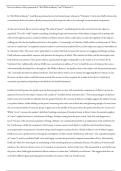
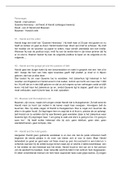
In “She Walks in Beauty”, Lord Byron professes his love for female beauty whereas in “Valentine”, Carol Ann Duffy criticises the
conventional cliches of romance; Both poems portray their respective take on love through unconventional comparisons.
At the start of stanza, Byron starts by stating “She walks in beauty”- establishing the fact the love he has for the subject is
superficial. The verb “walks” implies everything, including the gait and mannerism of the subject is elegant- this is perhaps also
reflected through the poem’s consistent rhythm and rhyme scheme which could mimic not only the regularity of the subject’s
walking pace but also her faultless perfection to the speaker. . Contrastingly, in Valentine, Duffy utilises an abrupt start of “Not a
red rose or a satin heart” to emphasise intense aversion to conventional symbols of love as both objects are typical commodities of
St. Valentine's Day. The noun “satin” particularly is a texture that links to luxury but is prone to snagging and damage- perhaps
Duffy references materialistic romance and questions the longevity of which. This criticism of cliche, and the interruptive start
both subvert conventions of love poems and has a particularly thought-evoking effect on the reader as it was written for St.
Valentine’s Day. Additionally, whereas Duffy uses a second-person address of “you” to build the sense of intimacy that comes
with emotionally-developed love, throughout “She Walks in Beauty”, the speaker refers to the subject with the personal pronoun
“she” and solely describes her physical attributes. This shrouds her with an air of mystery by suggesting Byron’s distance to her.
However, modern readers could feel unease towards this account as they recognize she is subjected to the love of physical,
voyeuristic speculation and perhaps even belittled to his lustful admiration.
Further into both poems, the speakers portray their perspectives on love with unorthodox comparisons. In Byron’s poem, he
expresses fervency for the subject’s beauty with a simile of “cloudless climes and starry skies”. This unusual imagery of darkness
instils a sense of extraordinary sublimity that the speaker finds her; the contrast of darkness and light suggests the subject’s beauty
is in perfect balance, whilst alluding to the poem’s mourning muse who wore a black dress and glistening spangles. Its stray from
the conventional similes of romantic poetry is again seen in the middle of the poem when the speaker describes her “raven tress”.
Whilst “raven” connotes the speaker’s dark hair- breaking stereotypes of feminine beauty in Byron’s time, the animal metaphor
of “raven” implies bad omens, and elements of danger. Perhaps coming from the poet coined “mad, bad and dangerous to
know” because of his notorious reputation of being a lothario- we could understand this as an implication of his zestful lust for
her. Furthermore, whilst his comparison of her beauty to nature seems to lack depth, it could also stem from Byron being a
second generation romantic poet- therefore using natural imagery to project his love. Similar to Byron’s use of darker imagery,
Duffy moves on to profess her love through the startling line of “[the onion] will blind you with tears”. The extended metaphor
of “onion” is used to symbolise Duffy’s love and hugely contrasts the previously-critiqued commodities of love. Alternatively,
Duffy also offers love with depth, by symbolising it with something that has a multitude of layers; The delivery of the line itself
reinforces the subversive theme to love as it is stated in an unromantic, matter-of-fact tone. This unusual link is seen further into
the poem, when Duffy again declaratively likens romance to onions that “will blind you with tears''. She suggests that love can
and will be difficult-again upsetting typical normalities of romance with near-brutal honesty.
In “She Walks in Beauty”, Lord Byron professes his love for female beauty whereas in “Valentine”, Carol Ann Duffy criticises the
conventional cliches of romance; Both poems portray their respective take on love through unconventional comparisons.
At the start of stanza, Byron starts by stating “She walks in beauty”- establishing the fact the love he has for the subject is
superficial. The verb “walks” implies everything, including the gait and mannerism of the subject is elegant- this is perhaps also
reflected through the poem’s consistent rhythm and rhyme scheme which could mimic not only the regularity of the subject’s
walking pace but also her faultless perfection to the speaker. . Contrastingly, in Valentine, Duffy utilises an abrupt start of “Not a
red rose or a satin heart” to emphasise intense aversion to conventional symbols of love as both objects are typical commodities of
St. Valentine's Day. The noun “satin” particularly is a texture that links to luxury but is prone to snagging and damage- perhaps
Duffy references materialistic romance and questions the longevity of which. This criticism of cliche, and the interruptive start
both subvert conventions of love poems and has a particularly thought-evoking effect on the reader as it was written for St.
Valentine’s Day. Additionally, whereas Duffy uses a second-person address of “you” to build the sense of intimacy that comes
with emotionally-developed love, throughout “She Walks in Beauty”, the speaker refers to the subject with the personal pronoun
“she” and solely describes her physical attributes. This shrouds her with an air of mystery by suggesting Byron’s distance to her.
However, modern readers could feel unease towards this account as they recognize she is subjected to the love of physical,
voyeuristic speculation and perhaps even belittled to his lustful admiration.
Further into both poems, the speakers portray their perspectives on love with unorthodox comparisons. In Byron’s poem, he
expresses fervency for the subject’s beauty with a simile of “cloudless climes and starry skies”. This unusual imagery of darkness
instils a sense of extraordinary sublimity that the speaker finds her; the contrast of darkness and light suggests the subject’s beauty
is in perfect balance, whilst alluding to the poem’s mourning muse who wore a black dress and glistening spangles. Its stray from
the conventional similes of romantic poetry is again seen in the middle of the poem when the speaker describes her “raven tress”.
Whilst “raven” connotes the speaker’s dark hair- breaking stereotypes of feminine beauty in Byron’s time, the animal metaphor
of “raven” implies bad omens, and elements of danger. Perhaps coming from the poet coined “mad, bad and dangerous to
know” because of his notorious reputation of being a lothario- we could understand this as an implication of his zestful lust for
her. Furthermore, whilst his comparison of her beauty to nature seems to lack depth, it could also stem from Byron being a
second generation romantic poet- therefore using natural imagery to project his love. Similar to Byron’s use of darker imagery,
Duffy moves on to profess her love through the startling line of “[the onion] will blind you with tears”. The extended metaphor
of “onion” is used to symbolise Duffy’s love and hugely contrasts the previously-critiqued commodities of love. Alternatively,
Duffy also offers love with depth, by symbolising it with something that has a multitude of layers; The delivery of the line itself
reinforces the subversive theme to love as it is stated in an unromantic, matter-of-fact tone. This unusual link is seen further into
the poem, when Duffy again declaratively likens romance to onions that “will blind you with tears''. She suggests that love can
and will be difficult-again upsetting typical normalities of romance with near-brutal honesty.