1|Page
HESI Medical-Surgical Exit Exam Version 1 for 2025
A 43-year-old homeless, malnourished female client with a
history of alcoholism is transferred to the ICU. She is placed on
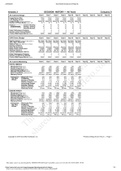
telemetry, and the rhythm strip shown is obtained. The nurse
palpates a heart rate of 160 beats/min, and the client's blood
pressure is 90/54 mm Hg. Based on these findings, which IV
medication should the nurse administer?
A.
Amiodarone (Cordarone)
B.
Magnesium sulfate
C.
Lidocaine (Xylocaine)
D.
Procainamide (Pronestyl) - ...ANSWER✓✓✓B.
Magnesium sulfate
Rationale:
Because the client has chronic alcoholism, she is likely to have
hypomagnesemia. (B) is the recommended drug for torsades de
pointes, which is a form of polymorphic ventricular tachycardia
(VT) usually associated with a prolonged QT interval that occurs
with hypomagnesemia. (A and D) increase the QT interval, which
,2|Page
can cause the torsades to worsen. (C) is the antiarrhythmic of
choice in most cases of drug-induced monomorphic VT, not
torsades.
A 62-year-old woman who lives alone tripped on a rug in her
home and fractured her hip. Which predisposing factor most
likely contributed to the fracture in the proximal end of her
femur?
A.
Failing eyesight resulting in an unsafe environment
B.
Renal osteodystrophy resulting from chronic kidney disease
(CKD)
C.
Osteoporosis resulting from declining hormone levels
D.
,3|Page
Cerebral vessel changes causing transient ischemic attacks -
...ANSWER✓✓✓C.
Osteoporosis resulting from declining hormone levels
The most common cause of a fractured hip in older women is
osteoporosis, resulting from reduced calcium in the bones as a
result of hormonal changes in the perimenopausal years (C). (A)
may or may not have contributed to the accident, but eye
changes were not involved in promoting the hip fracture. (B) is
not a common condition of older people but is associated with
CKD. Although (D) may result in transient ischemic attacks (TIAs)
or stroke, it will not result in fragility of the bones, as does
osteoporosis.
A 74-year-old male client is admitted to the intensive care unit
(ICU) with a diagnosis of respiratory failure secondary to
pneumonia. Currently, he is ventilator-dependent, with settings
of tidal volume (VT) of 750 mL and an intermittent mandatory
ventilation (IMV) rate of 10 breaths/min. Arterial blood gas (ABG)
results are as follows: pH, 7.48; Paco2, 30 mm Hg; Pao2, 64 mm
Hg; HCO3, 25 mEq/L; and Fio2, 0.80. Which intervention should
the nurse implement first?
A.
Increase the ventilator VT to 850 mL.
B.
, 4|Page
Decrease the ventilator IMV to a rate of 8 breaths/min.
C.
Reduce the Fio2 to 0.70 and redraw ABGs.
D.
Add 5 cm positive end-expiratory pressure (PEEP). -
...ANSWER✓✓✓D.
Add 5 cm positive end-expiratory pressure (PEEP).
Rationale:
Adding PEEP (D) helps improve oxygenation while reducing Fio2
to a less toxic level. (A, B, and C) will not result in improved
oxygenation and could cause further complications for this client,
who is experiencing respiratory failure.
A 77-year-old female client is admitted to the hospital with
confusion and anorexia of several days' duration. She has
symptoms of nausea and vomiting and is currently complaining
of a headache. The client's pulse rate is 43 beats/min. The nurse
is most concerned about the client's history related to which
medication?
A.
HESI Medical-Surgical Exit Exam Version 1 for 2025
A 43-year-old homeless, malnourished female client with a
history of alcoholism is transferred to the ICU. She is placed on
telemetry, and the rhythm strip shown is obtained. The nurse
palpates a heart rate of 160 beats/min, and the client's blood
pressure is 90/54 mm Hg. Based on these findings, which IV
medication should the nurse administer?
A.
Amiodarone (Cordarone)
B.
Magnesium sulfate
C.
Lidocaine (Xylocaine)
D.
Procainamide (Pronestyl) - ...ANSWER✓✓✓B.
Magnesium sulfate
Rationale:
Because the client has chronic alcoholism, she is likely to have
hypomagnesemia. (B) is the recommended drug for torsades de
pointes, which is a form of polymorphic ventricular tachycardia
(VT) usually associated with a prolonged QT interval that occurs
with hypomagnesemia. (A and D) increase the QT interval, which
,2|Page
can cause the torsades to worsen. (C) is the antiarrhythmic of
choice in most cases of drug-induced monomorphic VT, not
torsades.
A 62-year-old woman who lives alone tripped on a rug in her
home and fractured her hip. Which predisposing factor most
likely contributed to the fracture in the proximal end of her
femur?
A.
Failing eyesight resulting in an unsafe environment
B.
Renal osteodystrophy resulting from chronic kidney disease
(CKD)
C.
Osteoporosis resulting from declining hormone levels
D.
,3|Page
Cerebral vessel changes causing transient ischemic attacks -
...ANSWER✓✓✓C.
Osteoporosis resulting from declining hormone levels
The most common cause of a fractured hip in older women is
osteoporosis, resulting from reduced calcium in the bones as a
result of hormonal changes in the perimenopausal years (C). (A)
may or may not have contributed to the accident, but eye
changes were not involved in promoting the hip fracture. (B) is
not a common condition of older people but is associated with
CKD. Although (D) may result in transient ischemic attacks (TIAs)
or stroke, it will not result in fragility of the bones, as does
osteoporosis.
A 74-year-old male client is admitted to the intensive care unit
(ICU) with a diagnosis of respiratory failure secondary to
pneumonia. Currently, he is ventilator-dependent, with settings
of tidal volume (VT) of 750 mL and an intermittent mandatory
ventilation (IMV) rate of 10 breaths/min. Arterial blood gas (ABG)
results are as follows: pH, 7.48; Paco2, 30 mm Hg; Pao2, 64 mm
Hg; HCO3, 25 mEq/L; and Fio2, 0.80. Which intervention should
the nurse implement first?
A.
Increase the ventilator VT to 850 mL.
B.
, 4|Page
Decrease the ventilator IMV to a rate of 8 breaths/min.
C.
Reduce the Fio2 to 0.70 and redraw ABGs.
D.
Add 5 cm positive end-expiratory pressure (PEEP). -
...ANSWER✓✓✓D.
Add 5 cm positive end-expiratory pressure (PEEP).
Rationale:
Adding PEEP (D) helps improve oxygenation while reducing Fio2
to a less toxic level. (A, B, and C) will not result in improved
oxygenation and could cause further complications for this client,
who is experiencing respiratory failure.
A 77-year-old female client is admitted to the hospital with
confusion and anorexia of several days' duration. She has
symptoms of nausea and vomiting and is currently complaining
of a headache. The client's pulse rate is 43 beats/min. The nurse
is most concerned about the client's history related to which
medication?
A.