3.3.2 tropical biomes and sustainable development
Tropical Biomes
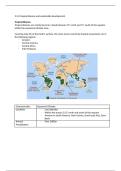
Tropical biomes are mainly found in a band between 15o north and 15o south of the equator
within the equatorial climate zone.
Covering only 6% of the Earth’s surface, the main areas covered by tropical ecosystems are in
the following regions:
- Amazon
- Central America
- Central Africa
- Indo-Malaysia
Characteristics Equatorial Climate
Locations - Low latitudes
- Within the tropics 23.5o north and south of the equator
- Amazon in South America, New Guinea, South-east Asia, Zaire
Basin
Annual - Over 2000m
Precipitation
, Characteristics Equatorial Climate
Temperature - Small range of mean monthly temperatures (26-28 oC )
Range - Constant high temperatures
- Diurnal (night) Range is about 7 oC
Seasons - No seasons – hot and wet all year round
Characteristics Equatorial Climate
Humidity - High, usuall over 75- 80 %
Soils - Many of the soils in the rainforest are latosols
- Due to leaching and rapid uptake of nutrients by plants the soils
are actually not very fertile
- Nutrients are concentrated in the upper topsoil
Characteristics Equatorial Climate
Biodiversity - Tropical biomes contain the highest biodiversity of plants and
animals on Earth
- Estimates range from 50% to 80% of the worlds plant and
animal species
- For example, 10km^2 of the tropical rainforest can contain up to
1500 flowering plants, 750 species of trees, 400 species of birds
and 150 species of butterflies.
Exploitation in Tropical Biomes
- Tropical biomes (particularly tropical rainforests), have some of the highest levels of
biodiversity of any ecosystem.
- The wet and warm climate means there is year-round growth. Natural capital
- Wide variety of plants provides a range of habitats and food.
- Rapid nutrient cycling increases plant growth
- Lack of human activity in the past meant that plants and animals have remained
undisturbed.
- The abiotic and biotic components in tropical rainforests are all interlinked and changes
in one can lead to changes in one can lead to changes in the others - this is known as
interdependence
Tropical Biomes
Tropical biomes are mainly found in a band between 15o north and 15o south of the equator
within the equatorial climate zone.
Covering only 6% of the Earth’s surface, the main areas covered by tropical ecosystems are in
the following regions:
- Amazon
- Central America
- Central Africa
- Indo-Malaysia
Characteristics Equatorial Climate
Locations - Low latitudes
- Within the tropics 23.5o north and south of the equator
- Amazon in South America, New Guinea, South-east Asia, Zaire
Basin
Annual - Over 2000m
Precipitation
, Characteristics Equatorial Climate
Temperature - Small range of mean monthly temperatures (26-28 oC )
Range - Constant high temperatures
- Diurnal (night) Range is about 7 oC
Seasons - No seasons – hot and wet all year round
Characteristics Equatorial Climate
Humidity - High, usuall over 75- 80 %
Soils - Many of the soils in the rainforest are latosols
- Due to leaching and rapid uptake of nutrients by plants the soils
are actually not very fertile
- Nutrients are concentrated in the upper topsoil
Characteristics Equatorial Climate
Biodiversity - Tropical biomes contain the highest biodiversity of plants and
animals on Earth
- Estimates range from 50% to 80% of the worlds plant and
animal species
- For example, 10km^2 of the tropical rainforest can contain up to
1500 flowering plants, 750 species of trees, 400 species of birds
and 150 species of butterflies.
Exploitation in Tropical Biomes
- Tropical biomes (particularly tropical rainforests), have some of the highest levels of
biodiversity of any ecosystem.
- The wet and warm climate means there is year-round growth. Natural capital
- Wide variety of plants provides a range of habitats and food.
- Rapid nutrient cycling increases plant growth
- Lack of human activity in the past meant that plants and animals have remained
undisturbed.
- The abiotic and biotic components in tropical rainforests are all interlinked and changes
in one can lead to changes in one can lead to changes in the others - this is known as
interdependence