Guidance:
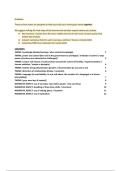
These revision notes are designed to help you build up to revising the novels together.
We suggest making A3 mind maps of key themes and narrative aspects where you include:
● Key moments / quotes from the start, middle and end of each novel. Choose quotes that
enable AO2 analysis.
● relevant contextual links for each novel (esp. political / literary context) (AO3)
● similarities/differences between the novels (AO4)
CONTENTS
THEME: knowledge (books/learning / who controls knowledge) 2
THEME: power and control (the role of the government or privileged / methods of control / ways
power structures are subverted or challenged) 3
THEME: science and misuse of science (fears around the control of fertility / experimentation /
human ambition / utopia vs dystopia) 4
THEME: Gender (inequality between genders / discrimination by sex and so on) 5
THEME: distortion of relationships (family / romantic) 6
THEME: Language (its unreliability, its use and abuse, the creation of a language) as a theme
(storytelling) 7
THEME: [your own idea if needed] 8
NARRATIVE ASPECT: use of narrative voice (who speaks - how and why) 9
NARRATIVE ASPECT: Handling of time (time shifts / structure) 10
NARRATIVE ASPECT: use of setting (place / location) 11
NARRATIVE ASPECT: use of symbolism 12
,THEME: knowledge (books/ learning / who controls knowledge)
The Handmaid’s Tale Frankenstein
Start: Start:
● ‘I knelt to examine the floor [..] in the “Expedition of discovery” Letter I
corner where the darkest shadow fell: Idea of journey and mystery, a sense of
Nolite te bastardes carborundorum’- (ch adventure and danger- someone who is taking
9) risks for their passion.
The words are not yet understandable,
however she is having a conversation- it “I am glowing with the enthusiasm of success.”
plays with power dynamics. The Letter II
emphasis of ‘darkest shadow’ ‘Glowing’ spiritual connotations, idea of angels.
intensifies the menacing nature or the Transgressive- the idea that the joy you are
power- it's alluring. meant to be able to get from god he gets from
his pursuits.
● ‘I can spend minutes, tens of minutes, “It was the secrets of heaven and earth that I
running my eyes over the print: FAITH’- desired to learn.” (ch 2)
repetition/listing depicts the extended ‘Secrets’ hold yourself in such a regard that you
period of time- the insatiability to believe worthy of aiming to understand the
placing your thoughts to words. ‘Faith’ inconceivable- transgressive and removed the
has a double meaning of religious ‘Omni’ nature/ and the Eternal nature of God.
connotations as well as Atwood's
importance of personal faith. (ch 10) “Was not as the other traveller seemed to be, a
savage inhabitant of some undiscovered island,
● ‘The Bible is kept locked up [...] It is an but an European” Letter IV
incendiary device.’ - metaphor suggests ‘Savage’ the lack of understanding of another
destructive power (fire / explosive) person or species, creates prejudice around
(ch15) them and causes a breach in justice. ‘European’
the blessed caucasians- Shelley disproves this
Middle: notion through the creature’s nature.
● ‘Books and books and books [...] it’s an
oasis of the forbidden’ - “One man's life or death were but a small price
The syndetic listing paired with the to pay for the acquirement of the knowledge.”
repetition of ‘book’ depicts the great The idea of obsession, a person's life is not
abundance of the books but also enough to quench the lust for information that
sounds like an alarm- as it is forbidden. plagues the man. Small price// Idea of weighing
The juxtaposition of ‘oasis’ and up and controlling people's lives like God.
‘forbidden’ depicts Offred’s
understanding of the dystopian nature “Pour a torrent of life into our dark world.” (ch
of Gilead. ‘Oasis’ can often be a part of 4)
a mirage- suggesting that the beauty Light Imagery- idea of knowledge, a place
present isn't sustainable and isn't real without knowledge is ful of darkness and evil.
but it foreshadows how she needs to
sit like water and will die without it. (Ch “Doomed by slavery to toil in the mines.” (ch 4)
23) The pursuit of knowledge leads to someone
● “What’s going on.” The use of the neglecting their god-given duties, and
statement is particular, it shows that becoming a slave to this pursuit- worshipping it
she believes that she has enough power rather than God- it is transgressive.
, to demand from the Commander, to
not question him but with certainty get “The energy of my purpose alone sustained
things. me.” (ch 4)
● “‘We know you have been.’ I ask her Same idea that it wasn’t his soul nor his love of
how ‘We just know’” (ch 34) The God or nature which sustained him only his
repetition is dismissive and challenging- pursuit.
it shows that those with information
can throw it's weights round and hide it “The beauty of the dream vanished, and
from those who do not. breathless horror” (ch 5)
Knowledge acts as a double-edged sword- gave
End: him purpose then destroyed his future.
● “He shows it to me slyly. I am to
understand” (ch 39) Middle:
Adverb, ‘slyly’ depicts the deliberation and his “I not in deed, but in effect, was the true
action, nuances with which how he acts- these murderer (...) I was a wreck.” (ch I)
nuances only possible through his esteemed The awareness of the truth, that knowledge
and increased knowledge. The monotonous skills and torments him- he is now full of a
nature of our voice, represents her passive act skin-crawling anger which remains.
within the language. “I found a fire (...) How strange, I thought, that
the same cause should produce such opposite
● “Has been convicted of rape…// He has effects.” (ch 3)
become an it.” (ch 43) Prometheus- knowledge gives rebellion, it
‘Rape’ there are a select few ‘buzzwords’ which allows for pain and light- this duality of light
seem to control them, cult-like. This shows that suggests nurture, the goodness or evil of fire is
they have been directed in a particular manner. dependent on the man who wields it.
‘It’ shows dehumanisation, showing that a
person's humanity is broken down deliberately. “Was man, indeed, at once so powerful, so
● “Into the darkness within; or else the virtuous, and magnificent, yet so vicious and
light.”(ch 46) base?” (ch 5)
The light imagery depicts both hope and Duality/contrast- once gain the idea of nature
dismay- a probability of existence and not a vs nurture- the creature’s evil is not innate
clear end. This plays into the dystopian genre. rather created- on instinct he will always be
WIthin knowledge it shows the benefit of lack good.
of knowledge, as it allows her to hope- clarity
can often remove faith. “Of what a strange nature is knowledge! It
clings to the mind, when it has once seized on
AO3 links: it, like a lichen o the rock.” (ch 5)
Censorship: Atwood believes that censoring The ‘linchen’ depicts a creature a leech sucking
scientific information is a bad thing to do. on the blood, on happiness and joy. Moreover,
Relates to 1984- where everything is censored it is unavoidable once understood.
and writing is forbidden.
Women in writing- literary context, feminist “What was I?” (ch 5/7)
theory, writers such as Simone de Beauvoir Knowledge- makes him question his purpose
wrote the ‘Second Sex’ in which women's and his existence within the world- Ignorance is
treatment within history, specifically through a bliss.
woman's point of view- a woman's story, an
inherently political experience. Moreover, the “Increase of knowledge only discovered to me
écriture féminine written by Hélène Cixous more clearly what a wretched outcast I was.”
states "Woman must write herself: must write (ch 7)
about women and bring women to writing, Separates him and empties his soul and
from which they have been driven away as connection with others.
, violently as from their bodies"
“An idea seized me that this little creature was
unprejudiced, and had lived too short a time (..)
“Hideous monster!” (ch 8)
Lack of knowledge suggests an attempt of
giving the benefit of the doubt by there is
institutional prejudice against the
disenfranchised.
End:
“Could I enter into a festival with this deadly
weight yet hanging round my neck, and bowing
me to the ground?”
Political novel, alludes to Victor being the save,
bow me to the ground, alludes to the loss of
status- from God-like to dragged against the
floor like the devil, the consequences of
transgression- slavery was common at this time.
‘deadly weight’ suggests his death- deas that
transgression only ends like this.
“The wretch saw me destroy the creature on
whose future existence he depended for
happiness, and, with a howl of devilish despair
and revenge, withdrew.” Vol 3 Ch 3
Nomenclature: idea of the creature
automatically dark and evil within hsi
perspective- or it's retrospective, he hates him
due to the death which blinds his real
emotions? ‘howl’ shows a guttural explosion of
emotion, depicts Victor as self aware of his
power and has used it against him, a last igting
blow? Or an act of cruel injustice.
“I no longer talked in the same incoherent
manner of my crimes; sufficient for me was the
consciousness of them.” (ch 5)
‘consciousness’ depicts mental torture, he is
drowning in guilt unconsciously and it fills him
with conscious anger- it's interesting, it's like
victor is a self aware gothic women- aware of
his lack of power and angry and dangerous due
to it.
“Wherever I am, the soothing voice of my
Elizabeth, and the conversation of Clerval, will
ever whisper in my ear.” (ch 7)
The very fact that Victor is ultimately a human,
a man, with familial ties fills him with power- he
dies to join them, the creature is alone in after
life also- Idea of Walton remembering
Frankenstein as a kind soul despite the
These revision notes are designed to help you build up to revising the novels together.
We suggest making A3 mind maps of key themes and narrative aspects where you include:
● Key moments / quotes from the start, middle and end of each novel. Choose quotes that
enable AO2 analysis.
● relevant contextual links for each novel (esp. political / literary context) (AO3)
● similarities/differences between the novels (AO4)
CONTENTS
THEME: knowledge (books/learning / who controls knowledge) 2
THEME: power and control (the role of the government or privileged / methods of control / ways
power structures are subverted or challenged) 3
THEME: science and misuse of science (fears around the control of fertility / experimentation /
human ambition / utopia vs dystopia) 4
THEME: Gender (inequality between genders / discrimination by sex and so on) 5
THEME: distortion of relationships (family / romantic) 6
THEME: Language (its unreliability, its use and abuse, the creation of a language) as a theme
(storytelling) 7
THEME: [your own idea if needed] 8
NARRATIVE ASPECT: use of narrative voice (who speaks - how and why) 9
NARRATIVE ASPECT: Handling of time (time shifts / structure) 10
NARRATIVE ASPECT: use of setting (place / location) 11
NARRATIVE ASPECT: use of symbolism 12
,THEME: knowledge (books/ learning / who controls knowledge)
The Handmaid’s Tale Frankenstein
Start: Start:
● ‘I knelt to examine the floor [..] in the “Expedition of discovery” Letter I
corner where the darkest shadow fell: Idea of journey and mystery, a sense of
Nolite te bastardes carborundorum’- (ch adventure and danger- someone who is taking
9) risks for their passion.
The words are not yet understandable,
however she is having a conversation- it “I am glowing with the enthusiasm of success.”
plays with power dynamics. The Letter II
emphasis of ‘darkest shadow’ ‘Glowing’ spiritual connotations, idea of angels.
intensifies the menacing nature or the Transgressive- the idea that the joy you are
power- it's alluring. meant to be able to get from god he gets from
his pursuits.
● ‘I can spend minutes, tens of minutes, “It was the secrets of heaven and earth that I
running my eyes over the print: FAITH’- desired to learn.” (ch 2)
repetition/listing depicts the extended ‘Secrets’ hold yourself in such a regard that you
period of time- the insatiability to believe worthy of aiming to understand the
placing your thoughts to words. ‘Faith’ inconceivable- transgressive and removed the
has a double meaning of religious ‘Omni’ nature/ and the Eternal nature of God.
connotations as well as Atwood's
importance of personal faith. (ch 10) “Was not as the other traveller seemed to be, a
savage inhabitant of some undiscovered island,
● ‘The Bible is kept locked up [...] It is an but an European” Letter IV
incendiary device.’ - metaphor suggests ‘Savage’ the lack of understanding of another
destructive power (fire / explosive) person or species, creates prejudice around
(ch15) them and causes a breach in justice. ‘European’
the blessed caucasians- Shelley disproves this
Middle: notion through the creature’s nature.
● ‘Books and books and books [...] it’s an
oasis of the forbidden’ - “One man's life or death were but a small price
The syndetic listing paired with the to pay for the acquirement of the knowledge.”
repetition of ‘book’ depicts the great The idea of obsession, a person's life is not
abundance of the books but also enough to quench the lust for information that
sounds like an alarm- as it is forbidden. plagues the man. Small price// Idea of weighing
The juxtaposition of ‘oasis’ and up and controlling people's lives like God.
‘forbidden’ depicts Offred’s
understanding of the dystopian nature “Pour a torrent of life into our dark world.” (ch
of Gilead. ‘Oasis’ can often be a part of 4)
a mirage- suggesting that the beauty Light Imagery- idea of knowledge, a place
present isn't sustainable and isn't real without knowledge is ful of darkness and evil.
but it foreshadows how she needs to
sit like water and will die without it. (Ch “Doomed by slavery to toil in the mines.” (ch 4)
23) The pursuit of knowledge leads to someone
● “What’s going on.” The use of the neglecting their god-given duties, and
statement is particular, it shows that becoming a slave to this pursuit- worshipping it
she believes that she has enough power rather than God- it is transgressive.
, to demand from the Commander, to
not question him but with certainty get “The energy of my purpose alone sustained
things. me.” (ch 4)
● “‘We know you have been.’ I ask her Same idea that it wasn’t his soul nor his love of
how ‘We just know’” (ch 34) The God or nature which sustained him only his
repetition is dismissive and challenging- pursuit.
it shows that those with information
can throw it's weights round and hide it “The beauty of the dream vanished, and
from those who do not. breathless horror” (ch 5)
Knowledge acts as a double-edged sword- gave
End: him purpose then destroyed his future.
● “He shows it to me slyly. I am to
understand” (ch 39) Middle:
Adverb, ‘slyly’ depicts the deliberation and his “I not in deed, but in effect, was the true
action, nuances with which how he acts- these murderer (...) I was a wreck.” (ch I)
nuances only possible through his esteemed The awareness of the truth, that knowledge
and increased knowledge. The monotonous skills and torments him- he is now full of a
nature of our voice, represents her passive act skin-crawling anger which remains.
within the language. “I found a fire (...) How strange, I thought, that
the same cause should produce such opposite
● “Has been convicted of rape…// He has effects.” (ch 3)
become an it.” (ch 43) Prometheus- knowledge gives rebellion, it
‘Rape’ there are a select few ‘buzzwords’ which allows for pain and light- this duality of light
seem to control them, cult-like. This shows that suggests nurture, the goodness or evil of fire is
they have been directed in a particular manner. dependent on the man who wields it.
‘It’ shows dehumanisation, showing that a
person's humanity is broken down deliberately. “Was man, indeed, at once so powerful, so
● “Into the darkness within; or else the virtuous, and magnificent, yet so vicious and
light.”(ch 46) base?” (ch 5)
The light imagery depicts both hope and Duality/contrast- once gain the idea of nature
dismay- a probability of existence and not a vs nurture- the creature’s evil is not innate
clear end. This plays into the dystopian genre. rather created- on instinct he will always be
WIthin knowledge it shows the benefit of lack good.
of knowledge, as it allows her to hope- clarity
can often remove faith. “Of what a strange nature is knowledge! It
clings to the mind, when it has once seized on
AO3 links: it, like a lichen o the rock.” (ch 5)
Censorship: Atwood believes that censoring The ‘linchen’ depicts a creature a leech sucking
scientific information is a bad thing to do. on the blood, on happiness and joy. Moreover,
Relates to 1984- where everything is censored it is unavoidable once understood.
and writing is forbidden.
Women in writing- literary context, feminist “What was I?” (ch 5/7)
theory, writers such as Simone de Beauvoir Knowledge- makes him question his purpose
wrote the ‘Second Sex’ in which women's and his existence within the world- Ignorance is
treatment within history, specifically through a bliss.
woman's point of view- a woman's story, an
inherently political experience. Moreover, the “Increase of knowledge only discovered to me
écriture féminine written by Hélène Cixous more clearly what a wretched outcast I was.”
states "Woman must write herself: must write (ch 7)
about women and bring women to writing, Separates him and empties his soul and
from which they have been driven away as connection with others.
, violently as from their bodies"
“An idea seized me that this little creature was
unprejudiced, and had lived too short a time (..)
“Hideous monster!” (ch 8)
Lack of knowledge suggests an attempt of
giving the benefit of the doubt by there is
institutional prejudice against the
disenfranchised.
End:
“Could I enter into a festival with this deadly
weight yet hanging round my neck, and bowing
me to the ground?”
Political novel, alludes to Victor being the save,
bow me to the ground, alludes to the loss of
status- from God-like to dragged against the
floor like the devil, the consequences of
transgression- slavery was common at this time.
‘deadly weight’ suggests his death- deas that
transgression only ends like this.
“The wretch saw me destroy the creature on
whose future existence he depended for
happiness, and, with a howl of devilish despair
and revenge, withdrew.” Vol 3 Ch 3
Nomenclature: idea of the creature
automatically dark and evil within hsi
perspective- or it's retrospective, he hates him
due to the death which blinds his real
emotions? ‘howl’ shows a guttural explosion of
emotion, depicts Victor as self aware of his
power and has used it against him, a last igting
blow? Or an act of cruel injustice.
“I no longer talked in the same incoherent
manner of my crimes; sufficient for me was the
consciousness of them.” (ch 5)
‘consciousness’ depicts mental torture, he is
drowning in guilt unconsciously and it fills him
with conscious anger- it's interesting, it's like
victor is a self aware gothic women- aware of
his lack of power and angry and dangerous due
to it.
“Wherever I am, the soothing voice of my
Elizabeth, and the conversation of Clerval, will
ever whisper in my ear.” (ch 7)
The very fact that Victor is ultimately a human,
a man, with familial ties fills him with power- he
dies to join them, the creature is alone in after
life also- Idea of Walton remembering
Frankenstein as a kind soul despite the