Producing DNA Fragments
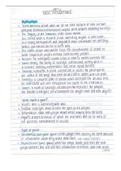
3 Methods effective forhighlyexpressedgene as a lotof mRNA
Reverse Transcriptase nointrons as spiringalready occurred to removeintrons
conversion of mRNA to complementary DNA cDNA requires revere transcriptase enzyme
mRNA acts as a template to produce a single stranded copyof cDNA using
reverse transcriptase
Singlestranded cDNA is isolatedby hydrolysis of the mRNA with an enzyme
Doublestranded DNA is formed on thetempate of the cDNA using DNApolymerase
Restriction Endonucleases
Each different restriction endonucleases cuts a DNAdoublestrand at a specific sequence of
bases called recognition sequence
n
onlyphosphodiester cutsphosphodiester
v u
lineofcut straight bond cut lineofartstaggered andHbond
leavesbluntendsbehind leaves stickyends behind
Gene Machine
Desiredsequence of nucleotide bases for thegene is fedinto a computer
iiwww.iiii
ii
computer designs a series of small overlapping singlestrandsof nucleotides called
oligonucleotides whichcan beassembled into thedesired gene
Oligonucleotides are assembled
by adding one nucleotide at a time in the required
sequence to make a gene without introns and DNApolymerase
polymerase chain reaction PCR replicatesgeneandconstructs the complementary strands
of nucleotides to make a double strand
Using sticky ends the gene can be inserted into a bacterial plasmid Cvector
, g y g Id l ss 1
Invivo Gene cloning the useof vectors
Sticky ends are important because of the same restriction endonuclease is used
to cut the DNA we can combine DNA of one organism withanother
Preparing DNA Fragment for Insertion
Involves addition of extralengths of DNA
RNA polymerase and TF must bind to the correct promoter
Terminator needs to be added at the other end to release RNA polymerase
and end transcription
Insertion of DNA Fragment into a vector
Plasmids circular lengths of DNA in bacteria are most common vectors
Plasmids always contains genes for antibiotic resistance
Restriction endonucleases are used at one of these antibiotic resistantgenes
to break plasmid loop
Same restriction endonuclease is used to cut DNA fragment so stickyends
are complementary
DNA ligase makes the joint permanent glue
Introduction ofDNA into Host cells
Plasmids made must be reintroduced into bacterialcells This is transformation
Plasmids and bacterial cells are mixedtogether in a medium containing Ca ions
Ca ions and changes in temperature makethe bacterialmembranepermeable
However not all the bacterial cells will have the DNA fragments fordesiredgenes
Only a few bacterial cells take up plasmidswhen the two are mixedtogether
Some plasmids would have closed up again without incorporating theDNA fragment
Some DNA fragment ends join together to formits own plasmid
Bacterial cells that has taken
up the plasmid would have antibiotic resistance as
3 Methods effective forhighlyexpressedgene as a lotof mRNA
Reverse Transcriptase nointrons as spiringalready occurred to removeintrons
conversion of mRNA to complementary DNA cDNA requires revere transcriptase enzyme
mRNA acts as a template to produce a single stranded copyof cDNA using
reverse transcriptase
Singlestranded cDNA is isolatedby hydrolysis of the mRNA with an enzyme
Doublestranded DNA is formed on thetempate of the cDNA using DNApolymerase
Restriction Endonucleases
Each different restriction endonucleases cuts a DNAdoublestrand at a specific sequence of
bases called recognition sequence
n
onlyphosphodiester cutsphosphodiester
v u
lineofcut straight bond cut lineofartstaggered andHbond
leavesbluntendsbehind leaves stickyends behind
Gene Machine
Desiredsequence of nucleotide bases for thegene is fedinto a computer
iiwww.iiii
ii
computer designs a series of small overlapping singlestrandsof nucleotides called
oligonucleotides whichcan beassembled into thedesired gene
Oligonucleotides are assembled
by adding one nucleotide at a time in the required
sequence to make a gene without introns and DNApolymerase
polymerase chain reaction PCR replicatesgeneandconstructs the complementary strands
of nucleotides to make a double strand
Using sticky ends the gene can be inserted into a bacterial plasmid Cvector
, g y g Id l ss 1
Invivo Gene cloning the useof vectors
Sticky ends are important because of the same restriction endonuclease is used
to cut the DNA we can combine DNA of one organism withanother
Preparing DNA Fragment for Insertion
Involves addition of extralengths of DNA
RNA polymerase and TF must bind to the correct promoter
Terminator needs to be added at the other end to release RNA polymerase
and end transcription
Insertion of DNA Fragment into a vector
Plasmids circular lengths of DNA in bacteria are most common vectors
Plasmids always contains genes for antibiotic resistance
Restriction endonucleases are used at one of these antibiotic resistantgenes
to break plasmid loop
Same restriction endonuclease is used to cut DNA fragment so stickyends
are complementary
DNA ligase makes the joint permanent glue
Introduction ofDNA into Host cells
Plasmids made must be reintroduced into bacterialcells This is transformation
Plasmids and bacterial cells are mixedtogether in a medium containing Ca ions
Ca ions and changes in temperature makethe bacterialmembranepermeable
However not all the bacterial cells will have the DNA fragments fordesiredgenes
Only a few bacterial cells take up plasmidswhen the two are mixedtogether
Some plasmids would have closed up again without incorporating theDNA fragment
Some DNA fragment ends join together to formits own plasmid
Bacterial cells that has taken
up the plasmid would have antibiotic resistance as