FINAL SUMMARY NEW MEDIA CHALLENGES
Lecture 1: Introduction
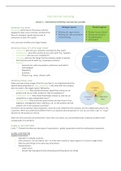
Over the past few years people changed in how they use media. There has been a
huge shift in people who watch television. Older generations prefer old media and
younger generations prefer online news.
Utopian worldview: : a community or society that possesses highly desirable or
nearly perfect qualities for its citizens
• Optimism about the future
• Strong belief in technology
• Cultural change to individualism
Dystopian worldview: a community or society that is undesirable or frightening
Some people describe that there is a 4th industrial revolution going on right now.
Where technology plays a big role. People think about AI, digital products,
technology and sustainability.
Lecture 2: An introduction to privacy
What is privacy? – privacy is defined by time, culture and individual differences
Time: ideas about privacy change over the time.
Culture:
• Individualistic cultures: it’s a fundamental right. The focus is on individual
rights, personal disclosure and self-expression.
(Scandinavia, UK, Germany, Netherlands)
• Collectivist cultures: more about group harmony instead of individual
harmony. The tendency to share with close communities.
(East Asia, Middle East)
Individual differences: people have different ideas about their privacy
1
,Three theoretical approaches to what privacy is:
1) Westin, 1967
The political- science approach: the way in which we interact with others.
Privacy is a basic need which helps us in interactions. It’s a dynamic process, it can
change between moments. And it’s non-monotonic, you can have too much and
too less.
Privacy is “the claim of individuals, groups, or institutions to determine for
themselves when, how, and to what extent information about them
is communicated to others.
There are four purposes for privacy
1. personal autonomy: people need to realize that you are your own person
2. self evaluation: freedom to think and evaluate, process information and make
plans
3. emotional release: have the freedom to have a role outside expectations
4. limited and protected boundaries: ability to limit who and has access to what
information
There are four states of privacy
1. solitude: no observations from others
2. intimacy: small group of people with a strong bond
3. reserve: the right to decide what to share and what not
4. anonymity: the right not to be identified
2) Altman, 1975
The psychological approach: privacy is for yourself. A selective control of access to
the self or to one's group
The privacy regulation theory: understanding why individuals alternate between
states of sociality and solitude.
Five elements of privacy:
1. Dynamic process: individuals regulate what they (do or not), want to share
differently, depending on the situational or social context.
2. Individuals vs group levels: it’s different on a individuals level than on a group
level.
3. Desired vs actual level: desired level of privacy might be lower/ higher than
individuals have in a given context.
2
,4. Non-monotonic: there is such a thing as both too much and not enough privacy.
There is an optimum level of privacy for every situation.
The sauna principle à there are two groups you feel conformable with going to a sauna. You
feel comfortable going to the sauna with friends or with complete strangers.
The same goes for informa9on. You feel comfortable sharing with friends or complete
strangers.
5. By directional (inwards and outwards): Individuals might have different sensitivities
for their actions towards others’ privacy and others’ actions towards them
3) Petronio, 2002
Communication approach: privacy as information ownership and sharing. We need
to regulates boundaries we put between ourselves and others, the amount of
control you have over the boundaries.
Context collapse: the flattening out of multiple distinct audiences in one’s social
network, such that people from different contexts become part of a singular group
of message recipients.
Article 1 - introduction to privacy online – Walther
Even before the internet existed, users wanted to share personal information in online
environments while simultaneously expecting this information to remain private. With
the rise of social media, this tension has only increased. Users enjoy the benefits of
self-disclosure, such as social interaction and connection, but at the same time, they
risk their information being shared or misused in undesirable ways.
There are three key factors contributing to online privacy issues:
1. The misconception that online communication is private – Many users
mistakenly believe that their messages are only visible to the intended
recipients, while online content often remains widely accessible.
2. The technical structure of the internet – The internet is designed as a "store-
and-forward" technology, meaning that information is stored and forwarded.
As a result, online communication can persist and be reshared, unlike
ephemeral offline conversations.
3. Confusion about legal protection – Many users assume that their online
communication is legally protected, similar to confidential conversations with
a doctor or lawyer. In reality, this protection applies only in specific cases and
not to most personal online interactions.
3
, A significant portion of privacy issues stems from the fact that people unconsciously
apply the same privacy expectations as in offline situations. Face-to-face
conversations, phone calls, and private gatherings are naturally temporary and limited
in access. Online communication, on the other hand, is often permanent and public,
leading to surprises and disappointments. This is evident in cases where students or
employees have been penalized due to compromising posts on social media.
Research shows that privacy protection on the internet is primarily a personal
responsibility. Rather than relying on laws or moral expectations from others, users
must become aware of their online footprint and learn how to protect themselves.
Privacy settings, carefully selecting online friends, and limiting personal disclosures
can help reduce risks.
Additionally, social media is discussed as a platform where users strategically manage
their self-image. While people enjoy sharing personal information to strengthen social
connections, this also puts their privacy at risk. Users adjust their self-presentation to
maintain a certain image, but this can paradoxically conflict with the "radical
transparency" of social networks, where shared information is easily disseminated and
difficult to retract.
In summary, the text highlights that online privacy issues are not new and that the
fundamental tensions between self-disclosure and privacy persist despite the
evolution of digital communication. User awareness and education play a crucial role
in protecting privacy, as legislation and technological solutions can only provide
limited protection. By gaining a better understanding of how the internet works and
the risks of online self-disclosure, users can make smarter choices to safeguard their
privacy.
• Privacy and self-disclosure: Users should be aware of how their online
behavior affects their privacy. This is especially relevant on social media, where
personal information is often shared without a clear understanding of who has
access to it. This can lead to unintended consequences, such as the use of
personal data by employers or institutions.
• Education as a solution: Instead of relying on laws or moral guidelines to
protect online privacy, researchers advocate for education on digital footprints.
Users should learn how to manage their privacy settings and better understand
the consequences of their online behavior.
4
Lecture 1: Introduction
Over the past few years people changed in how they use media. There has been a
huge shift in people who watch television. Older generations prefer old media and
younger generations prefer online news.
Utopian worldview: : a community or society that possesses highly desirable or
nearly perfect qualities for its citizens
• Optimism about the future
• Strong belief in technology
• Cultural change to individualism
Dystopian worldview: a community or society that is undesirable or frightening
Some people describe that there is a 4th industrial revolution going on right now.
Where technology plays a big role. People think about AI, digital products,
technology and sustainability.
Lecture 2: An introduction to privacy
What is privacy? – privacy is defined by time, culture and individual differences
Time: ideas about privacy change over the time.
Culture:
• Individualistic cultures: it’s a fundamental right. The focus is on individual
rights, personal disclosure and self-expression.
(Scandinavia, UK, Germany, Netherlands)
• Collectivist cultures: more about group harmony instead of individual
harmony. The tendency to share with close communities.
(East Asia, Middle East)
Individual differences: people have different ideas about their privacy
1
,Three theoretical approaches to what privacy is:
1) Westin, 1967
The political- science approach: the way in which we interact with others.
Privacy is a basic need which helps us in interactions. It’s a dynamic process, it can
change between moments. And it’s non-monotonic, you can have too much and
too less.
Privacy is “the claim of individuals, groups, or institutions to determine for
themselves when, how, and to what extent information about them
is communicated to others.
There are four purposes for privacy
1. personal autonomy: people need to realize that you are your own person
2. self evaluation: freedom to think and evaluate, process information and make
plans
3. emotional release: have the freedom to have a role outside expectations
4. limited and protected boundaries: ability to limit who and has access to what
information
There are four states of privacy
1. solitude: no observations from others
2. intimacy: small group of people with a strong bond
3. reserve: the right to decide what to share and what not
4. anonymity: the right not to be identified
2) Altman, 1975
The psychological approach: privacy is for yourself. A selective control of access to
the self or to one's group
The privacy regulation theory: understanding why individuals alternate between
states of sociality and solitude.
Five elements of privacy:
1. Dynamic process: individuals regulate what they (do or not), want to share
differently, depending on the situational or social context.
2. Individuals vs group levels: it’s different on a individuals level than on a group
level.
3. Desired vs actual level: desired level of privacy might be lower/ higher than
individuals have in a given context.
2
,4. Non-monotonic: there is such a thing as both too much and not enough privacy.
There is an optimum level of privacy for every situation.
The sauna principle à there are two groups you feel conformable with going to a sauna. You
feel comfortable going to the sauna with friends or with complete strangers.
The same goes for informa9on. You feel comfortable sharing with friends or complete
strangers.
5. By directional (inwards and outwards): Individuals might have different sensitivities
for their actions towards others’ privacy and others’ actions towards them
3) Petronio, 2002
Communication approach: privacy as information ownership and sharing. We need
to regulates boundaries we put between ourselves and others, the amount of
control you have over the boundaries.
Context collapse: the flattening out of multiple distinct audiences in one’s social
network, such that people from different contexts become part of a singular group
of message recipients.
Article 1 - introduction to privacy online – Walther
Even before the internet existed, users wanted to share personal information in online
environments while simultaneously expecting this information to remain private. With
the rise of social media, this tension has only increased. Users enjoy the benefits of
self-disclosure, such as social interaction and connection, but at the same time, they
risk their information being shared or misused in undesirable ways.
There are three key factors contributing to online privacy issues:
1. The misconception that online communication is private – Many users
mistakenly believe that their messages are only visible to the intended
recipients, while online content often remains widely accessible.
2. The technical structure of the internet – The internet is designed as a "store-
and-forward" technology, meaning that information is stored and forwarded.
As a result, online communication can persist and be reshared, unlike
ephemeral offline conversations.
3. Confusion about legal protection – Many users assume that their online
communication is legally protected, similar to confidential conversations with
a doctor or lawyer. In reality, this protection applies only in specific cases and
not to most personal online interactions.
3
, A significant portion of privacy issues stems from the fact that people unconsciously
apply the same privacy expectations as in offline situations. Face-to-face
conversations, phone calls, and private gatherings are naturally temporary and limited
in access. Online communication, on the other hand, is often permanent and public,
leading to surprises and disappointments. This is evident in cases where students or
employees have been penalized due to compromising posts on social media.
Research shows that privacy protection on the internet is primarily a personal
responsibility. Rather than relying on laws or moral expectations from others, users
must become aware of their online footprint and learn how to protect themselves.
Privacy settings, carefully selecting online friends, and limiting personal disclosures
can help reduce risks.
Additionally, social media is discussed as a platform where users strategically manage
their self-image. While people enjoy sharing personal information to strengthen social
connections, this also puts their privacy at risk. Users adjust their self-presentation to
maintain a certain image, but this can paradoxically conflict with the "radical
transparency" of social networks, where shared information is easily disseminated and
difficult to retract.
In summary, the text highlights that online privacy issues are not new and that the
fundamental tensions between self-disclosure and privacy persist despite the
evolution of digital communication. User awareness and education play a crucial role
in protecting privacy, as legislation and technological solutions can only provide
limited protection. By gaining a better understanding of how the internet works and
the risks of online self-disclosure, users can make smarter choices to safeguard their
privacy.
• Privacy and self-disclosure: Users should be aware of how their online
behavior affects their privacy. This is especially relevant on social media, where
personal information is often shared without a clear understanding of who has
access to it. This can lead to unintended consequences, such as the use of
personal data by employers or institutions.
• Education as a solution: Instead of relying on laws or moral guidelines to
protect online privacy, researchers advocate for education on digital footprints.
Users should learn how to manage their privacy settings and better understand
the consequences of their online behavior.
4