,Introductory Medical- n9
Surgical Nursing 11e Comprehensive Test Bank by Barbara K Timby,
n9 n9 n9 n9 n9 n9 n9 n9 n9 n9
Nancy E. Smith n9 n9
Pub. Date: September 2009
n9 n9 n9
Converted From Electronic Source - 11/7/2009 12:43:33 am
n9 n9 n9 n9 n9 n9 n9
Table of Contents n9 n9
Unit I n9
Nursing Roles and Responsibilities
n9 n9 n9 n
9 Unit II n9
Psychosocial Aspects of Client Care n9 n9 n9 n9
n9 Unit III Concepts of Health and Illness
n9 n9 n9 n9 n9
Unit IV Common Medical-Surgical Problems
n9 n9 n9
Unit V n9
Caring for Clients with Respiratory Disorders
n9 n9 n9 n9 n9 n9
Unit VI n9
Caring for Clients with Cardiovascular Disorder
n9 n9 n9 n9 n9
s
Unit VII Caring for Clients with Hematopoietic and Lymphatic Disorders
n9 n 9 n9 n9 n9 n9 n9 n9 n9 n9
Unit VIII Caring for Clients with Immune Disorders
n9 n9 n9 n9 n9 n9 n9
Unit IX n9
Caring for Clients with Neurologic Disorder
n9 n9 n9 n9 n9
s Unit X Caring for Clients with Sensory Problems
n9 n9 n9 n9 n9 n9 n9
Unit XI n9
Caring for Clients with Gastrointestinal Problem n9 n9 n9 n9 n9
s Unit XII Caring for Clients with Endocrine Problems
n9 n9 n 9 n9 n9 n9 n9 n9
Unit XIII Disturbances of Sexual Structures or Reproductive Function
n9 n9 n9 n9 n9 n9 n9 n9 n9
Unit XIV Caring for Clients with Urinary and Renal Problems
n9 n9 n9 n9 n9 n9 n9 n9 n9
Unit XV Caring for Clients with Musculoskeletal Problems U
n9 n 9 n9 n9 n9 n9 n9 n9
nit XVI Caring for Clients with Integumentary Problems App
n9 n9 n9 n9 n9 n9 n9 n9
endix: Answers n9
MULTIPLE CHOICE. n9
Choose the one alternative that best completes the stateme n9 n9 n9 n9 n9 n9 n9 n9
nt or answers the question.
n9 n9 n9 n9
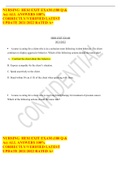
1) The nurse is assisting a postoperative client in using an incentive spirometer. Whi
n9 n9 n9 n9 n9 n9 n9 n9 n9 n9 n9 n9
ch of the following postoperative complications is this nurse attempting to avoid wi
n9 n9 n9 n9 n9 n9 n9 n9 n9 n9 n9 n9
th this client? 1)
n9 n9 n9 n9
A) Hemorrhage B) Pulmonary embolism n9 n9 n9
C)Deep vein thrombosis D) Atelectasis
n9 n9 n9 n9
,2) A client who is recovering from abdominal surgery has a penrose drain. Which
n9 n9 n9 n9 n9 n9 n9 n9 n9 n9 n9 n9 n9
of the following should the nurse include in the care of this client? 2)
n9 n9 n9 n9 n9 n9 n9 n9 n9 n9 n9 n9 n9 n9
A) Make sure there is a safety pin on the end of the drain.
n9 n9 n9 n9 n9 n9 n9 n9 n9 n9 n9 n9
B) Clean the wound with normal saline every two hours.
n9 n9 n9 n9 n9 n9 n9 n9
C) Empty the drain every 30 minutes.
n9 n9 n9 n9 n9
, D) Remove the drain four hours postoperatively.
n9 n9 n9 n9 n9
3) A client is in the recovery room. Which of the following members of the healthca
n9 n9 n9 n9 n9 n9 n9 n9 n9 n9 n9 n9 n9 n9
re team should the nurse contact regarding the client's level of pain control? 3)
n9 n9 n9 n9 n9 n9 n9 n9 n9 n9 n9 n9 n9 n9
A) The surgeon B) The anesthesiologist
n9 n9 n9 n9
C)The scrub nurse D) The circulating nurse
n9 n9 n9 n9 n9 n9
4) During the assessment of a postoperative client's bowel sounds, the nurse auscult
n9 n9 n9 n9 n9 n9 n9 n9 n9 n9 n9
ates high- n9
pitched sounds over all four abdominal quadrants. The nurse realizes this finding co
n9 n9 n9 n9 n9 n9 n9 n9 n9 n9 n9 n9
uld indicate: 4)
n9 n9 n9
A) Normal bowel function. B) The onset of stool.
n9 n9 n9 n9 n9 n9 n9
C)The onset of flatus. D) Paralytic ileus.
n9 n9 n9 n9 n9 n9
5) A client is being transferred from the operating room to the recovery room. T
n9 n9 n9 n9 n9 n9 n9 n9 n9 n9 n9 n9 n9
he nurse in the recovery room will be providing which phase of nursing care?
n9 n9 n9 n9 n9 n9 n9 n9 n9 n9 n9 n9 n9 n9
5)
A) Intraoperative B) Preoperative n9 n9
n9 C)Restorative D) Postoperative n9 n9
6) A client is being scheduled for surgery. Which of the following should be includ
n9 n9 n9 n9 n9 n9 n9 n9 n9 n9 n9 n9 n9
ed in the preoperative teaching provided by the nurse? 6)
n9 n9 n9 n9 n9 n9 n9 n9 n9 n9
A) The credentials of the anesthesiologist
n9 n9 n9 n9
B) Information concerning the surgical procedure which will be performed by t
n9 n9 n9 n9 n9 n9 n9 n9 n9 n9
he surgeon
n9
C) Cost of the proceduren9 n9 n9
D) Planned length of stay at the hospital n9 n9 n9 n9 n9 n9
7) A client is being positioned for a hip replacement procedure. In which of t
n9 n9 n9 n9 n9 n9 n9 n9 n9 n9 n9 n9 n9
he following positions will this client most likely be placed? 7)
n9 n9 n9 n9 n9 n9 n9 n9 n9 n9 n9
A) Dorsal recumbent B) Lateral chest
n9 n9 n9 n9
n9 C)Semi-sitting D) Prone n9 n9
8) A postoperative client tells the nurse, "A book I read said that I should not eat af
n9 n9 n9 n9 n9 n9 n9 n9 n9 n9 n9 n9 n9 n9 n9 n9
ter surgery for at least a week." Which of the following statements would be an a
n9 n9 n9 n9 n9 n9 n9 n9 n9 n9 n9 n9 n9 n9 n9
ppropriate nursing response? 8) n9 n9 n9 n9
A) "You don't need any food to heal anyway."
n9 n9 n9 n9 n9 n9 n9
B) "That's true." n9
C) "That's not true. You could get an infection in your stomach."
n9 n9 n9 n9 n9 n9 n9 n9 n9 n9
Surgical Nursing 11e Comprehensive Test Bank by Barbara K Timby,
n9 n9 n9 n9 n9 n9 n9 n9 n9 n9
Nancy E. Smith n9 n9
Pub. Date: September 2009
n9 n9 n9
Converted From Electronic Source - 11/7/2009 12:43:33 am
n9 n9 n9 n9 n9 n9 n9
Table of Contents n9 n9
Unit I n9
Nursing Roles and Responsibilities
n9 n9 n9 n
9 Unit II n9
Psychosocial Aspects of Client Care n9 n9 n9 n9
n9 Unit III Concepts of Health and Illness
n9 n9 n9 n9 n9
Unit IV Common Medical-Surgical Problems
n9 n9 n9
Unit V n9
Caring for Clients with Respiratory Disorders
n9 n9 n9 n9 n9 n9
Unit VI n9
Caring for Clients with Cardiovascular Disorder
n9 n9 n9 n9 n9
s
Unit VII Caring for Clients with Hematopoietic and Lymphatic Disorders
n9 n 9 n9 n9 n9 n9 n9 n9 n9 n9
Unit VIII Caring for Clients with Immune Disorders
n9 n9 n9 n9 n9 n9 n9
Unit IX n9
Caring for Clients with Neurologic Disorder
n9 n9 n9 n9 n9
s Unit X Caring for Clients with Sensory Problems
n9 n9 n9 n9 n9 n9 n9
Unit XI n9
Caring for Clients with Gastrointestinal Problem n9 n9 n9 n9 n9
s Unit XII Caring for Clients with Endocrine Problems
n9 n9 n 9 n9 n9 n9 n9 n9
Unit XIII Disturbances of Sexual Structures or Reproductive Function
n9 n9 n9 n9 n9 n9 n9 n9 n9
Unit XIV Caring for Clients with Urinary and Renal Problems
n9 n9 n9 n9 n9 n9 n9 n9 n9
Unit XV Caring for Clients with Musculoskeletal Problems U
n9 n 9 n9 n9 n9 n9 n9 n9
nit XVI Caring for Clients with Integumentary Problems App
n9 n9 n9 n9 n9 n9 n9 n9
endix: Answers n9
MULTIPLE CHOICE. n9
Choose the one alternative that best completes the stateme n9 n9 n9 n9 n9 n9 n9 n9
nt or answers the question.
n9 n9 n9 n9
1) The nurse is assisting a postoperative client in using an incentive spirometer. Whi
n9 n9 n9 n9 n9 n9 n9 n9 n9 n9 n9 n9
ch of the following postoperative complications is this nurse attempting to avoid wi
n9 n9 n9 n9 n9 n9 n9 n9 n9 n9 n9 n9
th this client? 1)
n9 n9 n9 n9
A) Hemorrhage B) Pulmonary embolism n9 n9 n9
C)Deep vein thrombosis D) Atelectasis
n9 n9 n9 n9
,2) A client who is recovering from abdominal surgery has a penrose drain. Which
n9 n9 n9 n9 n9 n9 n9 n9 n9 n9 n9 n9 n9
of the following should the nurse include in the care of this client? 2)
n9 n9 n9 n9 n9 n9 n9 n9 n9 n9 n9 n9 n9 n9
A) Make sure there is a safety pin on the end of the drain.
n9 n9 n9 n9 n9 n9 n9 n9 n9 n9 n9 n9
B) Clean the wound with normal saline every two hours.
n9 n9 n9 n9 n9 n9 n9 n9
C) Empty the drain every 30 minutes.
n9 n9 n9 n9 n9
, D) Remove the drain four hours postoperatively.
n9 n9 n9 n9 n9
3) A client is in the recovery room. Which of the following members of the healthca
n9 n9 n9 n9 n9 n9 n9 n9 n9 n9 n9 n9 n9 n9
re team should the nurse contact regarding the client's level of pain control? 3)
n9 n9 n9 n9 n9 n9 n9 n9 n9 n9 n9 n9 n9 n9
A) The surgeon B) The anesthesiologist
n9 n9 n9 n9
C)The scrub nurse D) The circulating nurse
n9 n9 n9 n9 n9 n9
4) During the assessment of a postoperative client's bowel sounds, the nurse auscult
n9 n9 n9 n9 n9 n9 n9 n9 n9 n9 n9
ates high- n9
pitched sounds over all four abdominal quadrants. The nurse realizes this finding co
n9 n9 n9 n9 n9 n9 n9 n9 n9 n9 n9 n9
uld indicate: 4)
n9 n9 n9
A) Normal bowel function. B) The onset of stool.
n9 n9 n9 n9 n9 n9 n9
C)The onset of flatus. D) Paralytic ileus.
n9 n9 n9 n9 n9 n9
5) A client is being transferred from the operating room to the recovery room. T
n9 n9 n9 n9 n9 n9 n9 n9 n9 n9 n9 n9 n9
he nurse in the recovery room will be providing which phase of nursing care?
n9 n9 n9 n9 n9 n9 n9 n9 n9 n9 n9 n9 n9 n9
5)
A) Intraoperative B) Preoperative n9 n9
n9 C)Restorative D) Postoperative n9 n9
6) A client is being scheduled for surgery. Which of the following should be includ
n9 n9 n9 n9 n9 n9 n9 n9 n9 n9 n9 n9 n9
ed in the preoperative teaching provided by the nurse? 6)
n9 n9 n9 n9 n9 n9 n9 n9 n9 n9
A) The credentials of the anesthesiologist
n9 n9 n9 n9
B) Information concerning the surgical procedure which will be performed by t
n9 n9 n9 n9 n9 n9 n9 n9 n9 n9
he surgeon
n9
C) Cost of the proceduren9 n9 n9
D) Planned length of stay at the hospital n9 n9 n9 n9 n9 n9
7) A client is being positioned for a hip replacement procedure. In which of t
n9 n9 n9 n9 n9 n9 n9 n9 n9 n9 n9 n9 n9
he following positions will this client most likely be placed? 7)
n9 n9 n9 n9 n9 n9 n9 n9 n9 n9 n9
A) Dorsal recumbent B) Lateral chest
n9 n9 n9 n9
n9 C)Semi-sitting D) Prone n9 n9
8) A postoperative client tells the nurse, "A book I read said that I should not eat af
n9 n9 n9 n9 n9 n9 n9 n9 n9 n9 n9 n9 n9 n9 n9 n9
ter surgery for at least a week." Which of the following statements would be an a
n9 n9 n9 n9 n9 n9 n9 n9 n9 n9 n9 n9 n9 n9 n9
ppropriate nursing response? 8) n9 n9 n9 n9
A) "You don't need any food to heal anyway."
n9 n9 n9 n9 n9 n9 n9
B) "That's true." n9
C) "That's not true. You could get an infection in your stomach."
n9 n9 n9 n9 n9 n9 n9 n9 n9 n9