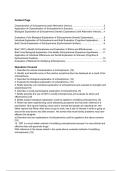
Content Page
Characteristics of Schizophrenia (with Alternative Version)………………………………….…2
Application of Characteristics of Schizophrenia to Scenario……………………………………4
Biological Explanation of Schizophrenia (Genetic Explanation) (with Alternative Version)....4
Evaluation of the Biological Explanation of Schizophrenia (Genetic Explanation)..………….6
Individual Explanation of Schizophrenia and Brief Evaluation (Cognitive Explanation)....…..8
Brief: Social Explanation of Schizophrenia (Dysfunctional Families)...………………………..9
Brief: CBT to Modify Schizophrenia and Evaluation of Ethics and Effectiveness…………...10
Brief: How Biological Explanation Can Modify Schizophrenia (Dopamine Hypothesis)........11
Application of Individual Differences and Social Explanation to Scenario (Cognitive &
Dysfunctional Families)....………………………………………………………………………....12
Evaluation of Methods for Modifying Schizophrenia…………………………………………....14
Questions Covered
1. Describe the clinical characteristics of schizophrenia. [10]
2. Identify and describe some of the positive symptoms Elyn has displayed as a result of her
schizophrenia.
3. Describe the biological explanation of schizophrenia. (10)
4. Evaluate the biological explanation of schizophrenia. (10)
5. Briefly describe one individual explanation of schizophrenia and evaluate its strengths and
weaknesses [10]
6. Describe a social psychological explanation of schizophrenia. (5)
7. Briefly describe the use of CBT to modify schizophrenia and evaluate its ethics and
effectiveness [10]
8. Briefly explain biological explanation could be applied to modifying schizophrenia. [5]
9. Rhian has been experiencing some distressing symptoms and has been referred to a
psychiatrist. She reports hearing voices and is worried that people are watching her. Her
father reports that Rhian often does not go to work, has a lack of interest in what is going on
around her and shows very little emotion. He worries that recent family problems may have
affected his daughter.
a) Describe how two explanations of schizophrenia could be applied to the above scenario
[15]
10. ‘CBT is a much better method of modifying schizophrenia because it is more ethical and
effective than anti-psychotic drugs.’
With reference to the issues raised in the quote above, evaluate methods of modifying
schizophrenia. [15]
, 1. Describe the clinical characteristics of schizophrenia. [10]
Schizophrenia is a serious mental disorder that includes psychosis, where the individual
struggles to differentiate reality and their imagination. The DSM-5 (Diagnostic and Statistical
Manual of Mental Disorders) requires one positive symptom for diagnoses, whereas the ICD
(International Classification of the Causes of the Disease and Death) requires two or more
positive symptoms, unless there are bizarre delusions or the presence of a voice
commenting on the individual’s behaviour.
There are a few major subtypes of schizophrenia, such as the disorganised type, catatonic
type (includes stiff, repetitive or unnecessary motor controls), paranoid type, undifferentiated
type (includes variation within symptoms) and residual type (where negative symptoms are
only present). The disorganised type includes disorganised speech or behaviour in a way
that impairs their daily communication with others. The paranoid type is a preoccupation with
one of their hallucinations and delusions that may cause them to have compulsions.
There are three main phases of schizophrenia: the prodromal phase, where most of the
symptoms start to form. Then, there is the active phase, where symptoms become
increasingly obvious to the people around them and can last months to a lifetime. Lastly, the
residual phase happens when the obvious symptoms start to subside, which usually
happens during treatment.
Schizophrenia is usually characterised by positive, negative and secondary symptoms.
Positive symptoms include delusions, hallucinations or disorganised thoughts. These are
symptoms that the individual wouldn’t have without the disorder. Delusions are beliefs that
don’t change in the presence of conflicting information. For example, a schizophrenic may
have nihilistic delusions, where they believe a major catastrophe will happen, persecutory
delusions, where they believe they will be harmed, or referential delusions, where they
believe others are talking about them. Hallucinations are perception-like experiences that
occur without an external stimulus. As for hallucinations, they may experience sensory
perceptions that others do not, such as visual hallucinations, where they see someone
talking to them. Other types of hallucinations, like auditory or tactile hallucinations (where the
individual feels someone touching them). For it to be considered a hallucination, it must not
occur when falling asleep (hypnagogic) or when waking up (hypnopompic).
A common symptom is called word salad, where schizophrenics loosely associate certain
words with others, quickly switch from one topic to another, or bring up unrelated topics to
the general theme of the conversation. It creates responses that are disorganised enough to
effectively impair their communication to a great extent. It also follows with disorganized
behaviour, where the individual acts bizarrely or very characteristically different from social
expectations. There is also abnormal behaviour that’s catatonic, which can be mutism in the
way they lack responses to others, a stiff motor control or an unwillingness to listen to
instructions. This usually happens in goal-orientated tasks and disables some
schizophrenics from carrying out their responsibilities. It may also include seemingly childish
or silly behaviour such as the echoing of speech or movement, called echolalia and
echopraxia.
Characteristics of Schizophrenia (with Alternative Version)………………………………….…2
Application of Characteristics of Schizophrenia to Scenario……………………………………4
Biological Explanation of Schizophrenia (Genetic Explanation) (with Alternative Version)....4
Evaluation of the Biological Explanation of Schizophrenia (Genetic Explanation)..………….6
Individual Explanation of Schizophrenia and Brief Evaluation (Cognitive Explanation)....…..8
Brief: Social Explanation of Schizophrenia (Dysfunctional Families)...………………………..9
Brief: CBT to Modify Schizophrenia and Evaluation of Ethics and Effectiveness…………...10
Brief: How Biological Explanation Can Modify Schizophrenia (Dopamine Hypothesis)........11
Application of Individual Differences and Social Explanation to Scenario (Cognitive &
Dysfunctional Families)....………………………………………………………………………....12
Evaluation of Methods for Modifying Schizophrenia…………………………………………....14
Questions Covered
1. Describe the clinical characteristics of schizophrenia. [10]
2. Identify and describe some of the positive symptoms Elyn has displayed as a result of her
schizophrenia.
3. Describe the biological explanation of schizophrenia. (10)
4. Evaluate the biological explanation of schizophrenia. (10)
5. Briefly describe one individual explanation of schizophrenia and evaluate its strengths and
weaknesses [10]
6. Describe a social psychological explanation of schizophrenia. (5)
7. Briefly describe the use of CBT to modify schizophrenia and evaluate its ethics and
effectiveness [10]
8. Briefly explain biological explanation could be applied to modifying schizophrenia. [5]
9. Rhian has been experiencing some distressing symptoms and has been referred to a
psychiatrist. She reports hearing voices and is worried that people are watching her. Her
father reports that Rhian often does not go to work, has a lack of interest in what is going on
around her and shows very little emotion. He worries that recent family problems may have
affected his daughter.
a) Describe how two explanations of schizophrenia could be applied to the above scenario
[15]
10. ‘CBT is a much better method of modifying schizophrenia because it is more ethical and
effective than anti-psychotic drugs.’
With reference to the issues raised in the quote above, evaluate methods of modifying
schizophrenia. [15]
, 1. Describe the clinical characteristics of schizophrenia. [10]
Schizophrenia is a serious mental disorder that includes psychosis, where the individual
struggles to differentiate reality and their imagination. The DSM-5 (Diagnostic and Statistical
Manual of Mental Disorders) requires one positive symptom for diagnoses, whereas the ICD
(International Classification of the Causes of the Disease and Death) requires two or more
positive symptoms, unless there are bizarre delusions or the presence of a voice
commenting on the individual’s behaviour.
There are a few major subtypes of schizophrenia, such as the disorganised type, catatonic
type (includes stiff, repetitive or unnecessary motor controls), paranoid type, undifferentiated
type (includes variation within symptoms) and residual type (where negative symptoms are
only present). The disorganised type includes disorganised speech or behaviour in a way
that impairs their daily communication with others. The paranoid type is a preoccupation with
one of their hallucinations and delusions that may cause them to have compulsions.
There are three main phases of schizophrenia: the prodromal phase, where most of the
symptoms start to form. Then, there is the active phase, where symptoms become
increasingly obvious to the people around them and can last months to a lifetime. Lastly, the
residual phase happens when the obvious symptoms start to subside, which usually
happens during treatment.
Schizophrenia is usually characterised by positive, negative and secondary symptoms.
Positive symptoms include delusions, hallucinations or disorganised thoughts. These are
symptoms that the individual wouldn’t have without the disorder. Delusions are beliefs that
don’t change in the presence of conflicting information. For example, a schizophrenic may
have nihilistic delusions, where they believe a major catastrophe will happen, persecutory
delusions, where they believe they will be harmed, or referential delusions, where they
believe others are talking about them. Hallucinations are perception-like experiences that
occur without an external stimulus. As for hallucinations, they may experience sensory
perceptions that others do not, such as visual hallucinations, where they see someone
talking to them. Other types of hallucinations, like auditory or tactile hallucinations (where the
individual feels someone touching them). For it to be considered a hallucination, it must not
occur when falling asleep (hypnagogic) or when waking up (hypnopompic).
A common symptom is called word salad, where schizophrenics loosely associate certain
words with others, quickly switch from one topic to another, or bring up unrelated topics to
the general theme of the conversation. It creates responses that are disorganised enough to
effectively impair their communication to a great extent. It also follows with disorganized
behaviour, where the individual acts bizarrely or very characteristically different from social
expectations. There is also abnormal behaviour that’s catatonic, which can be mutism in the
way they lack responses to others, a stiff motor control or an unwillingness to listen to
instructions. This usually happens in goal-orientated tasks and disables some
schizophrenics from carrying out their responsibilities. It may also include seemingly childish
or silly behaviour such as the echoing of speech or movement, called echolalia and
echopraxia.