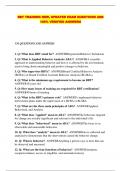
RBT TRAINING NEW, UPDATED EXAM QUESTIONS AND
100% VERIFIED ANSWERS
350 QUESTIONS AND ANSWERS
1. Q: What does RBT stand for? ANSWERRegistered Behavior Technician
2. Q: What is Applied Behavior Analysis (ABA)? ANSWERA scientific
approach to understanding behavior and how it is affected by the environment,
used to bring about meaningful and positive changes in behavior.
3. Q: Who supervises RBTs? ANSWERBoard Certified Behavior Analysts
(BCBAs) or Board Certified Assistant Behavior Analysts (BCaBAs)
4. Q: What is the minimum age requirement to become an RBT?
ANSWER18 years old
5. Q: How many hours of training are required for RBT certification?
ANSWER40 hours of training
6. Q: What is the RBT's primary role? ANSWERTo implement behavior
intervention plans under the supervision of a BCBA or BCaBA
7. Q: What are the three main principles of ABA? ANSWERApplied,
Behavioral, and Analytic
8. Q: What does "applied" mean in ABA? ANSWERThe behaviors targeted
for change are socially significant and relevant to the individual's life
9. Q: What does "behavioral" mean in ABA? ANSWERThe focus is on
observable and measurable behaviors
10. Q: What does "analytic" mean in ABA? ANSWERData is collected and
analyzed to demonstrate that the intervention caused the behavior change
11. Q: What is behavior? ANSWERAnything a person says or does that can
be observed and measured
12. Q: What are the four functions of behavior? ANSWERAttention,
escape/avoidance, access to tangibles, and automatic/sensory
,13. Q: What is reinforcement? ANSWERA process that increases the
likelihood that a behavior will occur again in the future
14. Q: What is punishment? ANSWERA process that decreases the
likelihood that a behavior will occur again in the future
15. Q: What is positive reinforcement? ANSWERAdding something
desirable after a behavior to increase the likelihood it will occur again
16. Q: What is negative reinforcement? ANSWERRemoving something
undesirable after a behavior to increase the likelihood it will occur again
17. Q: What is positive punishment? ANSWERAdding something
undesirable after a behavior to decrease the likelihood it will occur again
18. Q: What is negative punishment? ANSWERRemoving something
desirable after a behavior to decrease the likelihood it will occur again
19. Q: What is extinction? ANSWERWithholding reinforcement for a
previously reinforced behavior to decrease its occurrence
20. Q: What is an antecedent? ANSWERSomething that occurs before a
behavior that may trigger or set the occasion for the behavior
21. Q: What is a consequence? ANSWERSomething that occurs after a
behavior that affects the likelihood of the behavior occurring again
22. Q: What is the ABC model? ANSWERAntecedent-Behavior-
Consequence; a framework for understanding behavior
23. Q: What is a target behavior? ANSWERA specific behavior that is the
focus of a behavior change program
24. Q: What is baseline data? ANSWERData collected before intervention
begins to establish the current level of behavior
25. Q: What is generalization? ANSWERThe occurrence of a behavior in the
presence of stimuli that were not present during training
26. Q: What is maintenance? ANSWERThe continued occurrence of a
behavior after intervention has been withdrawn
27. Q: What is stimulus control? ANSWERWhen a behavior occurs in the
presence of certain stimuli but not others
28. Q: What is a discriminative stimulus (SD)? ANSWERA stimulus that
signals that reinforcement is available for a particular behavior
, 29. Q: What is shaping? ANSWERGradually changing behavior by
reinforcing successive approximations toward a target behavior
30. Q: What is chaining? ANSWERTeaching a sequence of behaviors by
linking them together
31. Q: What is forward chaining? ANSWERTeaching the first step of a chain
first, then adding subsequent steps
32. Q: What is backward chaining? ANSWERTeaching the last step of a
chain first, then adding previous steps
33. Q: What is prompting? ANSWERProviding assistance to help someone
perform a behavior correctly
34. Q: What is fading? ANSWERGradually reducing prompts to promote
independence
35. Q: What is a preference assessment? ANSWERA systematic way of
identifying items or activities that an individual finds reinforcing
36. Q: What is task analysis? ANSWERBreaking down a complex skill into
smaller, teachable steps
37. Q: What is discrete trial training (DTT)? ANSWERA structured
teaching method that breaks skills into small components taught one at a time
38. Q: What is natural environment training (NET)? ANSWERTeaching
skills in naturally occurring situations and environments
39. Q: What is incidental teaching? ANSWERUsing naturally occurring
opportunities to teach skills
40. Q: What is errorless learning? ANSWERA teaching method that
provides prompts to prevent errors from occurring
41. Q: What is error correction? ANSWERThe procedure used when a
learner makes an incorrect response
42. Q: What is mastery criteria? ANSWERThe predetermined level of
performance that indicates a skill has been learned
43. Q: What is a replacement behavior? ANSWERA more appropriate
behavior that serves the same function as a problem behavior
44. Q: What is a functional behavior assessment (FBA)? ANSWERA
process used to identify the function or purpose of a problem behavior
100% VERIFIED ANSWERS
350 QUESTIONS AND ANSWERS
1. Q: What does RBT stand for? ANSWERRegistered Behavior Technician
2. Q: What is Applied Behavior Analysis (ABA)? ANSWERA scientific
approach to understanding behavior and how it is affected by the environment,
used to bring about meaningful and positive changes in behavior.
3. Q: Who supervises RBTs? ANSWERBoard Certified Behavior Analysts
(BCBAs) or Board Certified Assistant Behavior Analysts (BCaBAs)
4. Q: What is the minimum age requirement to become an RBT?
ANSWER18 years old
5. Q: How many hours of training are required for RBT certification?
ANSWER40 hours of training
6. Q: What is the RBT's primary role? ANSWERTo implement behavior
intervention plans under the supervision of a BCBA or BCaBA
7. Q: What are the three main principles of ABA? ANSWERApplied,
Behavioral, and Analytic
8. Q: What does "applied" mean in ABA? ANSWERThe behaviors targeted
for change are socially significant and relevant to the individual's life
9. Q: What does "behavioral" mean in ABA? ANSWERThe focus is on
observable and measurable behaviors
10. Q: What does "analytic" mean in ABA? ANSWERData is collected and
analyzed to demonstrate that the intervention caused the behavior change
11. Q: What is behavior? ANSWERAnything a person says or does that can
be observed and measured
12. Q: What are the four functions of behavior? ANSWERAttention,
escape/avoidance, access to tangibles, and automatic/sensory
,13. Q: What is reinforcement? ANSWERA process that increases the
likelihood that a behavior will occur again in the future
14. Q: What is punishment? ANSWERA process that decreases the
likelihood that a behavior will occur again in the future
15. Q: What is positive reinforcement? ANSWERAdding something
desirable after a behavior to increase the likelihood it will occur again
16. Q: What is negative reinforcement? ANSWERRemoving something
undesirable after a behavior to increase the likelihood it will occur again
17. Q: What is positive punishment? ANSWERAdding something
undesirable after a behavior to decrease the likelihood it will occur again
18. Q: What is negative punishment? ANSWERRemoving something
desirable after a behavior to decrease the likelihood it will occur again
19. Q: What is extinction? ANSWERWithholding reinforcement for a
previously reinforced behavior to decrease its occurrence
20. Q: What is an antecedent? ANSWERSomething that occurs before a
behavior that may trigger or set the occasion for the behavior
21. Q: What is a consequence? ANSWERSomething that occurs after a
behavior that affects the likelihood of the behavior occurring again
22. Q: What is the ABC model? ANSWERAntecedent-Behavior-
Consequence; a framework for understanding behavior
23. Q: What is a target behavior? ANSWERA specific behavior that is the
focus of a behavior change program
24. Q: What is baseline data? ANSWERData collected before intervention
begins to establish the current level of behavior
25. Q: What is generalization? ANSWERThe occurrence of a behavior in the
presence of stimuli that were not present during training
26. Q: What is maintenance? ANSWERThe continued occurrence of a
behavior after intervention has been withdrawn
27. Q: What is stimulus control? ANSWERWhen a behavior occurs in the
presence of certain stimuli but not others
28. Q: What is a discriminative stimulus (SD)? ANSWERA stimulus that
signals that reinforcement is available for a particular behavior
, 29. Q: What is shaping? ANSWERGradually changing behavior by
reinforcing successive approximations toward a target behavior
30. Q: What is chaining? ANSWERTeaching a sequence of behaviors by
linking them together
31. Q: What is forward chaining? ANSWERTeaching the first step of a chain
first, then adding subsequent steps
32. Q: What is backward chaining? ANSWERTeaching the last step of a
chain first, then adding previous steps
33. Q: What is prompting? ANSWERProviding assistance to help someone
perform a behavior correctly
34. Q: What is fading? ANSWERGradually reducing prompts to promote
independence
35. Q: What is a preference assessment? ANSWERA systematic way of
identifying items or activities that an individual finds reinforcing
36. Q: What is task analysis? ANSWERBreaking down a complex skill into
smaller, teachable steps
37. Q: What is discrete trial training (DTT)? ANSWERA structured
teaching method that breaks skills into small components taught one at a time
38. Q: What is natural environment training (NET)? ANSWERTeaching
skills in naturally occurring situations and environments
39. Q: What is incidental teaching? ANSWERUsing naturally occurring
opportunities to teach skills
40. Q: What is errorless learning? ANSWERA teaching method that
provides prompts to prevent errors from occurring
41. Q: What is error correction? ANSWERThe procedure used when a
learner makes an incorrect response
42. Q: What is mastery criteria? ANSWERThe predetermined level of
performance that indicates a skill has been learned
43. Q: What is a replacement behavior? ANSWERA more appropriate
behavior that serves the same function as a problem behavior
44. Q: What is a functional behavior assessment (FBA)? ANSWERA
process used to identify the function or purpose of a problem behavior