Laboratory Exercise 7B: Introduction to the Evolution of Animals-Key Characters to
Animal Diversity
Biology II Laboratory BSC1011Lauthors: BJ NB AG JS AN BE Date 18April2023______________________________________________________________________________________
Material is also covered in Chapters 32 and 47 of Campbell Biology, 12th Ed., Urry, Cain, Wasserman, Minorsky and Orr. Page
numbers refer to Chapter 2 (Figures 2.13-2.16, Pgs. 23-26) of A Photographic Atlas for the Biology Laboratory, 8th edition.
Group Members: _____________________________________ ___________________________________________
_________________________________________ _________________________________________
KEY CONCEPTS:
1. Animals are multicellular, heterotrophic eukaryotes. Several characters that are used to identify evolutionary
relationships among animals include body symmetry, embryonic characters, and patterns of early development.
2. Patterns of symmetry include asymmetric, radial, and bilateral forms. Once a head is formed, parts of the body are
described as anterior or posterior, and with a spine parts can be dorsal or ventral.
3. Patterns of development. After an egg is fertilized, multicellular animals go through several stages that allow the
cells to increase in specialization. Characters in the different stages of embryonic development help us determine
evolutionary history:
A. Fertilization is the union of the egg and sperm, and forms the zygote.
B. Cleavage is the specialized cell division that occurs during early embryological development. The pattern of
cleavage varies among groups of animals and similar patterns are used to identify shared evolutionary history.
C. Gastrulation is the reorganization of the hollow blastula or ball of cells into germ layers (specialized layers of
cells). The number and kind of germ layers is used to identify evolutionary history. The pattern of gastrulation,
especially the fate of the blastopore (first external opening of the body), varies among groups of organisms and
similar patterns are used to identify shared evolutionary history.
D. Organogenesis is the process by which the germ layers differentiate into organs. Different forms of
organogenesis result in the great diversity of body forms in animals. Neurulation is used to identify some groups.
4. Special embryonic characters.
A. The blastopore is the first opening in the early stages of development. The blastopore may develop into the
mouth or the anus.
a. Protostomes are animals for which the blastopore develops into the mouth
b. Deuterostomes are animals for which the blastopore develops into the anus.
B. Animals have tissues that develop from embryonic germ layers, the ectoderm, mesoderm, and endoderm. If
an organism has only two germ layers it is diploblastic, if it has three it is triploblastic.
C. Animals that are triploblastic form an internal cavity called a coelom. The coelom is important as the organs
will be suspended and protected within the coelom. Animals may be:
• Compact (Acoelomate: they lack a coelom).
Lab 7B-Key Characters to Animal Diversity
• Have a Hemocoel (Pseudocoelomate: fluid filled space that is derived from mesoderm and endoderm).
• Coelomates (they have a true body cavity derived from mesoderm).
5. The early stages of development are similar among many groups of animals. The developmental stages of the sea
star are a model for development in animals.
SKILLS YOU SHOULD MASTER BY THE END OF THE LAB:
1. Recognize different patterns of symmetry including radial, bilateral and asymmetric forms.
2. Be able to recognize the stages of development (fertilization, cleavage, gastrulation, and organogenesis).
3. Recognize different patterns of cleavage and the difference between determinate and indeterminate cleavage.
4. Know the developmental variation among deuterostomes and protostomes.
5. Recognize the three germ layers (ectoderm, mesoderm, endoderm) and the structures they give rise to.
6. Recognize the importance of a coelom and the difference between compact, having a hemocoel, and
coelomate.
7. Be able to recognize the developmental stages of the sea star as a model for development in animals.
1
, VOCABULARY:
Asymmetrical Determinate cleavage Ectoderm
Radial symmetry Indeterminate cleavage Mesoderm
Bilateral symmetry Gastrulation Endoderm
Cephalization Organogenesis Protostome
Anterior Morula Deuterostome
Posterior Blastula Diploblastic
Dorsal Blastocoel Triploblastic
Ventral Gastrula Acoelomate
Fertilization Archenteron Pseudocoelomate
Totipotent/Pluripotent Blastopore Coelomate
Cleavage Germ layers
Body Symmetry
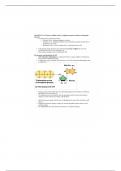
Different animals have different patterns of symmetry. Different forms of symmetry are used to identify shared
evolutionary history.
• Some animals are asymmetrical and have no planes of
symmetry. Single celled organisms are asymmetrical.
Asymmetrical forms of life evolved early.
• Some forms of life have radial symmetry, the body parts
are arranged around a central axis. Many radially
symmetric animals have most of their body arranged in a
circular pattern but may still have a few body parts that are
not symmetrical.
• Some animals show bilateral symmetry. Their bodies
show a right-left mirror image on either side of a single
plane. These animals have an anterior (head) end and a
posterior (rear) end. These animals often show
cephalization, or the formation of a head with nervous
tissue at the anterior end. They also have a dorsal (top or Figure 1. Forms of symmetry.
http://kentsimmons.uwinnipeg.ca/16cm05/1116/16anim3.htm
back) side as well as a ventral (belly) side.
The Cuban Tree frog is very common on campus and in south Florida, but it is an invasive species. What kind of
symmetry does the frog have?
_______________________________
Lab 7B-Key Characters to Animal Diversity
On the frog, label the anterior end, posterior
end, dorsal side and ventral side.
2
Animal Diversity
Biology II Laboratory BSC1011Lauthors: BJ NB AG JS AN BE Date 18April2023______________________________________________________________________________________
Material is also covered in Chapters 32 and 47 of Campbell Biology, 12th Ed., Urry, Cain, Wasserman, Minorsky and Orr. Page
numbers refer to Chapter 2 (Figures 2.13-2.16, Pgs. 23-26) of A Photographic Atlas for the Biology Laboratory, 8th edition.
Group Members: _____________________________________ ___________________________________________
_________________________________________ _________________________________________
KEY CONCEPTS:
1. Animals are multicellular, heterotrophic eukaryotes. Several characters that are used to identify evolutionary
relationships among animals include body symmetry, embryonic characters, and patterns of early development.
2. Patterns of symmetry include asymmetric, radial, and bilateral forms. Once a head is formed, parts of the body are
described as anterior or posterior, and with a spine parts can be dorsal or ventral.
3. Patterns of development. After an egg is fertilized, multicellular animals go through several stages that allow the
cells to increase in specialization. Characters in the different stages of embryonic development help us determine
evolutionary history:
A. Fertilization is the union of the egg and sperm, and forms the zygote.
B. Cleavage is the specialized cell division that occurs during early embryological development. The pattern of
cleavage varies among groups of animals and similar patterns are used to identify shared evolutionary history.
C. Gastrulation is the reorganization of the hollow blastula or ball of cells into germ layers (specialized layers of
cells). The number and kind of germ layers is used to identify evolutionary history. The pattern of gastrulation,
especially the fate of the blastopore (first external opening of the body), varies among groups of organisms and
similar patterns are used to identify shared evolutionary history.
D. Organogenesis is the process by which the germ layers differentiate into organs. Different forms of
organogenesis result in the great diversity of body forms in animals. Neurulation is used to identify some groups.
4. Special embryonic characters.
A. The blastopore is the first opening in the early stages of development. The blastopore may develop into the
mouth or the anus.
a. Protostomes are animals for which the blastopore develops into the mouth
b. Deuterostomes are animals for which the blastopore develops into the anus.
B. Animals have tissues that develop from embryonic germ layers, the ectoderm, mesoderm, and endoderm. If
an organism has only two germ layers it is diploblastic, if it has three it is triploblastic.
C. Animals that are triploblastic form an internal cavity called a coelom. The coelom is important as the organs
will be suspended and protected within the coelom. Animals may be:
• Compact (Acoelomate: they lack a coelom).
Lab 7B-Key Characters to Animal Diversity
• Have a Hemocoel (Pseudocoelomate: fluid filled space that is derived from mesoderm and endoderm).
• Coelomates (they have a true body cavity derived from mesoderm).
5. The early stages of development are similar among many groups of animals. The developmental stages of the sea
star are a model for development in animals.
SKILLS YOU SHOULD MASTER BY THE END OF THE LAB:
1. Recognize different patterns of symmetry including radial, bilateral and asymmetric forms.
2. Be able to recognize the stages of development (fertilization, cleavage, gastrulation, and organogenesis).
3. Recognize different patterns of cleavage and the difference between determinate and indeterminate cleavage.
4. Know the developmental variation among deuterostomes and protostomes.
5. Recognize the three germ layers (ectoderm, mesoderm, endoderm) and the structures they give rise to.
6. Recognize the importance of a coelom and the difference between compact, having a hemocoel, and
coelomate.
7. Be able to recognize the developmental stages of the sea star as a model for development in animals.
1
, VOCABULARY:
Asymmetrical Determinate cleavage Ectoderm
Radial symmetry Indeterminate cleavage Mesoderm
Bilateral symmetry Gastrulation Endoderm
Cephalization Organogenesis Protostome
Anterior Morula Deuterostome
Posterior Blastula Diploblastic
Dorsal Blastocoel Triploblastic
Ventral Gastrula Acoelomate
Fertilization Archenteron Pseudocoelomate
Totipotent/Pluripotent Blastopore Coelomate
Cleavage Germ layers
Body Symmetry
Different animals have different patterns of symmetry. Different forms of symmetry are used to identify shared
evolutionary history.
• Some animals are asymmetrical and have no planes of
symmetry. Single celled organisms are asymmetrical.
Asymmetrical forms of life evolved early.
• Some forms of life have radial symmetry, the body parts
are arranged around a central axis. Many radially
symmetric animals have most of their body arranged in a
circular pattern but may still have a few body parts that are
not symmetrical.
• Some animals show bilateral symmetry. Their bodies
show a right-left mirror image on either side of a single
plane. These animals have an anterior (head) end and a
posterior (rear) end. These animals often show
cephalization, or the formation of a head with nervous
tissue at the anterior end. They also have a dorsal (top or Figure 1. Forms of symmetry.
http://kentsimmons.uwinnipeg.ca/16cm05/1116/16anim3.htm
back) side as well as a ventral (belly) side.
The Cuban Tree frog is very common on campus and in south Florida, but it is an invasive species. What kind of
symmetry does the frog have?
_______________________________
Lab 7B-Key Characters to Animal Diversity
On the frog, label the anterior end, posterior
end, dorsal side and ventral side.
2