

Laboratory Exercise 5: Plant Diversity I - The First Embryophytes or
Multicellular Land Plants Biology II Laboratory BSC1011LAuthors:BJ AG NB BE Date:31Jan23 ________________
Material is also covered in Chapters 29-30 of Campbell Biology, 12th Ed., Urry, Cain, Wasserman, Minorsky and Orr.
Page numbers refer to Chapter 5 (pages 69-71) of A Photographic Atlas for the Biology Laboratory, 8th edition.
Guides to supplementary pictures are in a small font. Examine the photos in the Atlas if a concept is not clear.
Group Members: _______________________________________
___________________________________________
___________________________________________
___________________________________________
KEY CONCEPTS:
1. The Embryophytes (plants with embryos, or land plants) and their subgroups
evolved several key diagnostic traits that provide an increasing support of the
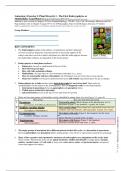
embryo and allow survival on land. Land plants are called the embryophytes because Figure 1. Plants
http://en.wikipedia.org/wiki/Plantae
the multicellular embryos are dependent on the female parent.
2. Embryophytes or land plants are/have:
• Eukaryotes, but only a small branch of the tree of life.
• Derived from green algae
• Have cell walls containing cellulose
• Multicellular, the large mass of a few dominates landscapes (e. g., trees).
• Most are autotrophic and have chloroplasts, but chloroplasts may have been lost in some species.
• Many have cuticles (covering for epidermis/outer layer) and stomata (specialized pores for gas exchange).
3. Embryophytes are a clade and have three derived key traits for survival on land. These traits are
synapomorphies for the branch to the Embryophytes; they are diagnostic traits for the Embryophytes.
1. Alternation of generations between gametophyte and sporophyte forms
2. Walled spores produced in Sporangia
3. Apical meristems present at the tips of roots and shoots for growth
4. There are four main groups of land plants; each is identified by unique traits. See also Figure 5.1, page 68.
Main group Key traits that define the group
1 Bryophytes: Nonvascular plants Oldest lineages in the phylogenetic tree of
(Liverworts, True Mosses, Hornworts) land plants (Figure 2, this handout). A grade, not a clade.
2 Seedless vascular plants: First vascular plants These plants have specialized tissues that can
(Lycophytes, Monilophytes) transport water and nutrients, allowing height. A grade, not a clade.
3 Gymnosperms: First plants with seeds (Figure 2, this handout), but the seeds
(Conifers, Ginkgos, Cycads) are
naked. They have vascular tissue. A clade. Lab 5 - Plant Diversity: Embryophytes.
4 Angiosperms: First plants with flowers (Figure 2, this handout).
(Flowering plants) They have vascular tissue and seeds. A clade.
5. The major groups of land plants have different patterns in their life cycles; the alternation of generations
between gametophyte and sporophyte differs among groups. You will see a representative pattern for each group.
6. Many of the vegetative and reproductive structures of embryophytes are adaptations to life on dry land.
These include: Meristematic tissue (in the apical meristems), thallus and rhizoids of simple plants, stomata,
cuticles, vascular tissue, stiff cell walls of some cells, roots, leaves, stems, and protected spores, and special
tissues that support the embryo.
1
, SKILLS YOU SHOULD MASTER BY THE END OF THE LAB:
1. Know important features of land plants, many of which they share with some algae.
2. Know the three diagnostic traits (synapomorphies) of embryophytes that make plants successful on land.
• Be able to place the traits: vascular tissue, seeds, and flowers on a phylogenetic tree
3. Be able to recognize and distinguish between the four groups: bryophytes, seedless vascular plants,
gymnosperms, and angiosperms (this week and next week) and the main groups within them.
4. Be able to recognize structures that are unique to bryophytes and seedless vascular plants
5. Be able to recognize the preserved specimens, models in the lab, and the live plants on campus.
6. Each group has a different pattern in their life cycle. In each, be able to identify:
• The occurrence of mitosis and meiosis
• The dominance of the sporophyte or the gametophyte generations
• Structures for an increasing independence of water
• Structures for an increasing protection and support of the embryo
7. Recognize adaptations for survival on dry land.
VOCABULARY:
Embryophyte Gametangia Strobilus/strobili
Bryophyte Archegonia Frond
Seedless Vascular Plants Antheridium Fiddlehead
Lycophytes Thallus Sorus/sori
Monilophytes Gemmae cups Cellulose
Angiosperm Reproduction by fragmentation Stomata
Gymnosperm Vascular tissue Root cap
Alternation of generations Xylem Apical meristem
Sporophyte Phloem Zone of elongation
Gametophyte Rhizoids Zone of maturation
Sporangia Spores
The material we will examine today (know the terms in bold):
Main group Important subgroups: Taxa you will examine: Specimen:
1. Bryophytes Liverworts (Hepatophyta) Marchantia – liverwort lab specimen
Hornworts (Anthocerophyta) Anthoceros – hornwort Figure 5.18, pg. 73.
Mosses (Bryophyta) Sphagnum – moss lab specimen, campus
2. Seedless Lycophytes – club mosses Lycopodium - club moss lab specimen
vascular spike mosses Selaginella -spike moss lab specimen
plants quillworts (no specimen) (no specimen)
Monilophytes (Pterophyta) Psilotum – whisk fern campus
whisk ferns, Equisetum - horsetail lab specimen
horsetails Giant Leather Fern - a campus Lab 5 - Plant Diversity: Embryophytes.
true ferns true fern-
Next week we will examine Gymnosperms (naked seed plants) and Angiosperms (flowering plants).
2
Multicellular Land Plants Biology II Laboratory BSC1011LAuthors:BJ AG NB BE Date:31Jan23 ________________
Material is also covered in Chapters 29-30 of Campbell Biology, 12th Ed., Urry, Cain, Wasserman, Minorsky and Orr.
Page numbers refer to Chapter 5 (pages 69-71) of A Photographic Atlas for the Biology Laboratory, 8th edition.
Guides to supplementary pictures are in a small font. Examine the photos in the Atlas if a concept is not clear.
Group Members: _______________________________________
___________________________________________
___________________________________________
___________________________________________
KEY CONCEPTS:
1. The Embryophytes (plants with embryos, or land plants) and their subgroups
evolved several key diagnostic traits that provide an increasing support of the
embryo and allow survival on land. Land plants are called the embryophytes because Figure 1. Plants
http://en.wikipedia.org/wiki/Plantae
the multicellular embryos are dependent on the female parent.
2. Embryophytes or land plants are/have:
• Eukaryotes, but only a small branch of the tree of life.
• Derived from green algae
• Have cell walls containing cellulose
• Multicellular, the large mass of a few dominates landscapes (e. g., trees).
• Most are autotrophic and have chloroplasts, but chloroplasts may have been lost in some species.
• Many have cuticles (covering for epidermis/outer layer) and stomata (specialized pores for gas exchange).
3. Embryophytes are a clade and have three derived key traits for survival on land. These traits are
synapomorphies for the branch to the Embryophytes; they are diagnostic traits for the Embryophytes.
1. Alternation of generations between gametophyte and sporophyte forms
2. Walled spores produced in Sporangia
3. Apical meristems present at the tips of roots and shoots for growth
4. There are four main groups of land plants; each is identified by unique traits. See also Figure 5.1, page 68.
Main group Key traits that define the group
1 Bryophytes: Nonvascular plants Oldest lineages in the phylogenetic tree of
(Liverworts, True Mosses, Hornworts) land plants (Figure 2, this handout). A grade, not a clade.
2 Seedless vascular plants: First vascular plants These plants have specialized tissues that can
(Lycophytes, Monilophytes) transport water and nutrients, allowing height. A grade, not a clade.
3 Gymnosperms: First plants with seeds (Figure 2, this handout), but the seeds
(Conifers, Ginkgos, Cycads) are
naked. They have vascular tissue. A clade. Lab 5 - Plant Diversity: Embryophytes.
4 Angiosperms: First plants with flowers (Figure 2, this handout).
(Flowering plants) They have vascular tissue and seeds. A clade.
5. The major groups of land plants have different patterns in their life cycles; the alternation of generations
between gametophyte and sporophyte differs among groups. You will see a representative pattern for each group.
6. Many of the vegetative and reproductive structures of embryophytes are adaptations to life on dry land.
These include: Meristematic tissue (in the apical meristems), thallus and rhizoids of simple plants, stomata,
cuticles, vascular tissue, stiff cell walls of some cells, roots, leaves, stems, and protected spores, and special
tissues that support the embryo.
1
, SKILLS YOU SHOULD MASTER BY THE END OF THE LAB:
1. Know important features of land plants, many of which they share with some algae.
2. Know the three diagnostic traits (synapomorphies) of embryophytes that make plants successful on land.
• Be able to place the traits: vascular tissue, seeds, and flowers on a phylogenetic tree
3. Be able to recognize and distinguish between the four groups: bryophytes, seedless vascular plants,
gymnosperms, and angiosperms (this week and next week) and the main groups within them.
4. Be able to recognize structures that are unique to bryophytes and seedless vascular plants
5. Be able to recognize the preserved specimens, models in the lab, and the live plants on campus.
6. Each group has a different pattern in their life cycle. In each, be able to identify:
• The occurrence of mitosis and meiosis
• The dominance of the sporophyte or the gametophyte generations
• Structures for an increasing independence of water
• Structures for an increasing protection and support of the embryo
7. Recognize adaptations for survival on dry land.
VOCABULARY:
Embryophyte Gametangia Strobilus/strobili
Bryophyte Archegonia Frond
Seedless Vascular Plants Antheridium Fiddlehead
Lycophytes Thallus Sorus/sori
Monilophytes Gemmae cups Cellulose
Angiosperm Reproduction by fragmentation Stomata
Gymnosperm Vascular tissue Root cap
Alternation of generations Xylem Apical meristem
Sporophyte Phloem Zone of elongation
Gametophyte Rhizoids Zone of maturation
Sporangia Spores
The material we will examine today (know the terms in bold):
Main group Important subgroups: Taxa you will examine: Specimen:
1. Bryophytes Liverworts (Hepatophyta) Marchantia – liverwort lab specimen
Hornworts (Anthocerophyta) Anthoceros – hornwort Figure 5.18, pg. 73.
Mosses (Bryophyta) Sphagnum – moss lab specimen, campus
2. Seedless Lycophytes – club mosses Lycopodium - club moss lab specimen
vascular spike mosses Selaginella -spike moss lab specimen
plants quillworts (no specimen) (no specimen)
Monilophytes (Pterophyta) Psilotum – whisk fern campus
whisk ferns, Equisetum - horsetail lab specimen
horsetails Giant Leather Fern - a campus Lab 5 - Plant Diversity: Embryophytes.
true ferns true fern-
Next week we will examine Gymnosperms (naked seed plants) and Angiosperms (flowering plants).
2


