

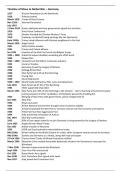
Timeline of Move to Global War – Germany
1917 Russian Revolution by the Bolsheviks
1918 Poland created
March 1918 Treaty of Brest-Litovsk
Nov 1918 – German Revolution
July 1919
11 Nov 1919 Kaiser abdicated and new government signed the armistice
1919 Paris Peace Conference
1919 Drexler founded the German Workers’ Party
1919 Freikorps crushed left-wing uprisings like the Spartacists
Early 1920s France made alliances with German neighbours to the East
March 1920 Kapp Putsch
1921 Little Entente treaties
1921 France and Poland alliance
Jan 1923 Invasion of the Ruhr by French and Belgian troops
1923 – 1928 Industrial output doubled, exceeding pre-WWI levels
1924 Dawes Plan
1924 – 1930 US banks lent $25 billion to German industry
1925 Locarno Treaties
1926 Germany joined the League of Nations
1928 Kellogg-Briand Pact
1928 Nazi Party had 2.6% of the Reichstag
1929 Young Plan
1929 Great Depression
1929 – 1932 World trade declined by 70%, mass unemployment
July 1932 Nazi Party had 37.3% of the Reichstag
1933 Hitler appointed Chancellor
March 1933 Nazi Party won 44% of the Reichstag in the election – due to banning of Communist party
and harassment of other candidates. Immediately passed the Enabling Act
1933 Merging of Nazi Party with government, police merged with SS
Oct 1933 New Plan
1934 Rivals executed
1934 British National Government brought some economic stability
1934 Schacht expanded the New Plan to increase control over the economy and imports
1934 Polish-German Non-Aggression Pact
1934 Italy prevented annexation of Austria
Dec 1934 Wal-Wal confrontation
1935 90% of Saar region voted to re-join Germany or be governed by the League of Nations
June 1935 Anglo-German Naval Treaty
Oct 1935 Italian invasion of Abyssinia
1935 USSR and Czechoslovakia mutual defence treaty
Mid 1930s Britain relied on the British Empire for trade, other European nations turned to Germany
Mid 1930s Soviets saw Germany as a threat, along with Italy and Japan
27 Feb 1936 Franco-Soviet Treaty of Mutual Assistance ratified
March 1936 Abyssinia Crisis created favourable diplomatic situation for Germany to reoccupy the
Rhineland
7 Mar 1936 German troops entered the Rhineland
Sept 1936 Four-Year Plan announced
Oct 1936 Rome-Berlin Axis signed
Nov 1936 Anti-Comintern Pact signed with Japan
Nov 1937 Italy joined Anti-Comintern Pact
1917 Russian Revolution by the Bolsheviks
1918 Poland created
March 1918 Treaty of Brest-Litovsk
Nov 1918 – German Revolution
July 1919
11 Nov 1919 Kaiser abdicated and new government signed the armistice
1919 Paris Peace Conference
1919 Drexler founded the German Workers’ Party
1919 Freikorps crushed left-wing uprisings like the Spartacists
Early 1920s France made alliances with German neighbours to the East
March 1920 Kapp Putsch
1921 Little Entente treaties
1921 France and Poland alliance
Jan 1923 Invasion of the Ruhr by French and Belgian troops
1923 – 1928 Industrial output doubled, exceeding pre-WWI levels
1924 Dawes Plan
1924 – 1930 US banks lent $25 billion to German industry
1925 Locarno Treaties
1926 Germany joined the League of Nations
1928 Kellogg-Briand Pact
1928 Nazi Party had 2.6% of the Reichstag
1929 Young Plan
1929 Great Depression
1929 – 1932 World trade declined by 70%, mass unemployment
July 1932 Nazi Party had 37.3% of the Reichstag
1933 Hitler appointed Chancellor
March 1933 Nazi Party won 44% of the Reichstag in the election – due to banning of Communist party
and harassment of other candidates. Immediately passed the Enabling Act
1933 Merging of Nazi Party with government, police merged with SS
Oct 1933 New Plan
1934 Rivals executed
1934 British National Government brought some economic stability
1934 Schacht expanded the New Plan to increase control over the economy and imports
1934 Polish-German Non-Aggression Pact
1934 Italy prevented annexation of Austria
Dec 1934 Wal-Wal confrontation
1935 90% of Saar region voted to re-join Germany or be governed by the League of Nations
June 1935 Anglo-German Naval Treaty
Oct 1935 Italian invasion of Abyssinia
1935 USSR and Czechoslovakia mutual defence treaty
Mid 1930s Britain relied on the British Empire for trade, other European nations turned to Germany
Mid 1930s Soviets saw Germany as a threat, along with Italy and Japan
27 Feb 1936 Franco-Soviet Treaty of Mutual Assistance ratified
March 1936 Abyssinia Crisis created favourable diplomatic situation for Germany to reoccupy the
Rhineland
7 Mar 1936 German troops entered the Rhineland
Sept 1936 Four-Year Plan announced
Oct 1936 Rome-Berlin Axis signed
Nov 1936 Anti-Comintern Pact signed with Japan
Nov 1937 Italy joined Anti-Comintern Pact


