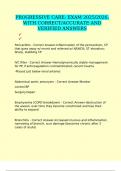
PROGRESSIVE CARE: EXAM 2025/2026,
WITH CORRECT/ACCURATE AND
VERIFIED ANSWERS
Pericarditis - Correct Answer-Inflammation of the pericardium, CP
that goes away w/ mvmt and relieved w/ NSAIDS; ST elevation;
Sharp, stabbing CP
IVC filter - Correct Answer-Hemodynamically stable management
for PE if anticoagulation contraindicated; recent trauma
-Placed just below renal arteries
Abdominal aortic aneurysm - Correct Answer-Monitor
control BP
Surgery/repair
Emphysema (COPD breakdown) - Correct Answer-destruction of
the alveoli, over time they become constricted and lose their
ability to expand
Bronchitis - Correct Answer-Increased mucous and inflammation;
narrowing of bronchi, scar damage (becomes chronic after 3
cases of acute)
, Pulmonary Embolism - Correct Answer-A blood clot that breaks off
from a large vein and travels to the blood vessels of the lung,
causing obstruction of blood flow.
Virchow's Triad - Correct Answer-Risk factors for PE: Stasis of
Blood flow (immobility), hypercoagulability, injury or damage
(postop pts), CA pt's,
Hemothorax - Correct Answer-Blood in the pleural space
Tx: Chest tube or IR/OR for embolization
pneumothorax - Correct Answer-air in the pleural cavity caused
by a puncture of the lung or chest wall; air between lung tissue
and lining
-Lung can't expand
-Tx: Chest tube
Tension pneumothorax - Correct Answer-A life-threatening
collection of air within the pleural space; the volume and pressure
have both collasped the involved lung and caused a shift of the
mediastinal structures to the opposite side.
Causes: blunt trauma, BiPAP
Tx: needle decompression
Pulmonary contusion - Correct Answer-severe blunt chest trauma
(MVA). Dyspnea, chest pain, hypoxemia worse with IVF, patchy
alveolar infiltrates.
WITH CORRECT/ACCURATE AND
VERIFIED ANSWERS
Pericarditis - Correct Answer-Inflammation of the pericardium, CP
that goes away w/ mvmt and relieved w/ NSAIDS; ST elevation;
Sharp, stabbing CP
IVC filter - Correct Answer-Hemodynamically stable management
for PE if anticoagulation contraindicated; recent trauma
-Placed just below renal arteries
Abdominal aortic aneurysm - Correct Answer-Monitor
control BP
Surgery/repair
Emphysema (COPD breakdown) - Correct Answer-destruction of
the alveoli, over time they become constricted and lose their
ability to expand
Bronchitis - Correct Answer-Increased mucous and inflammation;
narrowing of bronchi, scar damage (becomes chronic after 3
cases of acute)
, Pulmonary Embolism - Correct Answer-A blood clot that breaks off
from a large vein and travels to the blood vessels of the lung,
causing obstruction of blood flow.
Virchow's Triad - Correct Answer-Risk factors for PE: Stasis of
Blood flow (immobility), hypercoagulability, injury or damage
(postop pts), CA pt's,
Hemothorax - Correct Answer-Blood in the pleural space
Tx: Chest tube or IR/OR for embolization
pneumothorax - Correct Answer-air in the pleural cavity caused
by a puncture of the lung or chest wall; air between lung tissue
and lining
-Lung can't expand
-Tx: Chest tube
Tension pneumothorax - Correct Answer-A life-threatening
collection of air within the pleural space; the volume and pressure
have both collasped the involved lung and caused a shift of the
mediastinal structures to the opposite side.
Causes: blunt trauma, BiPAP
Tx: needle decompression
Pulmonary contusion - Correct Answer-severe blunt chest trauma
(MVA). Dyspnea, chest pain, hypoxemia worse with IVF, patchy
alveolar infiltrates.