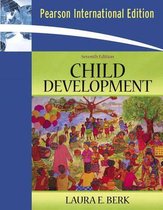
,Test34Bank34For34Child34Development349th34Edition34by34Laura34E.34Berk
Table34of34Contents
Part34I:34Theory34and34Research34in34Child34Development
Chapter34134History,34Theory,34and34Applied34Directions
Chapter34234Research34Strategies
Part34II:34Foundations34of34Development
Chapter34334Biological34Foundations,34Prenatal34Development,34and34Birth
Chapter34434Infancy:34Early34Learning,34Motor34Skills,34and34Perceptual34Capacities
Chapter34534Physical34Growth
Part34III:34Cognitive34and34Language34Development
Chapter34634Cognitive34Development:34Piagetian,34Core34Knowledge,34and34Vygotskian
Perspectives
Chapter34734Cognitive34Development:34An34Information-Processing34Perspective
Chapter34834Intelligence
Chapter34934Language34Development
Part34IV:34Personality34and34Social34Development
Chapter341034Emotional34Development
Chapter341134Self34and34Social34Understanding
Chapter341234Moral34Development
Chapter341334Development34of34Sex34Differences34and34Gender34Roles
Part34V:34Contexts34for34Development
Chapter341434The34Family
Chapter341534Peers,34Media,34and34Schooling
,CHAPTER341
HISTORY,34THEORY,34AND34APPLIED34DIRECTIONS
34MULTIPLE34CHOICE
1) The34field34of34child34development
A) is34devoted34to34understanding34human34constancy34and34change34throughout34the34lifespan.
B) is34part34of34a34larger,34interdisciplinary34field34known34as34developmental34science.
C) focuses34primarily34on34children’s34physical34and34emotional34development.
D) focuses34primarily34on34infants’34and34children’s34social34and34cognitive34develo
pment.34Answer:34B
Page34Ref:344
2) The34common34goal34of34investigators34who34study34child34development34is34to
A) understand34how34physical34growth34and34nutrition34contribute34to34health34and34well-
being34throughout34the34lifespan.
B) understand34more34about34personality34and34social34development.
C) analyze34child-rearing34practices34and34experiences34that34promote34children’s34well-being.
D) describe34and34identify34those34factors34that34influence34the34consistencies34and34changes34in34young34people3
4during34the34first34two34decades34of34life.
Answer:34
D34Page34R
ef:344
3) Which34of34the34following34factors34contributed34to34the34study34of34child34development34in34the34twentieth34ce
ntury?
A) The34beginning34of34public34education34led34to34a34demand34for34knowledge34about34what34and34how34to34teac
h34children34of34different34ages.
B) Parents34were34having34more34children34and34researchers34became34interested34in34the34effects34of34fam
ily34size34on34children’s34well-being.
C) Pediatricians34were34pressured34by34insurance34companies34to34improve34children’s34health,34which34inspired34n
utritional34research.
D) High34rates34of34childhood34depression34inspired34new34areas34of34research34into34children’s34anxieties34an
d34behavior34problems.
Answer:34
A34Page34R
ef:344
4) Which34of34the34following34statements34is34true34about34the34field34of34child34development?
A) Scientific34curiosity34is34the34prevailing34factor34that34led34to34the34study34of34children,34and34current34researche
rs34primarily34answer34questions34of34scientific34interest.
B) The34field34of34child34development34is34considered34interdisciplinary34because34it34has34grown34through34the
34combined34efforts34of34people34from34many34fields.
C) Child34development34is34the34area34of34study34devoted34to34understanding34constancy34and34change34thro
ughout34the34lifespan.
D) Most34of34what34we34know34about34child34development34comes34from34psychologists34and34medical34pro
fessionals.34Answer:34B
Page34Ref:344
5) Development34is34often34divided34into34which34of34the34following34three34broad34domains?
A) infancy,34childhood,34and34adolescence
B) social,34cultural,34and34historical
C) physical,34cognitive,34and34emotional34and34social
D) biological,34social,34and34intellectu
al34Answer:34C
, Page34Ref:344
Table34of34Contents
Part34I:34Theory34and34Research34in34Child34Development
Chapter34134History,34Theory,34and34Applied34Directions
Chapter34234Research34Strategies
Part34II:34Foundations34of34Development
Chapter34334Biological34Foundations,34Prenatal34Development,34and34Birth
Chapter34434Infancy:34Early34Learning,34Motor34Skills,34and34Perceptual34Capacities
Chapter34534Physical34Growth
Part34III:34Cognitive34and34Language34Development
Chapter34634Cognitive34Development:34Piagetian,34Core34Knowledge,34and34Vygotskian
Perspectives
Chapter34734Cognitive34Development:34An34Information-Processing34Perspective
Chapter34834Intelligence
Chapter34934Language34Development
Part34IV:34Personality34and34Social34Development
Chapter341034Emotional34Development
Chapter341134Self34and34Social34Understanding
Chapter341234Moral34Development
Chapter341334Development34of34Sex34Differences34and34Gender34Roles
Part34V:34Contexts34for34Development
Chapter341434The34Family
Chapter341534Peers,34Media,34and34Schooling
,CHAPTER341
HISTORY,34THEORY,34AND34APPLIED34DIRECTIONS
34MULTIPLE34CHOICE
1) The34field34of34child34development
A) is34devoted34to34understanding34human34constancy34and34change34throughout34the34lifespan.
B) is34part34of34a34larger,34interdisciplinary34field34known34as34developmental34science.
C) focuses34primarily34on34children’s34physical34and34emotional34development.
D) focuses34primarily34on34infants’34and34children’s34social34and34cognitive34develo
pment.34Answer:34B
Page34Ref:344
2) The34common34goal34of34investigators34who34study34child34development34is34to
A) understand34how34physical34growth34and34nutrition34contribute34to34health34and34well-
being34throughout34the34lifespan.
B) understand34more34about34personality34and34social34development.
C) analyze34child-rearing34practices34and34experiences34that34promote34children’s34well-being.
D) describe34and34identify34those34factors34that34influence34the34consistencies34and34changes34in34young34people3
4during34the34first34two34decades34of34life.
Answer:34
D34Page34R
ef:344
3) Which34of34the34following34factors34contributed34to34the34study34of34child34development34in34the34twentieth34ce
ntury?
A) The34beginning34of34public34education34led34to34a34demand34for34knowledge34about34what34and34how34to34teac
h34children34of34different34ages.
B) Parents34were34having34more34children34and34researchers34became34interested34in34the34effects34of34fam
ily34size34on34children’s34well-being.
C) Pediatricians34were34pressured34by34insurance34companies34to34improve34children’s34health,34which34inspired34n
utritional34research.
D) High34rates34of34childhood34depression34inspired34new34areas34of34research34into34children’s34anxieties34an
d34behavior34problems.
Answer:34
A34Page34R
ef:344
4) Which34of34the34following34statements34is34true34about34the34field34of34child34development?
A) Scientific34curiosity34is34the34prevailing34factor34that34led34to34the34study34of34children,34and34current34researche
rs34primarily34answer34questions34of34scientific34interest.
B) The34field34of34child34development34is34considered34interdisciplinary34because34it34has34grown34through34the
34combined34efforts34of34people34from34many34fields.
C) Child34development34is34the34area34of34study34devoted34to34understanding34constancy34and34change34thro
ughout34the34lifespan.
D) Most34of34what34we34know34about34child34development34comes34from34psychologists34and34medical34pro
fessionals.34Answer:34B
Page34Ref:344
5) Development34is34often34divided34into34which34of34the34following34three34broad34domains?
A) infancy,34childhood,34and34adolescence
B) social,34cultural,34and34historical
C) physical,34cognitive,34and34emotional34and34social
D) biological,34social,34and34intellectu
al34Answer:34C
, Page34Ref:344