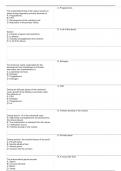
A. Progesterone.
The endometrial lining of the uterus remains in
place during pregnancy primarily because of
A. Progesterone.
B. FSH.
C. Development of the umbilical cord.
D. Maturation of the primary follicle.
D. Is all of the above.
Semen
A. Consists of sperm and secretions.
B. Is alkaline.
C. Includes prostaglandins and nutrients.
D. Is all of the above.
B. Estrogen.
The hormone mainly responsible for the
development and maintenance of female
secondary sex characteristics is
A. Luteinizing hormone.
B. Estrogen.
C. Progesterone.
D. Androgen.
A. FSH.
During the follicular phase of the menstrual
cycle, growth of the follicles is primarily under
the influence of
A. FSH.
B. Estrogen.
C. Progesterone.
D. LH
D. Follicles develop in the ovaries.
During days 6- 14 of the menstrual cycle
A. High levels of progesterone are produced by
the corpus luteum.
B. The endometrium is released from the uterus.
C. Fertilization occurs.
D. Follicles develop in the ovaries.
A. Fill with blood.
During erection, the erectile tissues of the penis
A. Fill with blood.
B. Secrete alkaline fluid.
C. Absorb sperm.
D. Contract into the scrotum.
B. A mucus-like fluid.
The bulbourethral glands secrete
A. Sperm.
B. A mucus-like fluid.
C. Blood.
D. Sweat.
, B. Gastrointestinal and respiratory tracts.
The endoderm germ layer will develop into the
A. Skeletal muscle.
B. Gastrointestinal and respiratory tracts.
C. Cardiac muscle.
D. Nervous system and epidermis.
C. Ductus deferens.
The epididymis, coiled on the outer surface of
the testis, becomes the
A. Tunica albuginea.
B. Rete testis.
C. Ductus deferens.
D. Penile urethra.
A. It is produced by the seminiferous tubules of the testes.
All of the following characteristics are associated
with testosterone except
A. It is produced by the seminiferous tubules of
the testes.
B. It promotes protein synthesis and muscle
growth.
C. It maintains the accessory organs of the male
reproductive tract.
D. It influences the secondary male
characteristics.
B. Ovaries.
Menopause is due to aging of the
A. Uterine tube.
B. Ovaries.
C. Vagina.
D. Cervix.
We have an expert-written solution to this problem!
A. From the rete testes.
The epididymis receives sperm
A. From the rete testes.
B. From the penis.
C. From the ductus deferens.
D. From the prostate gland.
B. It is composed of one tissue layer called the myometrium.
All of the following are associated with the
uterus except
A. It expands considerably during pregnancy.
B. It is composed of one tissue layer called the
myometrium.
C. It is also called the womb.
, C. LH.
At the time of ovulation, the anterior pituitary
gland releases a surge of
A. Progesterone.
B. Estrogen.
C. LH.
D. Androgen.
D. Erectile tissues.
The corpus cavernosa and corpus spongiosum
are both
A. Sites where sperm are stored.
B. Glands that add secretions to the semen.
C. Areas where urine is held prior to expulsion.
D. Erectile tissues.
D. Reproductive hormones.
The development, maintenance, and regulation
of the male and female reproductive systems are
the functions of:
A. Testes and ovaries.
B. Secondary sex characteristics.
C. Eggs and sperm.
D. Reproductive hormones.
A. Uterine tubes.
The ampulla, fimbriae and infundibulum are
anatomical features of the
A. Uterine tubes.
B. Uterus.
C. Cervix.
D. Vagina.
C. A secondary oocyte.
The egg, or ovum, is more correctly called
A. A zygote.
B. An oogonium.
C. A secondary oocyte.
D. A primary oocyte.
C. Gonads (testes and ovaries)
Name the primary sex organs.
A. Penis in males; uterus in females.
B. Seminal vesicles and prostate in males;
vestibular glands in females.
C. Gonads (testes and ovaries)
D. Epididymis and ductus deferens in the males;
uterine tubes in females.
We have an expert-written solution to this problem!
The endometrial lining of the uterus remains in
place during pregnancy primarily because of
A. Progesterone.
B. FSH.
C. Development of the umbilical cord.
D. Maturation of the primary follicle.
D. Is all of the above.
Semen
A. Consists of sperm and secretions.
B. Is alkaline.
C. Includes prostaglandins and nutrients.
D. Is all of the above.
B. Estrogen.
The hormone mainly responsible for the
development and maintenance of female
secondary sex characteristics is
A. Luteinizing hormone.
B. Estrogen.
C. Progesterone.
D. Androgen.
A. FSH.
During the follicular phase of the menstrual
cycle, growth of the follicles is primarily under
the influence of
A. FSH.
B. Estrogen.
C. Progesterone.
D. LH
D. Follicles develop in the ovaries.
During days 6- 14 of the menstrual cycle
A. High levels of progesterone are produced by
the corpus luteum.
B. The endometrium is released from the uterus.
C. Fertilization occurs.
D. Follicles develop in the ovaries.
A. Fill with blood.
During erection, the erectile tissues of the penis
A. Fill with blood.
B. Secrete alkaline fluid.
C. Absorb sperm.
D. Contract into the scrotum.
B. A mucus-like fluid.
The bulbourethral glands secrete
A. Sperm.
B. A mucus-like fluid.
C. Blood.
D. Sweat.
, B. Gastrointestinal and respiratory tracts.
The endoderm germ layer will develop into the
A. Skeletal muscle.
B. Gastrointestinal and respiratory tracts.
C. Cardiac muscle.
D. Nervous system and epidermis.
C. Ductus deferens.
The epididymis, coiled on the outer surface of
the testis, becomes the
A. Tunica albuginea.
B. Rete testis.
C. Ductus deferens.
D. Penile urethra.
A. It is produced by the seminiferous tubules of the testes.
All of the following characteristics are associated
with testosterone except
A. It is produced by the seminiferous tubules of
the testes.
B. It promotes protein synthesis and muscle
growth.
C. It maintains the accessory organs of the male
reproductive tract.
D. It influences the secondary male
characteristics.
B. Ovaries.
Menopause is due to aging of the
A. Uterine tube.
B. Ovaries.
C. Vagina.
D. Cervix.
We have an expert-written solution to this problem!
A. From the rete testes.
The epididymis receives sperm
A. From the rete testes.
B. From the penis.
C. From the ductus deferens.
D. From the prostate gland.
B. It is composed of one tissue layer called the myometrium.
All of the following are associated with the
uterus except
A. It expands considerably during pregnancy.
B. It is composed of one tissue layer called the
myometrium.
C. It is also called the womb.
, C. LH.
At the time of ovulation, the anterior pituitary
gland releases a surge of
A. Progesterone.
B. Estrogen.
C. LH.
D. Androgen.
D. Erectile tissues.
The corpus cavernosa and corpus spongiosum
are both
A. Sites where sperm are stored.
B. Glands that add secretions to the semen.
C. Areas where urine is held prior to expulsion.
D. Erectile tissues.
D. Reproductive hormones.
The development, maintenance, and regulation
of the male and female reproductive systems are
the functions of:
A. Testes and ovaries.
B. Secondary sex characteristics.
C. Eggs and sperm.
D. Reproductive hormones.
A. Uterine tubes.
The ampulla, fimbriae and infundibulum are
anatomical features of the
A. Uterine tubes.
B. Uterus.
C. Cervix.
D. Vagina.
C. A secondary oocyte.
The egg, or ovum, is more correctly called
A. A zygote.
B. An oogonium.
C. A secondary oocyte.
D. A primary oocyte.
C. Gonads (testes and ovaries)
Name the primary sex organs.
A. Penis in males; uterus in females.
B. Seminal vesicles and prostate in males;
vestibular glands in females.
C. Gonads (testes and ovaries)
D. Epididymis and ductus deferens in the males;
uterine tubes in females.
We have an expert-written solution to this problem!