Northeastern University
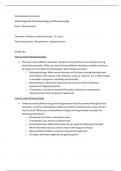
2350 Integrated Pathophysiology and Pharmacology
Exam 1 Study Guide
Overview: Modules covered include 1, 2, and 3
Test Composition: 50 questions, multiple choice
Study Tips:
How to study Pathophysiology
• There are many different diseases, illnesses and syndromes you will be learning
about this semester. When you look at these different diseases a helpful structure
to review is to consider the following for each disease process:
o Pathophysiology: What normal process of the body is being disrupted and
how? What is the course of the disease, acute vs. Chronic, etc.? Other things
to consider: prognosis, morbidity and mortality.
o Manifestations: What will I see/what will a person with this disease
experience? Signs/symptoms
o Treatments: Can this be treated? Possible medications reviewed for
treatment and other nonpharm treatments.
How to study Pharmacology
• There are many different drugs and drug classes that are covered throughout this
semester. It can be challenging to determine what is need to know versus what is
nice to know. When you review different drugs and drug classes consider the
following information:
o Mechanism of action: how does it work
o Therapeutic use: what is it used to treat
o Nursing Process: What information do you need to safely give the drug?
What information do you need to know if the drug is working?
o Adverse Effects: What is common and what is high risk?
o Off label: what else might this drug be used for?
This study source was downloaded by 1143875 from cliffsnotes.com on 08-08-2025 17:41:22 GMT -05:00
https://www.cliffsnotes.com//study-notes/27458136
, • Note on drug names: NCLEX testing will include drug names. Drugs will be listed by
generic name only. Knowing generic names is important as this is the universal
language of drug therapy.
o Specific drugs names will be highlighted as prototypes/examples of drugs.
You are expected to know these names.
o Other names might be included on an exam. If this happens, you will see the
drug class (broader category) included in the question prompt.
▪ Drug classes in some cases may be identifiable by naming norms
often in the form of a common suffix. Keep an eye out for this to easily
identify drugs as part of drug class.
o Key take away: know example/prototype/gold standard drugs, be able to
identify drug classes as the broader identifier in pharmacology.
Module 1: Foundations of Pathophysiology
Module Objectives:
• Describe the chemical make-up and function of the cell membrane
• Identify basic cellular components and explain their function
• Describe the processes of energy production in the cell
• Compare and contrast Passive and Active transport
• Compare and contrast common cellular structural adaptations
• Outline two pathologic conditions related to cell alterations
• Describe the etiologies and mechanisms of cell injury
• Differentiate between necrosis and apoptosis
• Compare and contrast the inheritance patterns of altered chromosomal disorders
• Explain the relationship between genetic alterations and the individual's response
to medications
Chapters Reviewed:
Tucker: Focus on Nursing Pharmacology
o Chapter 7: Introduction to Cell Physiology; pg 82-87 "The Cell"-"Cell
Cyle"
Norris: Essentials of Pathophysiology
o Chapter 1 (2 if you need review), all
o Chapter 3, all
o Chapter 8, pg 135-160
This study source was downloaded by 1143875 from cliffsnotes.com on 08-08-2025 17:41:22 GMT -05:00
https://www.cliffsnotes.com//study-notes/27458136
2350 Integrated Pathophysiology and Pharmacology
Exam 1 Study Guide
Overview: Modules covered include 1, 2, and 3
Test Composition: 50 questions, multiple choice
Study Tips:
How to study Pathophysiology
• There are many different diseases, illnesses and syndromes you will be learning
about this semester. When you look at these different diseases a helpful structure
to review is to consider the following for each disease process:
o Pathophysiology: What normal process of the body is being disrupted and
how? What is the course of the disease, acute vs. Chronic, etc.? Other things
to consider: prognosis, morbidity and mortality.
o Manifestations: What will I see/what will a person with this disease
experience? Signs/symptoms
o Treatments: Can this be treated? Possible medications reviewed for
treatment and other nonpharm treatments.
How to study Pharmacology
• There are many different drugs and drug classes that are covered throughout this
semester. It can be challenging to determine what is need to know versus what is
nice to know. When you review different drugs and drug classes consider the
following information:
o Mechanism of action: how does it work
o Therapeutic use: what is it used to treat
o Nursing Process: What information do you need to safely give the drug?
What information do you need to know if the drug is working?
o Adverse Effects: What is common and what is high risk?
o Off label: what else might this drug be used for?
This study source was downloaded by 1143875 from cliffsnotes.com on 08-08-2025 17:41:22 GMT -05:00
https://www.cliffsnotes.com//study-notes/27458136
, • Note on drug names: NCLEX testing will include drug names. Drugs will be listed by
generic name only. Knowing generic names is important as this is the universal
language of drug therapy.
o Specific drugs names will be highlighted as prototypes/examples of drugs.
You are expected to know these names.
o Other names might be included on an exam. If this happens, you will see the
drug class (broader category) included in the question prompt.
▪ Drug classes in some cases may be identifiable by naming norms
often in the form of a common suffix. Keep an eye out for this to easily
identify drugs as part of drug class.
o Key take away: know example/prototype/gold standard drugs, be able to
identify drug classes as the broader identifier in pharmacology.
Module 1: Foundations of Pathophysiology
Module Objectives:
• Describe the chemical make-up and function of the cell membrane
• Identify basic cellular components and explain their function
• Describe the processes of energy production in the cell
• Compare and contrast Passive and Active transport
• Compare and contrast common cellular structural adaptations
• Outline two pathologic conditions related to cell alterations
• Describe the etiologies and mechanisms of cell injury
• Differentiate between necrosis and apoptosis
• Compare and contrast the inheritance patterns of altered chromosomal disorders
• Explain the relationship between genetic alterations and the individual's response
to medications
Chapters Reviewed:
Tucker: Focus on Nursing Pharmacology
o Chapter 7: Introduction to Cell Physiology; pg 82-87 "The Cell"-"Cell
Cyle"
Norris: Essentials of Pathophysiology
o Chapter 1 (2 if you need review), all
o Chapter 3, all
o Chapter 8, pg 135-160
This study source was downloaded by 1143875 from cliffsnotes.com on 08-08-2025 17:41:22 GMT -05:00
https://www.cliffsnotes.com//study-notes/27458136