
Human error
Lecture 1 - Course overview, Human Error classifica8on
Assignment (no exam)
o Enroll in a group (4 students), select topic with this group
o One presenta;on per group (10 minutes- January 11 and 12)
o Individual: write a short advisory report on the topic of your group
o Start with a short sketch of a disaster or accident
o Analysis of errors: give advice (tailor to the audience you are wri;ng
for, e.g. government)
o Max 1000 words (≤ 1.5 page), use the template document)
You must submit a first assignment before 21 December 2023 (09:00:
cannot go for a ‘second’ chance only)
o The second opportunity should be on a different topic
o Last grade counts
‘To err is human’ – Alexander Pope, early 18th century
® Humans, by their very nature, will make errors
However: they do the right thing most of the 3me
® Error: the failure of planned ac@ons to achieve their desired goal without some
unforeseen or chance interven@on.
Error types (taxonomy)
A. Errors of Automa@on
Slips (aEen@on failure)
Lapses (memory failure) ® fumbles (physical, but we do not pay aEen@on to that here)
B. Errors of Conscious Control
Mistakes (we have a plan, but something goes wrong)
Viola0ons (people know they are not obeying the rules)
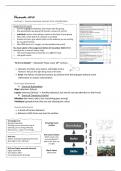
Human Performance
® 3 levels of human behavior
® Behavior shiJs from one level to another.
Knowledge level
Bounded raDonality Knowledge based
Thinking (not our prominent way of mistakes
behaving, we are energy efficient)
Slow process – costs a lot of energy
Rule based mistakes
Rule level Which country has
Pa1ern matching (recognizing elements) more inhabitants?
If the light is red, I will brake Most of the Dme, we
are right
Skill level (highly automa1c behavior)
Highly automated Slips & Lapses
Very li1le/no effort Stroop tasks
Can also be physical (training)
, Skill Level Error
Errors that proceed detec-on of a problem
InaEen@on/Omission
® AJer an interrup@on, stronger automa@on takes over.
® AEen@onal check fails aJer an external event (interference errors).
® Double-capture slips (mul@ple sidesteps with detached inten@ons): distracter
captures execu@ve control: not paying enough aEen@on.
® Also: perceptual confusions (paEern matching problems)
What am I doing here?
I should be doing something but I cannot remember what.
® A Freudian slip is where you say one thing but mean another.
Over-aEen@on
® Omissions: any human ac@on that should have been performed, but does not occur
® Repe@@ons
® Reversals
Some%mes it is just best not to think...
Rule Level Errors
Errors that typically follow detec-on of a problem
Misapplica@on of good rules
® First excep0ons (over-generaliza0on)
The first @me an excep@on is met leads to the crea@on of
sub-rules.
® Informa0onal overload
Signs: all or some of the condi@onal aspects of the rule met
Countersigns: indicate another rule is appropriate
Nosigns: do not relate to any exis@ng rule and are distrac@on
noise
Limited resources to no@ce signs and countersigns and ignore nosigns
® Rule strength
The stronger (more frequently used) a rule the easier it will “fire”: including par@al
matches.
® General Rules
General rules are stronger rules: excep0ons are excep0onal
® Redundancy
Repeated encounters result in ignoring redundant informa@on
Increasing the strength of the remaining cues
® Rigidity: if it ain't broke don’t fix it
Lecture 1 - Course overview, Human Error classifica8on
Assignment (no exam)
o Enroll in a group (4 students), select topic with this group
o One presenta;on per group (10 minutes- January 11 and 12)
o Individual: write a short advisory report on the topic of your group
o Start with a short sketch of a disaster or accident
o Analysis of errors: give advice (tailor to the audience you are wri;ng
for, e.g. government)
o Max 1000 words (≤ 1.5 page), use the template document)
You must submit a first assignment before 21 December 2023 (09:00:
cannot go for a ‘second’ chance only)
o The second opportunity should be on a different topic
o Last grade counts
‘To err is human’ – Alexander Pope, early 18th century
® Humans, by their very nature, will make errors
However: they do the right thing most of the 3me
® Error: the failure of planned ac@ons to achieve their desired goal without some
unforeseen or chance interven@on.
Error types (taxonomy)
A. Errors of Automa@on
Slips (aEen@on failure)
Lapses (memory failure) ® fumbles (physical, but we do not pay aEen@on to that here)
B. Errors of Conscious Control
Mistakes (we have a plan, but something goes wrong)
Viola0ons (people know they are not obeying the rules)
Human Performance
® 3 levels of human behavior
® Behavior shiJs from one level to another.
Knowledge level
Bounded raDonality Knowledge based
Thinking (not our prominent way of mistakes
behaving, we are energy efficient)
Slow process – costs a lot of energy
Rule based mistakes
Rule level Which country has
Pa1ern matching (recognizing elements) more inhabitants?
If the light is red, I will brake Most of the Dme, we
are right
Skill level (highly automa1c behavior)
Highly automated Slips & Lapses
Very li1le/no effort Stroop tasks
Can also be physical (training)
, Skill Level Error
Errors that proceed detec-on of a problem
InaEen@on/Omission
® AJer an interrup@on, stronger automa@on takes over.
® AEen@onal check fails aJer an external event (interference errors).
® Double-capture slips (mul@ple sidesteps with detached inten@ons): distracter
captures execu@ve control: not paying enough aEen@on.
® Also: perceptual confusions (paEern matching problems)
What am I doing here?
I should be doing something but I cannot remember what.
® A Freudian slip is where you say one thing but mean another.
Over-aEen@on
® Omissions: any human ac@on that should have been performed, but does not occur
® Repe@@ons
® Reversals
Some%mes it is just best not to think...
Rule Level Errors
Errors that typically follow detec-on of a problem
Misapplica@on of good rules
® First excep0ons (over-generaliza0on)
The first @me an excep@on is met leads to the crea@on of
sub-rules.
® Informa0onal overload
Signs: all or some of the condi@onal aspects of the rule met
Countersigns: indicate another rule is appropriate
Nosigns: do not relate to any exis@ng rule and are distrac@on
noise
Limited resources to no@ce signs and countersigns and ignore nosigns
® Rule strength
The stronger (more frequently used) a rule the easier it will “fire”: including par@al
matches.
® General Rules
General rules are stronger rules: excep0ons are excep0onal
® Redundancy
Repeated encounters result in ignoring redundant informa@on
Increasing the strength of the remaining cues
® Rigidity: if it ain't broke don’t fix it


