DR WS13
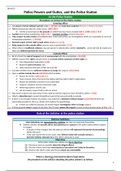
Police Powers and Duties, and the Police Station
At the Police Station
Procedure on Arrival at the Police station
Arresting officer
Has power of arrest without warrant under s. 24 PACE, but must have suspicion (Hussein v Chong Fook Kam)
Tell arrested person they are under arrest: s28(1) PACE
Tell the arrested person the grounds on which they have been arrested (s24.5, s23(8), Code C 10.3)
Caution them before questioning: Code C 10.1 – Standard wording set out in Para 10.5
Take suspect to police station immediately after arrest unless there are investigations which are reasonable to carry out
immediately elsewhere: s. 30 PACE
Remind suspect of their right to legal advice (Code C 6.1; 11.2)
Bring suspect to the custody officer asap (as soon as practicable): C2.1A
Where there is insufficient evidence, may ask person to attend police station voluntarily – arrest will only be made once
there are sufficient grounds for arrest.
Custody Officer
Be of at least the rank of Sergeant and be unconnected with the investigation: s.36 PACE
Tell the suspect their rights and give them an oral and written statement of their rights to:
Free independent legal advice (s.58)
Read the Code of Practice; and
Have someone informed of their arrest (s.56)
Consider whether there is sufficient evidence to charge the suspect: s37(1) PACE
Open a written Custody Record (s36 PACE) which includes:
Reason for arrest: Code G para 4.3
Time of arrest, time of arrival at the station and time told of right to legal advice
Reason for detention and time it was authorized
Suspect’s response and any comments made
When legal adviser arrived; and
List of property suspect had on him on arrival
May search suspect and seize items if they could be used by suspect to harm himself or others: s 54(3)
Attach a detention log to record all significant events that occurred while in custody
If there is not enough evidence at present, may authorize a detention without charge (s37(3) PACE) if there are
reasonable grounds for this (e.g. obtain such evidence by questioning).
If there are sufficient grounds, CO should require investigation offer to charge suspect.
If those grounds cease to apply at any time, the CO must release the suspect as soon as they become aware of this: s 39
Role of the Solicitor at the police station
Defence Solicitors
Most defendants are represented by a solicitor but they can represent themselves.
Defence solicitor will provide advice and assistance to a suspect in the police station before suspect
is charged.
If suspect is then charged, then the defence solicitor will represent that person in proceedings
before the court
If the case reaches the Crown Court, then defence solicit will normally instruct a
barrister/solicitor advocate to be the client’s advocate in court
Objectives
At the police station the solicitor has three objectives:
(1) Find out as much as possible about the alleged offence
(2) Find out if there have been any breaches of procedure and Codes by the police.
(3) Check on the client’s state and find out about any vulnerability
Where a client has exercised his right to legal advice,
the procedure on the solicitor attending the police station is as follows :
1
Police Powers and Duties, and the Police Station
At the Police Station
Procedure on Arrival at the Police station
Arresting officer
Has power of arrest without warrant under s. 24 PACE, but must have suspicion (Hussein v Chong Fook Kam)
Tell arrested person they are under arrest: s28(1) PACE
Tell the arrested person the grounds on which they have been arrested (s24.5, s23(8), Code C 10.3)
Caution them before questioning: Code C 10.1 – Standard wording set out in Para 10.5
Take suspect to police station immediately after arrest unless there are investigations which are reasonable to carry out
immediately elsewhere: s. 30 PACE
Remind suspect of their right to legal advice (Code C 6.1; 11.2)
Bring suspect to the custody officer asap (as soon as practicable): C2.1A
Where there is insufficient evidence, may ask person to attend police station voluntarily – arrest will only be made once
there are sufficient grounds for arrest.
Custody Officer
Be of at least the rank of Sergeant and be unconnected with the investigation: s.36 PACE
Tell the suspect their rights and give them an oral and written statement of their rights to:
Free independent legal advice (s.58)
Read the Code of Practice; and
Have someone informed of their arrest (s.56)
Consider whether there is sufficient evidence to charge the suspect: s37(1) PACE
Open a written Custody Record (s36 PACE) which includes:
Reason for arrest: Code G para 4.3
Time of arrest, time of arrival at the station and time told of right to legal advice
Reason for detention and time it was authorized
Suspect’s response and any comments made
When legal adviser arrived; and
List of property suspect had on him on arrival
May search suspect and seize items if they could be used by suspect to harm himself or others: s 54(3)
Attach a detention log to record all significant events that occurred while in custody
If there is not enough evidence at present, may authorize a detention without charge (s37(3) PACE) if there are
reasonable grounds for this (e.g. obtain such evidence by questioning).
If there are sufficient grounds, CO should require investigation offer to charge suspect.
If those grounds cease to apply at any time, the CO must release the suspect as soon as they become aware of this: s 39
Role of the Solicitor at the police station
Defence Solicitors
Most defendants are represented by a solicitor but they can represent themselves.
Defence solicitor will provide advice and assistance to a suspect in the police station before suspect
is charged.
If suspect is then charged, then the defence solicitor will represent that person in proceedings
before the court
If the case reaches the Crown Court, then defence solicit will normally instruct a
barrister/solicitor advocate to be the client’s advocate in court
Objectives
At the police station the solicitor has three objectives:
(1) Find out as much as possible about the alleged offence
(2) Find out if there have been any breaches of procedure and Codes by the police.
(3) Check on the client’s state and find out about any vulnerability
Where a client has exercised his right to legal advice,
the procedure on the solicitor attending the police station is as follows :
1