Rates of Reaction (Measuring Reaction Rates in Three Ways)
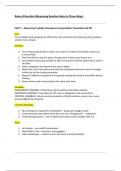
PART 1 – Measuring Turbidity (Cloudiness) Using Sodium Thiosulfate and HCl
Aim:
To investigate how temperature affects the rate of reaction by measuring how quickly a
solution turns cloudy.
Method:
1. Use a measuring cylinder to add a set volume of sodium thiosulfate solution to
a conical flask.
2. Place the flask on top of a piece of paper with a black cross drawn on it.
3. Use another measuring cylinder to add a set volume of dilute hydrochloric acid to
the flask.
4. Start a stopwatch the moment the acid is added.
5. Watch the cross from above and stop the stopwatch when the cross is no longer
visible due to the cloudy precipitate.
6. Repeat at different temperatures by gently heating the sodium thiosulfate before
starting.
7. Keep volumes and concentrations the same each time.
Variables:
INDEPENDENT VARIABLE: Temperature of the sodium thiosulfate solution.
DEPENDENT VARIABLE: Time taken for the cross to disappear (rate of reaction).
CONTROL VARIABLES: Volume and concentration of both solutions, same cross, same
person judging the end point.
Common Mistakes:
1. Not starting the stopwatch immediately – delays give dodgy results.
2. Inconsistent decision about when the cross has “disappeared” – subjective.
3. Using dirty glassware – ruins visibility and makes it look cloudier than it is.
Risks:
1. Hot liquids – can scald if overheated.
2. Hydrochloric acid – corrosive; wear goggles.
3. Sulfur dioxide gas – irritant; ensure the room is well-ventilated.
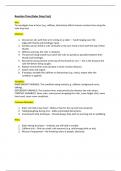
, PART 2 – Measuring Gas Volume Using a Gas Syringe (Magnesium + Hydrochloric Acid)
Aim:
To measure how the concentration of hydrochloric acid affects the rate of reaction by
measuring gas produced.
Method:
1. Use a measuring cylinder to add a set volume of dilute hydrochloric acid into
a conical flask.
2. Attach a bung and delivery tube connected to a gas syringe.
3. Add a strip of magnesium ribbon to the acid, then immediately seal the flask with
the bung and start the stopwatch.
4. Record the volume of gas in the syringe every 10 seconds until the reaction stops.
5. Repeat with different concentrations of hydrochloric acid.
Variables:
INDEPENDENT VARIABLE: Concentration of hydrochloric acid.
DEPENDENT VARIABLE: Volume of hydrogen gas produced over time.
CONTROL VARIABLES: Volume of acid, size/length of magnesium, same temperature.
Common Mistakes:
1. Delaying putting the bung on – gas escapes = rubbish results.
2. Not using the same size magnesium – affects how much gas is produced.
3. Gas syringe not sealed properly – you'll lose gas.
Risks:
1. Hydrochloric acid – corrosive; always wear goggles.
2. Gas pressure – don’t let the syringe fill beyond its limit.
3. Magnesium ribbon edges – sharp, be careful.
PART 1 – Measuring Turbidity (Cloudiness) Using Sodium Thiosulfate and HCl
Aim:
To investigate how temperature affects the rate of reaction by measuring how quickly a
solution turns cloudy.
Method:
1. Use a measuring cylinder to add a set volume of sodium thiosulfate solution to
a conical flask.
2. Place the flask on top of a piece of paper with a black cross drawn on it.
3. Use another measuring cylinder to add a set volume of dilute hydrochloric acid to
the flask.
4. Start a stopwatch the moment the acid is added.
5. Watch the cross from above and stop the stopwatch when the cross is no longer
visible due to the cloudy precipitate.
6. Repeat at different temperatures by gently heating the sodium thiosulfate before
starting.
7. Keep volumes and concentrations the same each time.
Variables:
INDEPENDENT VARIABLE: Temperature of the sodium thiosulfate solution.
DEPENDENT VARIABLE: Time taken for the cross to disappear (rate of reaction).
CONTROL VARIABLES: Volume and concentration of both solutions, same cross, same
person judging the end point.
Common Mistakes:
1. Not starting the stopwatch immediately – delays give dodgy results.
2. Inconsistent decision about when the cross has “disappeared” – subjective.
3. Using dirty glassware – ruins visibility and makes it look cloudier than it is.
Risks:
1. Hot liquids – can scald if overheated.
2. Hydrochloric acid – corrosive; wear goggles.
3. Sulfur dioxide gas – irritant; ensure the room is well-ventilated.
, PART 2 – Measuring Gas Volume Using a Gas Syringe (Magnesium + Hydrochloric Acid)
Aim:
To measure how the concentration of hydrochloric acid affects the rate of reaction by
measuring gas produced.
Method:
1. Use a measuring cylinder to add a set volume of dilute hydrochloric acid into
a conical flask.
2. Attach a bung and delivery tube connected to a gas syringe.
3. Add a strip of magnesium ribbon to the acid, then immediately seal the flask with
the bung and start the stopwatch.
4. Record the volume of gas in the syringe every 10 seconds until the reaction stops.
5. Repeat with different concentrations of hydrochloric acid.
Variables:
INDEPENDENT VARIABLE: Concentration of hydrochloric acid.
DEPENDENT VARIABLE: Volume of hydrogen gas produced over time.
CONTROL VARIABLES: Volume of acid, size/length of magnesium, same temperature.
Common Mistakes:
1. Delaying putting the bung on – gas escapes = rubbish results.
2. Not using the same size magnesium – affects how much gas is produced.
3. Gas syringe not sealed properly – you'll lose gas.
Risks:
1. Hydrochloric acid – corrosive; always wear goggles.
2. Gas pressure – don’t let the syringe fill beyond its limit.
3. Magnesium ribbon edges – sharp, be careful.