Research methods and techniques II
Chapter 1: Psychology is a way of thinking
Producing VS consuming research
- Examples to illustrate the importance of the research consumer role:
➔ Facilitated communication treatment (for patients with severe ASS)
➔ Scared-straight approach (scaring ppl so they don’t act out certain behaviour such as
crime) → doesn’t really work
➔ Mindfulness and academic performance
- Critical mindset is essential
- Not all published research is correct or robust
- Replication crisis in psychology
How scientist work
- Science is based on empiricism
- Scientists test theories (based on data)
- Scientists work on fundamental and applied problems
- Science is continuously evolving
- Scientists publish their findings in scientific journals
- Scientists communicate with the general public via journalists
Empiricism
- Empirical method is based on data obtained through:
➔ Our senses (sight, hearing, touch)
➔ Instruments that assist our senses (thermometer, questionnaires, timer)
- Empiricists aim to do research in a systematic, rigorous, and replicable manner
- Empiricism is not based on own experiences, intuition, or authority figures
Scientists test theories
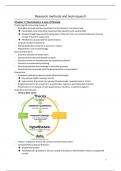
- Theory-data cycle
- Harlow: cupboard theory VS contact comfort theory dia11
- Characteristics of good theories:
➔ Supported by data
➔ Falsifiable (it’s possible to set up a study that allow to test whether theory is supported
or not)
1
, • Unfalsifiable → can’t reject theory if they don’t believe in it
➔ Parsimonious = simplest theory/explanation (“Occam’s razor”)
- Examples of non-falsifiable theories:
➔ Facilitated communication treatment believers
- Theories are evaluated based on all available evidence:
➔ A theory can never be “proven”, but it can be falsified
➔ Replication is crucial
Scientists form a community
- Merton’s scientific norms:
➔ Universalism: everyone should be able to do research
➔ Communality: scientists should be transparent & collaborate
➔ Disinterestedness: outcome of study shouldn’t depend on personal interest
➔ Organized scepticism: critical abt eachothers work (evaluate & critique…)
Fundamental VS applied research
- Basic research: (= fundamental research)
➔ Test theories without necessarily needing a practical outcome → just want to improve
understanding of world
➔ “What parts of the brain are active when experienced meditators are meditating?”
- Translational research:
➔ Trying to move towards practical application (not directly applicable in most situations)
➔ “In a lab study, can meditation lessons improve college students GRE scores?”
- Applied research:
➔ Can be applied to specif context/setting
➔ “Has our school’s new meditation program helped students focus longer on their math
lessons?”
Continuously evolving
- Theories are continuously tested, modified, and falsified
- Research triggers follow-up research (example: impact of colour on approach- and
avoidance-motivation in context) dia15-16
Publishing
- Manuscripts are submitted to scientific journals
- Peer-review process
➔ Role of editor, reviewers
➔ Reject, revise and resubmit, accept
Communication
- The science news cycle dia20
➔ Your research → university → news wire organisation → the internet → news (local)
Chapter 2: Sources of information
Sources of information
- Researchers:
➔ Use a comparison group
➔ Control of third variables
➔ Try to evaluate information without bias
- Research is better than:
➔ Experience, intuition, authority arguments
Research VS experience
- Experience has no comparison group
2
, ➔ Illustration of the role of comparison groups dia 24-26
- Research is confounded by third variables
➔ Confound = var die zowel de afhankelijke variabele als de onafhankelijke variabele beïnvl
➔ We do not control our own experience for multiple, simultaneously acting factors that
influence our feelings and behaviours (confounders)
- Bottom line: research is better than own experiences
- Researchers:
➔ Use a control group, control for confounders & attempt to evaluate information without
bias
➔ Example: Bushman – catharsis hypothesis dia27
➔ Research is probabilistic
Research VS intuition
- Cognitive biases: dia28
➔ A good story
➔ Availability heuristic
➔ Present/present bias: I did something, then felt better dia29
➔ Confirmation bias: we tend to believe something if it lies within out believes
➔ Confirmatory hypothesis testing: shape study in certain way that it’ll confirm believes
➔ Bias blind spot: we think we aren’t affected by results
Authority figures
Overview
- Overview of sources of information dia33
Scientific sources
- Empirical articles published in scientific journals
- Review articles published in scientific journals
- Chapters in books
- Scientific books
- Books for broad audience
- Blogs, internet sites
- Popular media
- Pyramid of scientific evidence:
Chapter 3: Three claims, four validities
Variables
- = something that varies, meaning that it has at least 2 levels or values
- Variables VS constants
3
Chapter 1: Psychology is a way of thinking
Producing VS consuming research
- Examples to illustrate the importance of the research consumer role:
➔ Facilitated communication treatment (for patients with severe ASS)
➔ Scared-straight approach (scaring ppl so they don’t act out certain behaviour such as
crime) → doesn’t really work
➔ Mindfulness and academic performance
- Critical mindset is essential
- Not all published research is correct or robust
- Replication crisis in psychology
How scientist work
- Science is based on empiricism
- Scientists test theories (based on data)
- Scientists work on fundamental and applied problems
- Science is continuously evolving
- Scientists publish their findings in scientific journals
- Scientists communicate with the general public via journalists
Empiricism
- Empirical method is based on data obtained through:
➔ Our senses (sight, hearing, touch)
➔ Instruments that assist our senses (thermometer, questionnaires, timer)
- Empiricists aim to do research in a systematic, rigorous, and replicable manner
- Empiricism is not based on own experiences, intuition, or authority figures
Scientists test theories
- Theory-data cycle
- Harlow: cupboard theory VS contact comfort theory dia11
- Characteristics of good theories:
➔ Supported by data
➔ Falsifiable (it’s possible to set up a study that allow to test whether theory is supported
or not)
1
, • Unfalsifiable → can’t reject theory if they don’t believe in it
➔ Parsimonious = simplest theory/explanation (“Occam’s razor”)
- Examples of non-falsifiable theories:
➔ Facilitated communication treatment believers
- Theories are evaluated based on all available evidence:
➔ A theory can never be “proven”, but it can be falsified
➔ Replication is crucial
Scientists form a community
- Merton’s scientific norms:
➔ Universalism: everyone should be able to do research
➔ Communality: scientists should be transparent & collaborate
➔ Disinterestedness: outcome of study shouldn’t depend on personal interest
➔ Organized scepticism: critical abt eachothers work (evaluate & critique…)
Fundamental VS applied research
- Basic research: (= fundamental research)
➔ Test theories without necessarily needing a practical outcome → just want to improve
understanding of world
➔ “What parts of the brain are active when experienced meditators are meditating?”
- Translational research:
➔ Trying to move towards practical application (not directly applicable in most situations)
➔ “In a lab study, can meditation lessons improve college students GRE scores?”
- Applied research:
➔ Can be applied to specif context/setting
➔ “Has our school’s new meditation program helped students focus longer on their math
lessons?”
Continuously evolving
- Theories are continuously tested, modified, and falsified
- Research triggers follow-up research (example: impact of colour on approach- and
avoidance-motivation in context) dia15-16
Publishing
- Manuscripts are submitted to scientific journals
- Peer-review process
➔ Role of editor, reviewers
➔ Reject, revise and resubmit, accept
Communication
- The science news cycle dia20
➔ Your research → university → news wire organisation → the internet → news (local)
Chapter 2: Sources of information
Sources of information
- Researchers:
➔ Use a comparison group
➔ Control of third variables
➔ Try to evaluate information without bias
- Research is better than:
➔ Experience, intuition, authority arguments
Research VS experience
- Experience has no comparison group
2
, ➔ Illustration of the role of comparison groups dia 24-26
- Research is confounded by third variables
➔ Confound = var die zowel de afhankelijke variabele als de onafhankelijke variabele beïnvl
➔ We do not control our own experience for multiple, simultaneously acting factors that
influence our feelings and behaviours (confounders)
- Bottom line: research is better than own experiences
- Researchers:
➔ Use a control group, control for confounders & attempt to evaluate information without
bias
➔ Example: Bushman – catharsis hypothesis dia27
➔ Research is probabilistic
Research VS intuition
- Cognitive biases: dia28
➔ A good story
➔ Availability heuristic
➔ Present/present bias: I did something, then felt better dia29
➔ Confirmation bias: we tend to believe something if it lies within out believes
➔ Confirmatory hypothesis testing: shape study in certain way that it’ll confirm believes
➔ Bias blind spot: we think we aren’t affected by results
Authority figures
Overview
- Overview of sources of information dia33
Scientific sources
- Empirical articles published in scientific journals
- Review articles published in scientific journals
- Chapters in books
- Scientific books
- Books for broad audience
- Blogs, internet sites
- Popular media
- Pyramid of scientific evidence:
Chapter 3: Three claims, four validities
Variables
- = something that varies, meaning that it has at least 2 levels or values
- Variables VS constants
3