1
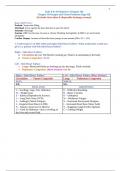
Units 9 & 10 Objectives (Chapter 38)
Chapter 38 Oxygen and Tissue Perfusion Page 928
(Exclude chest tubes & disposable drainage systems)
Basic A&P review:
Preload- Ventricular filling
Afterload- Force against the heart that has to eject the blood
Ischemia- Blockage
Anemia- RBC lost because of acute or chronic bleeding/ hemoglobin, & RBC’s are not formed
adequately
Cardiac Output- Amount of blood the heart pumps in one minute (HR x SV = CO)
1. Understand s/s of (left-sided and right-sided) heart failure. What medication would you
give to a patient with left-sided heart failure?
Right - Side Heart Failure
o Circulation all over. The blood is backing up. Fluid is accumulating in the body.
o Venous Congestion / No O2
Left - Side Heart Failure
o Lungs. Blood and fluids are backing up into the lungs. Fluid overload.
o Pulmonary Congestion. (Most Serious) with O2
Right - Sided Heart Failure Left - Sided Heart Failure (More Serious)
Circulation / Venous Congestion Lungs / Pulmonary Congestion
No O2 With O2
S/S: S/S:
SWELLING DROWNING
S – Swelling- Legs, Feet, Abdomen D – Difficulty Breathing
W – Weight Gain R – Rales/ Crackles
E – Edema (Dependent & Ascites) O – Orthopnea
L – Long Neck Veins (JVD) W – Weakness/ Fatigue
L – Lethargic (Weak/ Fatigue) N – Nocturnal Paroxysmal Dyspnea
I – Irregular Heart Beat (A-FIB) I – Increased Heart Rate (Sinus Tach)
N – Nausea/ Anorexia/ Gi Distress N – Nagging Cough (Frothy Sputum)
G – Girth of Abdomen ^ due to swelling of G – Gaining Weight
the liver and excess fluid
, 2
Heart Failure s/s in General:
Poor BP
Poor cardiac output
Poor renal perfusion
Poor Neuro perfusion
Signs and Symptoms of Heart failure warrant a call to PCP
o Shortness of breath with exertion or when supine
o Weight gain of 2-3 pounds in 1 day
o Weight gain of 5 pounds in 1 week
o Increased cough with pink-tinged sputum
o New or Increased swelling of the ankles, feet or abdomen
Medications for Left Heart Failure
Reduce the workload of the heart and prevent vasoconstriction
o Nitrates, calcium channel blockers, and ACE inhibitors
Increase contractile strength of the heart
o Digoxin (Positive inotropic drugs) hold if HR is less than 60
Help increase pressure
Block sympathetic nervous system action and decrease oxygen consumption
o Propranolol Beta Blockers
Vasodilators
Diuretics – Furosemide
Enoxaparin – Baby Aspirin 81mg
IV fluids:
o Give to a patient the has inadequate stroke volume related to decreased preload
Think about nursing considerations with each of these classes:
o Diuretics: monitor strict I&O and watch serum electrolytes (specifically potassium)
o Digoxin: take HR and hold if below 60
o Antihypertensives: monitor BP and watch for orthostatic hypotension
o Vasodilators could cause a headache as a s/s
o Enoxaparin: teach patients to monitor closely for signs of bleeding and to report to PCP
immediately (ex: blood in stools, nosebleeds, bruising, etc.)
, 3
MI Treatment (MONA)
o M- Morphine
o O- O2
o N- Nitrates
o A- Aspirin
Chronic Heart Failure:
o F- Fatigue
o A- Limitation of activities
o C- Chest congestion and cough
o E- Edema
o S- Shortness of breath
2. Know medications that are given for fluid overload
Diuretics
o Thiazide
o Angiotensin-converting enzyme (ACE) inhibitors
o Angiotensin II receptor antagonists
o Beta-blockers
o Calcium channel blockers
o Alpha-1 antagonists
o Alpha-2 agonists
o Vasodilators (monitor BP, dizziness, hypotension)
3. Understand the various cardiac diagnostics tests and what they show.
Complete Blood Count
Provides Information regarding oxygen and carbon dioxide transport capabilities and status of
the immune response.
What’s included in a complete blood count:
o RBC
o Hemoglobin Decreased in Heart Failure due to excess fluid in the system causing
hemodilution
o Hemoglobin & Hematocrit Increases in patients with COPD due to the overproduction
of RBC’s stimulated by low oxygen levels
o WBC elevated due to infection (Endocarditis)
o Hematocrit levels (indicate oxygen-carrying capacity)
Basic Metabolic Panel
Used to assess:
o Renal function
o Glucose level
o Electrolytes (imbalance can cause cardiac arrhythmias)
o Heart Failure or hypertension may be on Diuretics, which can cause hypokalemia and
hypomagnesemia
Units 9 & 10 Objectives (Chapter 38)
Chapter 38 Oxygen and Tissue Perfusion Page 928
(Exclude chest tubes & disposable drainage systems)
Basic A&P review:
Preload- Ventricular filling
Afterload- Force against the heart that has to eject the blood
Ischemia- Blockage
Anemia- RBC lost because of acute or chronic bleeding/ hemoglobin, & RBC’s are not formed
adequately
Cardiac Output- Amount of blood the heart pumps in one minute (HR x SV = CO)
1. Understand s/s of (left-sided and right-sided) heart failure. What medication would you
give to a patient with left-sided heart failure?
Right - Side Heart Failure
o Circulation all over. The blood is backing up. Fluid is accumulating in the body.
o Venous Congestion / No O2
Left - Side Heart Failure
o Lungs. Blood and fluids are backing up into the lungs. Fluid overload.
o Pulmonary Congestion. (Most Serious) with O2
Right - Sided Heart Failure Left - Sided Heart Failure (More Serious)
Circulation / Venous Congestion Lungs / Pulmonary Congestion
No O2 With O2
S/S: S/S:
SWELLING DROWNING
S – Swelling- Legs, Feet, Abdomen D – Difficulty Breathing
W – Weight Gain R – Rales/ Crackles
E – Edema (Dependent & Ascites) O – Orthopnea
L – Long Neck Veins (JVD) W – Weakness/ Fatigue
L – Lethargic (Weak/ Fatigue) N – Nocturnal Paroxysmal Dyspnea
I – Irregular Heart Beat (A-FIB) I – Increased Heart Rate (Sinus Tach)
N – Nausea/ Anorexia/ Gi Distress N – Nagging Cough (Frothy Sputum)
G – Girth of Abdomen ^ due to swelling of G – Gaining Weight
the liver and excess fluid
, 2
Heart Failure s/s in General:
Poor BP
Poor cardiac output
Poor renal perfusion
Poor Neuro perfusion
Signs and Symptoms of Heart failure warrant a call to PCP
o Shortness of breath with exertion or when supine
o Weight gain of 2-3 pounds in 1 day
o Weight gain of 5 pounds in 1 week
o Increased cough with pink-tinged sputum
o New or Increased swelling of the ankles, feet or abdomen
Medications for Left Heart Failure
Reduce the workload of the heart and prevent vasoconstriction
o Nitrates, calcium channel blockers, and ACE inhibitors
Increase contractile strength of the heart
o Digoxin (Positive inotropic drugs) hold if HR is less than 60
Help increase pressure
Block sympathetic nervous system action and decrease oxygen consumption
o Propranolol Beta Blockers
Vasodilators
Diuretics – Furosemide
Enoxaparin – Baby Aspirin 81mg
IV fluids:
o Give to a patient the has inadequate stroke volume related to decreased preload
Think about nursing considerations with each of these classes:
o Diuretics: monitor strict I&O and watch serum electrolytes (specifically potassium)
o Digoxin: take HR and hold if below 60
o Antihypertensives: monitor BP and watch for orthostatic hypotension
o Vasodilators could cause a headache as a s/s
o Enoxaparin: teach patients to monitor closely for signs of bleeding and to report to PCP
immediately (ex: blood in stools, nosebleeds, bruising, etc.)
, 3
MI Treatment (MONA)
o M- Morphine
o O- O2
o N- Nitrates
o A- Aspirin
Chronic Heart Failure:
o F- Fatigue
o A- Limitation of activities
o C- Chest congestion and cough
o E- Edema
o S- Shortness of breath
2. Know medications that are given for fluid overload
Diuretics
o Thiazide
o Angiotensin-converting enzyme (ACE) inhibitors
o Angiotensin II receptor antagonists
o Beta-blockers
o Calcium channel blockers
o Alpha-1 antagonists
o Alpha-2 agonists
o Vasodilators (monitor BP, dizziness, hypotension)
3. Understand the various cardiac diagnostics tests and what they show.
Complete Blood Count
Provides Information regarding oxygen and carbon dioxide transport capabilities and status of
the immune response.
What’s included in a complete blood count:
o RBC
o Hemoglobin Decreased in Heart Failure due to excess fluid in the system causing
hemodilution
o Hemoglobin & Hematocrit Increases in patients with COPD due to the overproduction
of RBC’s stimulated by low oxygen levels
o WBC elevated due to infection (Endocarditis)
o Hematocrit levels (indicate oxygen-carrying capacity)
Basic Metabolic Panel
Used to assess:
o Renal function
o Glucose level
o Electrolytes (imbalance can cause cardiac arrhythmias)
o Heart Failure or hypertension may be on Diuretics, which can cause hypokalemia and
hypomagnesemia