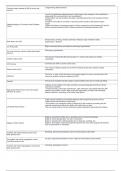
Coronary artery disease (CAD) is mainly the Longstanding atherosclerosis
result of
*result of longstanding atherosclerosis (which begins with damage to the endothelium,
responsible for vasoconstriction and vasodilation)
*inflammation sets up formation of plaque, disrupting blood flow and causing thrombus
formation
*Overtime, this build up can lead to narrowing which results in decreased oxygen
supply
Pathophysiology of Coronary Artery Disease
*patient will begin to experience angina. Further progression of the disease will result in
(CAD)
acute coronary syndrome (ACS), formerly known as myocardial infarction (MI).
family history, smoking, obesity (sedentary lifestyle), high cholesterol (diet),
Risk factors for CAD hypertension, diabetes
Cor Pulmonale Right ventricular failure secondary to pulmonary hypertension.
Pulmonary hypertension.
The most common cause of right-sided heart
failure is:
The amount of blood that the heart pumps in 1 minute. Also known as cardiac
Cardiac Output (CO): contractility.
CO Formula: CO=heart rate (HR) x stroke volume (SV).
The volume of blood pumped out of the left ventricle during each systolic cardiac
Stroke Volume (SV): contraction.
The force, or load, which the heart must contract against in order to pump blood. Also
Afterload: known as systemic vascular resistance (SVR).
Preload: The amount of stretch that the cardiac muscle exhibits at the end of ventricular filling.
*defines as the inability of the right ventricle to provide adequate blood flow into the
pulmonary circulation
* Causes include: pulmonary hypertension, right ventricular myocardial infarction (MI)
Right Sided Heart Failure (Cor Pulmonale): weakens the cardiac muscle, right ventricular hypertrophy, tricuspid valve damage
definition & causes (allows backflow), secondary to left sided heart failure
*High vascular resistance (increased afterload) will increase the amount of force
needed for the left ventricle to eject blood
* this results in an increased volume of blood left in the ventricle (increasing the left
ventricle preload) and affects the ability of the left atrium to eject
Left Sided Heart Failure *this can cause build up into the pulmonary system leading to right sided heart failure
Stage A: risk factors (CAD), but no symptoms and no structural damage
Stage B: Heart damage (MI), but still no symptoms
Stage C: Symptomatic; affecting ADLS due to dyspnea, swelling, etc.
Stages of Heart Failure Stage D: End Stage; maximized treatment options and may need surgical interventions
such as pacemaker or transplant
A patient with mitral stenosis would most Rumbling, decrescendo diastolic murmur heard at apex of the heart.
likely present with:
The patient with aortic regurgitation would an early, high-pitched diastolic murmur heard at the left lower sternal border.
most likely present with
A patient with mitral regurgitation would most a blowing, holosystolic murmur
likely present with
result of
*result of longstanding atherosclerosis (which begins with damage to the endothelium,
responsible for vasoconstriction and vasodilation)
*inflammation sets up formation of plaque, disrupting blood flow and causing thrombus
formation
*Overtime, this build up can lead to narrowing which results in decreased oxygen
supply
Pathophysiology of Coronary Artery Disease
*patient will begin to experience angina. Further progression of the disease will result in
(CAD)
acute coronary syndrome (ACS), formerly known as myocardial infarction (MI).
family history, smoking, obesity (sedentary lifestyle), high cholesterol (diet),
Risk factors for CAD hypertension, diabetes
Cor Pulmonale Right ventricular failure secondary to pulmonary hypertension.
Pulmonary hypertension.
The most common cause of right-sided heart
failure is:
The amount of blood that the heart pumps in 1 minute. Also known as cardiac
Cardiac Output (CO): contractility.
CO Formula: CO=heart rate (HR) x stroke volume (SV).
The volume of blood pumped out of the left ventricle during each systolic cardiac
Stroke Volume (SV): contraction.
The force, or load, which the heart must contract against in order to pump blood. Also
Afterload: known as systemic vascular resistance (SVR).
Preload: The amount of stretch that the cardiac muscle exhibits at the end of ventricular filling.
*defines as the inability of the right ventricle to provide adequate blood flow into the
pulmonary circulation
* Causes include: pulmonary hypertension, right ventricular myocardial infarction (MI)
Right Sided Heart Failure (Cor Pulmonale): weakens the cardiac muscle, right ventricular hypertrophy, tricuspid valve damage
definition & causes (allows backflow), secondary to left sided heart failure
*High vascular resistance (increased afterload) will increase the amount of force
needed for the left ventricle to eject blood
* this results in an increased volume of blood left in the ventricle (increasing the left
ventricle preload) and affects the ability of the left atrium to eject
Left Sided Heart Failure *this can cause build up into the pulmonary system leading to right sided heart failure
Stage A: risk factors (CAD), but no symptoms and no structural damage
Stage B: Heart damage (MI), but still no symptoms
Stage C: Symptomatic; affecting ADLS due to dyspnea, swelling, etc.
Stages of Heart Failure Stage D: End Stage; maximized treatment options and may need surgical interventions
such as pacemaker or transplant
A patient with mitral stenosis would most Rumbling, decrescendo diastolic murmur heard at apex of the heart.
likely present with:
The patient with aortic regurgitation would an early, high-pitched diastolic murmur heard at the left lower sternal border.
most likely present with
A patient with mitral regurgitation would most a blowing, holosystolic murmur
likely present with