Music Therapy Exam Review Guide
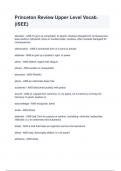
ACRONYMS -
ACRONYMS
NICU -
neonatal intensive care unit
RAS -
Rhythmic Auditory Stimulation
- deals with improving gait
TIMP -
Therapeutic Instrumental Music Performance:
- Using instruments to help with motor function
MACT -
Musical Attention Control Training
PSE -
Patterned Sensory Enhancement
MMT -
Musical Mnemonics Training:
- Uses music to help memory
NMT -
Neurological Music Therapy
TDM -
Transformational Design Model (5 model)
AMTA—year of unification -
American Music Therapy Assoiation - 1998
CBMT—year established -
Certification Board for Music Therapist - 1983
BEHAVIORAL/EMOTIONAL -
BEHAVIORAL/EMOTIONAL
Symptom & descriptions -
Symptom & descriptions
Negative symptoms -
Schizophrenia:
, - deficit in facial affect
- flattened emotions
- inability to begin/sustain goal directed activity
- poverty of speech (little to say in everyday convo, or brief replies
- inability to understand reality
Dementia:
- group of symptoms
- progressive loss of memory and other intellectual functions
- serious enough to interfere with performing the tasks of daily life
Hallucinations -
sensory experiences that occur in absence of actual environmental stimulation
- such as hearing voices
- seeing things that don't exist
Delusions -
false beliefs that lack reality which is maintained by patient despite evidence proving its false . . .
- being persecuted
- grandeur: . "I'm famous" (Elvis) (Jesus Christ)
- control (aliens controlling life)
- romance (someone is in love w/ you)
Disorganized speech -
- shifting from one topic to another randomly
- speech seems illogical or incoherent
- most severe: can make communication nearly impossible
Grossly disorganized behavior or catatonic behavior -
- inability to organize basic activities in daily life
Catotonic:
- DeF: unresponsive
- marked abnormality in motor behavior
- long fixed posture
what are . . . -
what are. . . .
episodes -
discrete periods of time in which the person's behavior is dominated marked change of previous
functioning by either a depressed or manic mood
Levels of group therapy and descriptions of each -
1) supportive - activity oriented MT
- promote healthy behavior/foster participation
ACRONYMS -
ACRONYMS
NICU -
neonatal intensive care unit
RAS -
Rhythmic Auditory Stimulation
- deals with improving gait
TIMP -
Therapeutic Instrumental Music Performance:
- Using instruments to help with motor function
MACT -
Musical Attention Control Training
PSE -
Patterned Sensory Enhancement
MMT -
Musical Mnemonics Training:
- Uses music to help memory
NMT -
Neurological Music Therapy
TDM -
Transformational Design Model (5 model)
AMTA—year of unification -
American Music Therapy Assoiation - 1998
CBMT—year established -
Certification Board for Music Therapist - 1983
BEHAVIORAL/EMOTIONAL -
BEHAVIORAL/EMOTIONAL
Symptom & descriptions -
Symptom & descriptions
Negative symptoms -
Schizophrenia:
, - deficit in facial affect
- flattened emotions
- inability to begin/sustain goal directed activity
- poverty of speech (little to say in everyday convo, or brief replies
- inability to understand reality
Dementia:
- group of symptoms
- progressive loss of memory and other intellectual functions
- serious enough to interfere with performing the tasks of daily life
Hallucinations -
sensory experiences that occur in absence of actual environmental stimulation
- such as hearing voices
- seeing things that don't exist
Delusions -
false beliefs that lack reality which is maintained by patient despite evidence proving its false . . .
- being persecuted
- grandeur: . "I'm famous" (Elvis) (Jesus Christ)
- control (aliens controlling life)
- romance (someone is in love w/ you)
Disorganized speech -
- shifting from one topic to another randomly
- speech seems illogical or incoherent
- most severe: can make communication nearly impossible
Grossly disorganized behavior or catatonic behavior -
- inability to organize basic activities in daily life
Catotonic:
- DeF: unresponsive
- marked abnormality in motor behavior
- long fixed posture
what are . . . -
what are. . . .
episodes -
discrete periods of time in which the person's behavior is dominated marked change of previous
functioning by either a depressed or manic mood
Levels of group therapy and descriptions of each -
1) supportive - activity oriented MT
- promote healthy behavior/foster participation