Russia- Theme 4- Social developments
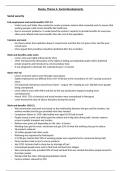
Social security
Full employment and social benefits 1917-53
- Under Lenin and Stalin, they wanted to create economic systems that rewarded work to ensure that
working people could receive benefits like healthcare
- Due to economic problems- it undermined the system’s capacity to provide benefits for everyone-
often party officials had more benefits than the rest of the population
Marxism and work
- His theory states that capitalism doesn’t reward work and that the rich grow richer and the poor
remain poor
- Marx argued that parasitism should be abolished after the revolution
Work and benefits under Lenin
- Lenin’s view was highly influenced by Marx
- 1918- introduced the declaration of the rights of toiling and exploited people which abolished
private property and introduced a universal labour duty
- It was designed to eliminate the ‘patristical layers’ of society
Work 1917-18
- Lenin’s economic policy went through many phases
- Stable employment was difficult from 1917-1918 due to the revolutions of 1917 causing economic
chaos
- 570 industrial enterprises closed from March – August 1917 leading to over 100,000 more people
being unemployed
- Lenin called a truce with WW1 and due to this war production stopped creating more
unemployment
- March 1918- 75% of chemical and metal workers were unemployed in Petrograd
- Lenin stressed the duty of labour discipline during this period
Work and benefits 1918-21
- War communism and work was based on the relationship between the gov and the workers, the
workers worked and the gov provided what they needed
- Compulsory labour in 1918- able bodied men aged 16-50 had to work
- People issued a work card which gave the rations and in big cities dining halls, laundry systems
access to public transport and creches
- Rations were given out depending on the class- 6 classes
- Working class got the most- aristocrats only got 25% of what the working class got in rations
- 36 products rationed
- 22 million people had ration cards
- Rationing was organised by Podraspred
- In 1920 gov claimed that 93% of working people were regularly fed in communal dining halls
- Party members had access to scarce products
- July 1920- factories had to close due to shortage of fuel
- Unemployed people were sent to find food and fuel from villages
- War communism only provided 50% of food and duel that was needed therefore people turned to
the black market
- Workers fled the cities- Petrograd population halved
- Factory workers reduced by 25%
,Work and benefits in the 1920s
- State capitalism returned under the NEP
- Capitalism and unemployment returned
- Percentage of labour force unemployed went from 5.5% in 1921 to 18% in 1924
- 1921-22 red army soldiers demobilised so found it hard to find work
- Workers who left the city during the civil war returned and couldn’t find jobs
- Gov wanted to rationalise the industry, therefore less workers to reduce unit costs
- War communism ended and the gov sacked 225,000 administrators
- Gov prioritised jobs for the former red army in 1926
- Funding for creches ended
- Percentage of unemployed people in 1922 that were women in towns and cities- 62.2%
- 1920s extensive system of benefits for workers
- 1922 labour law gave unions the right to negotiate binding agreements about pay and working
conditions with employers
- Social insurance- paid disability benefits, etc and covered 9m workers
- Invested in education for urban families
- Peasants were excluded – gov wanted to focus on the proletariat
- Paid around 10% more in 1926 than 1913 and ate more meat and fish
- Peasants didn’t gain anything as it was only mainly in cities and big towns
Work and benefits under Stalin
- Under Stalin he re-established the compulsory work and benefits
- He saw workers as a crucial resource and wanted full employment to help his five year plans and
heavy industrialisation
- He saw workers as being crucial for building socialism
Employment and benefits in the 1930s
- Rapid industrialisation meant all men and women had full employment
- However the full employment didn’t lead to a raise in the standards of living
- Working conditions deteriorated with the five year plans
- Miners worked in dangerous conditions
- Meeting production targets was more important to Stalin
- Harsh labour discipline introduced
o Lateness was criminalised
o Unions lost the right to negotiate with factory managers
o Damaging factory property was criminalised
o Strikes were banned
- ‘continuous work week’ – factories and mines could work 7 day weeks
- 1940- workers lost the right to change jobs – internal passports to prevent workers from moving
town to town
- Five year plans did lead to benefits
o Workers had food rations
o 1933- most people had access to electricity
o 1930s 300,000km of railways were built
o Moscow metro opened
o Healthcare- mass vaccination campaigns like smallpox and malaria
o Factory and farm canteens for workers
- Before the benefits were through unions or local soviets but under Stalin they were available
through factories or collective farms- link between work and social welfare
- Peasants not entitled to rations, gov seized the vast majority of farm production
- Party officials came first- ‘party first’ policy – access to all vaccines
- 10,000 cases of malaria in 1932 and 26,000 in 1933 in Ukraine
, Employment and benefits 1945-50
- Full employment continued after the war
- Industrial workforce went from 8 million to 12.2 million from 1945-50 – due to returning soldiers
- Food shortages effected benefits- communal canteens costing workers 250-300 roubles a month in
1947
- Under 18s entitled to 3 subsided priced meals a day but due to their low pay and it only covering
2.3kg of meat and 6 eggs a month- they still couldn’t afford it
- Communal eating fell
- Healthcare improved in the 1940s
o Infant mortality declined by 50% 1947-50
o Number of doctors increased by 2/3 1947-52
o Vaccines were universally available from 1947 onwards- Malaria cases declined by 1949
- Sickness rates didn’t fall due to poor housing and working conditions and lack of food
o Warm clothing and simple items like soap were in shortage
o Work canteens used rotten food and other products not fit for human consumption which
made people unwell
o Sanitation on farms and factories was inadequate- lice and vomiting
o Hygiene education was poor wasn’t until 1947 that it was promoted to wash your hands
after using the toilet
o Average worker took 10-13 days off ill in 1946 and this remained constant until mid 1950s
Housing 1917-53
- Housing was a big problem- destroyed in civil war and WW2
- Housing was expensive to build- people travelled to big cities to find jobs but they were already
overcrowded
- 1920s gov redistributed housing and took it away from rich property owners
- Under Stalin gov built houses- lacked facilities like running water and electricity and sewerage
Redistribution of property 1918-28
- From 1918- workers could take housing from aristocrats in big cities- they were either killed or
allowed one single room for their families
- Many people squatted in deserted buildings
- Lenin issued a decree in August 1918 to bring it under control- the local soviets took the property
away and redistributed it
- End of the civil war workers fled to the cities to find food as factories were closing- houses were
destroyed to use the wood for fuel
- 60-80% of housing was denationalised under the NEP
- Under the NEP redistribution of property was outlawed but after his death there was large attempts
to redistribute housing – in 1923-24- town houses were socialised
- Church property nationalised- priests evicted from their homes and they were turned into housing,
shops etc
- 1921- rent reintroduced
- 1923- house building started again
- Under the NEP 89% of house building was undertaken by private companies
- Buildings which reflected the values of the revolution: all built 1927-29
o Zuev club
o Rusakov club
o Burevestnik club
o Centres for workers
- Constructivist houses were also built
o Narkomfin apartments in Moscow- collective living- 4 planned only 2 built in 1928- little
impact
Social security
Full employment and social benefits 1917-53
- Under Lenin and Stalin, they wanted to create economic systems that rewarded work to ensure that
working people could receive benefits like healthcare
- Due to economic problems- it undermined the system’s capacity to provide benefits for everyone-
often party officials had more benefits than the rest of the population
Marxism and work
- His theory states that capitalism doesn’t reward work and that the rich grow richer and the poor
remain poor
- Marx argued that parasitism should be abolished after the revolution
Work and benefits under Lenin
- Lenin’s view was highly influenced by Marx
- 1918- introduced the declaration of the rights of toiling and exploited people which abolished
private property and introduced a universal labour duty
- It was designed to eliminate the ‘patristical layers’ of society
Work 1917-18
- Lenin’s economic policy went through many phases
- Stable employment was difficult from 1917-1918 due to the revolutions of 1917 causing economic
chaos
- 570 industrial enterprises closed from March – August 1917 leading to over 100,000 more people
being unemployed
- Lenin called a truce with WW1 and due to this war production stopped creating more
unemployment
- March 1918- 75% of chemical and metal workers were unemployed in Petrograd
- Lenin stressed the duty of labour discipline during this period
Work and benefits 1918-21
- War communism and work was based on the relationship between the gov and the workers, the
workers worked and the gov provided what they needed
- Compulsory labour in 1918- able bodied men aged 16-50 had to work
- People issued a work card which gave the rations and in big cities dining halls, laundry systems
access to public transport and creches
- Rations were given out depending on the class- 6 classes
- Working class got the most- aristocrats only got 25% of what the working class got in rations
- 36 products rationed
- 22 million people had ration cards
- Rationing was organised by Podraspred
- In 1920 gov claimed that 93% of working people were regularly fed in communal dining halls
- Party members had access to scarce products
- July 1920- factories had to close due to shortage of fuel
- Unemployed people were sent to find food and fuel from villages
- War communism only provided 50% of food and duel that was needed therefore people turned to
the black market
- Workers fled the cities- Petrograd population halved
- Factory workers reduced by 25%
,Work and benefits in the 1920s
- State capitalism returned under the NEP
- Capitalism and unemployment returned
- Percentage of labour force unemployed went from 5.5% in 1921 to 18% in 1924
- 1921-22 red army soldiers demobilised so found it hard to find work
- Workers who left the city during the civil war returned and couldn’t find jobs
- Gov wanted to rationalise the industry, therefore less workers to reduce unit costs
- War communism ended and the gov sacked 225,000 administrators
- Gov prioritised jobs for the former red army in 1926
- Funding for creches ended
- Percentage of unemployed people in 1922 that were women in towns and cities- 62.2%
- 1920s extensive system of benefits for workers
- 1922 labour law gave unions the right to negotiate binding agreements about pay and working
conditions with employers
- Social insurance- paid disability benefits, etc and covered 9m workers
- Invested in education for urban families
- Peasants were excluded – gov wanted to focus on the proletariat
- Paid around 10% more in 1926 than 1913 and ate more meat and fish
- Peasants didn’t gain anything as it was only mainly in cities and big towns
Work and benefits under Stalin
- Under Stalin he re-established the compulsory work and benefits
- He saw workers as a crucial resource and wanted full employment to help his five year plans and
heavy industrialisation
- He saw workers as being crucial for building socialism
Employment and benefits in the 1930s
- Rapid industrialisation meant all men and women had full employment
- However the full employment didn’t lead to a raise in the standards of living
- Working conditions deteriorated with the five year plans
- Miners worked in dangerous conditions
- Meeting production targets was more important to Stalin
- Harsh labour discipline introduced
o Lateness was criminalised
o Unions lost the right to negotiate with factory managers
o Damaging factory property was criminalised
o Strikes were banned
- ‘continuous work week’ – factories and mines could work 7 day weeks
- 1940- workers lost the right to change jobs – internal passports to prevent workers from moving
town to town
- Five year plans did lead to benefits
o Workers had food rations
o 1933- most people had access to electricity
o 1930s 300,000km of railways were built
o Moscow metro opened
o Healthcare- mass vaccination campaigns like smallpox and malaria
o Factory and farm canteens for workers
- Before the benefits were through unions or local soviets but under Stalin they were available
through factories or collective farms- link between work and social welfare
- Peasants not entitled to rations, gov seized the vast majority of farm production
- Party officials came first- ‘party first’ policy – access to all vaccines
- 10,000 cases of malaria in 1932 and 26,000 in 1933 in Ukraine
, Employment and benefits 1945-50
- Full employment continued after the war
- Industrial workforce went from 8 million to 12.2 million from 1945-50 – due to returning soldiers
- Food shortages effected benefits- communal canteens costing workers 250-300 roubles a month in
1947
- Under 18s entitled to 3 subsided priced meals a day but due to their low pay and it only covering
2.3kg of meat and 6 eggs a month- they still couldn’t afford it
- Communal eating fell
- Healthcare improved in the 1940s
o Infant mortality declined by 50% 1947-50
o Number of doctors increased by 2/3 1947-52
o Vaccines were universally available from 1947 onwards- Malaria cases declined by 1949
- Sickness rates didn’t fall due to poor housing and working conditions and lack of food
o Warm clothing and simple items like soap were in shortage
o Work canteens used rotten food and other products not fit for human consumption which
made people unwell
o Sanitation on farms and factories was inadequate- lice and vomiting
o Hygiene education was poor wasn’t until 1947 that it was promoted to wash your hands
after using the toilet
o Average worker took 10-13 days off ill in 1946 and this remained constant until mid 1950s
Housing 1917-53
- Housing was a big problem- destroyed in civil war and WW2
- Housing was expensive to build- people travelled to big cities to find jobs but they were already
overcrowded
- 1920s gov redistributed housing and took it away from rich property owners
- Under Stalin gov built houses- lacked facilities like running water and electricity and sewerage
Redistribution of property 1918-28
- From 1918- workers could take housing from aristocrats in big cities- they were either killed or
allowed one single room for their families
- Many people squatted in deserted buildings
- Lenin issued a decree in August 1918 to bring it under control- the local soviets took the property
away and redistributed it
- End of the civil war workers fled to the cities to find food as factories were closing- houses were
destroyed to use the wood for fuel
- 60-80% of housing was denationalised under the NEP
- Under the NEP redistribution of property was outlawed but after his death there was large attempts
to redistribute housing – in 1923-24- town houses were socialised
- Church property nationalised- priests evicted from their homes and they were turned into housing,
shops etc
- 1921- rent reintroduced
- 1923- house building started again
- Under the NEP 89% of house building was undertaken by private companies
- Buildings which reflected the values of the revolution: all built 1927-29
o Zuev club
o Rusakov club
o Burevestnik club
o Centres for workers
- Constructivist houses were also built
o Narkomfin apartments in Moscow- collective living- 4 planned only 2 built in 1928- little
impact