3-27-18
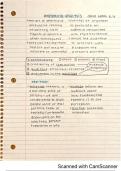
* Microorganisms: organisms too small to be seen with the naked eye. Use microscope to see.
* Bacteria:
- Prokaryotes: no nucleus
- Single-celled
- Peptidoglycan in cell walls
- Divide through binary fission
- Nutrients from organic/inorganic chemicals, or photosynthesis
- Shapes:
Bacillus (rod). Sometimes in pairs
Coccus (sphere, ball). Sometimes in bunches
Most are monomorphic (single shaped)
Uncommon shape: spiral
* Archaea:
- Prokaryotes
- Single-celled
- No peptidoglycan cell walls
- Found in extreme environments
* Fungi:
- Eukaryotes: nucleus
- Single or multicellular
- Chitin cell walls
- Absorb organic chemicals for energy
, - Yeast: unicellular, spore: multicellular
* Protozoa
- Eukaryotes
- Single cell
- Absorb or ingest organic chemicals
- Motile via pseudopods, cilia, or flagella
- Free living or parasitic
* Algae:
- Eukaryotes
- Uni or multicellular
- Cellulose cell walls
- Found in freshwater, saltwater, and soil
- Photosynthesis
* Viruses
- Acellular: no cell
- Consist of genomic information (RNA or DNA)
- Need a host to survive
* Prions:
- Infectious, mainly protein
- No RNA or DNA
- Mad cow disease
- Consist of prion protein (PrP) infectious form.
, * Microbes:
- Pathogenic (cause disease). Not all cause disease
- Decompose organic waste
- Make O2 by photosynthesis
- Produce chemical products (ethanol, acetone, vitamins)
- Produce fermented food (vinegar, cheese, bread, wine)
- Produce products in manufacturing (cellulase) and disease treatment (insulin)
* Genus capitalized. Epithet lowercase. All italicized. Ex: Escherichia coli (E.coli).
* Cell: smallest most basic unit of life. Has boundary (membrane).
* Pasteurization: heating, not boiling to kill certain bacterias.
3-29-18
* Chemical rxns: making/breaking bonds
* Anabolism: synthesis of molecules in cells. Opposite for catabolism.
* Carbs: hydrophilic
- Used for energy and structural components of DNA/RNA.
* Lipids: made of C and H
- Non-polar covalent
- Saturated fat: straight tails
- Unsaturated fat: kinks in tails
* Phospholipid: glycerol
- Forms phospholipid bilayer. Selectively permeable
* Endocytosis: cell engulfs some molecules.
* Microorganisms: organisms too small to be seen with the naked eye. Use microscope to see.
* Bacteria:
- Prokaryotes: no nucleus
- Single-celled
- Peptidoglycan in cell walls
- Divide through binary fission
- Nutrients from organic/inorganic chemicals, or photosynthesis
- Shapes:
Bacillus (rod). Sometimes in pairs
Coccus (sphere, ball). Sometimes in bunches
Most are monomorphic (single shaped)
Uncommon shape: spiral
* Archaea:
- Prokaryotes
- Single-celled
- No peptidoglycan cell walls
- Found in extreme environments
* Fungi:
- Eukaryotes: nucleus
- Single or multicellular
- Chitin cell walls
- Absorb organic chemicals for energy
, - Yeast: unicellular, spore: multicellular
* Protozoa
- Eukaryotes
- Single cell
- Absorb or ingest organic chemicals
- Motile via pseudopods, cilia, or flagella
- Free living or parasitic
* Algae:
- Eukaryotes
- Uni or multicellular
- Cellulose cell walls
- Found in freshwater, saltwater, and soil
- Photosynthesis
* Viruses
- Acellular: no cell
- Consist of genomic information (RNA or DNA)
- Need a host to survive
* Prions:
- Infectious, mainly protein
- No RNA or DNA
- Mad cow disease
- Consist of prion protein (PrP) infectious form.
, * Microbes:
- Pathogenic (cause disease). Not all cause disease
- Decompose organic waste
- Make O2 by photosynthesis
- Produce chemical products (ethanol, acetone, vitamins)
- Produce fermented food (vinegar, cheese, bread, wine)
- Produce products in manufacturing (cellulase) and disease treatment (insulin)
* Genus capitalized. Epithet lowercase. All italicized. Ex: Escherichia coli (E.coli).
* Cell: smallest most basic unit of life. Has boundary (membrane).
* Pasteurization: heating, not boiling to kill certain bacterias.
3-29-18
* Chemical rxns: making/breaking bonds
* Anabolism: synthesis of molecules in cells. Opposite for catabolism.
* Carbs: hydrophilic
- Used for energy and structural components of DNA/RNA.
* Lipids: made of C and H
- Non-polar covalent
- Saturated fat: straight tails
- Unsaturated fat: kinks in tails
* Phospholipid: glycerol
- Forms phospholipid bilayer. Selectively permeable
* Endocytosis: cell engulfs some molecules.