Overview of developmental disorders
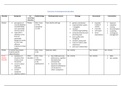
Disorder Symptoms Co- Epidemiology Developmental course Etiology Assessment Intervention
occurring
disorders
Anxiety • perceptions of Phobia Girls > boys Fears decline with age • genetic contribution • tripartite • exposure
uncontrollability/ 2.5-5%, • impaired limbic system model of • relaxation
unpredictability sometimes + amygdala anxiety training
over potentially 12-25% • classical • interview • desensitisation
aversive events conditioning/modelling • self-report • modelling
• rapid shift in • overprotective/intrusive • direct • contingency
attention to the parenting style observations management
focus of • poor quality early
potentially caregiving
dangerous events • avoidant coping style
or one’s own • insecure mother-child
affective attachment
response to these • poor peer relationships
events
Phobia A marked fear/anxiety Girls > boys Relatively stable See: anxiety See: anxiety See: anxiety
towards specific 3-4%
object/situation
Social • avoidance of Other Girls > boys • late childhood/ early See: anxiety See: anxiety • SSRIs
Anxiety situations that disorders 1-2% adolescence, cognitive • See: anxiety
Disorder involve social (children) developmental
interaction 3-4% prerequisites
• concerns about (adolescents) • awareness that
negative appearance/behaviour
evaluation can be basis for
• somatic others’ evaluations
symptoms
• selective mutism
Disorder Symptoms Co- Epidemiology Developmental course Etiology Assessment Intervention
occurring
disorders
Anxiety • perceptions of Phobia Girls > boys Fears decline with age • genetic contribution • tripartite • exposure
uncontrollability/ 2.5-5%, • impaired limbic system model of • relaxation
unpredictability sometimes + amygdala anxiety training
over potentially 12-25% • classical • interview • desensitisation
aversive events conditioning/modelling • self-report • modelling
• rapid shift in • overprotective/intrusive • direct • contingency
attention to the parenting style observations management
focus of • poor quality early
potentially caregiving
dangerous events • avoidant coping style
or one’s own • insecure mother-child
affective attachment
response to these • poor peer relationships
events
Phobia A marked fear/anxiety Girls > boys Relatively stable See: anxiety See: anxiety See: anxiety
towards specific 3-4%
object/situation
Social • avoidance of Other Girls > boys • late childhood/ early See: anxiety See: anxiety • SSRIs
Anxiety situations that disorders 1-2% adolescence, cognitive • See: anxiety
Disorder involve social (children) developmental
interaction 3-4% prerequisites
• concerns about (adolescents) • awareness that
negative appearance/behaviour
evaluation can be basis for
• somatic others’ evaluations
symptoms
• selective mutism