100% satisfaction guarantee Immediately available after payment Both online and in PDF No strings attached 4.2 TrustPilot
logo-home
Exam (elaborations)

NUR 212| NUR212 Module 1 questions and answers, 100% all correct updated 2025.

Rating
-
Sold
-
Pages
8
Grade
A+
Uploaded on
26-07-2025
Written in
2024/2025

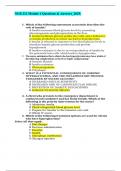
NUR 212 Module 1 Questions & Answers_2025. 1. Which of the following statements accurately describes the role of insulin? A Insulin increases blood glucose levels by promoting gluconeogenesis and glycogenolysis in the liver. B Insulin facilitates glucose uptake into cells, and a deficiency in insulin production or action can lead to hyperglycemia. C Insulin is released in response to low blood glucose levels to stimulate hepatic glucose production and prevent hypoglycemia. D Insulin resistance is due to an overproduction of insulin by the pancreatic beta cells, which leads to hypoglycemia. 2. The nurse anticipates that a client who has hyperglycemia may have which of the following complications as the liver begins compensating? A Osmotic diuresis B Insulin resistance C Gluconeogenesis D Polyphagia 3. WHAT IS A POTENTIAL CONSEQUENCE OF CHRONIC HYPERGLYCEMIA, AND THE INFLAMMATORY PROCESS TRIGGERED BY EXCESS GLUCOSE? A INCREASED INSULIN SENSITIVITY B DECREASED RISK OF CARDIOVASCULAR DISEASE C PREVENTION OF DIABETIC KETOACIDOSIS D DAMAGE TO MAJOR ORGANS 4. A client who presents to the emergency department is confused and combative and has fruity breath. Which of the following is the priority intervention for the nurse? A Administer insulin. B Check a fingerstick blood glucose level. C Prepare for transfer to the intensive care unit. D Obtain IV access. 5. Which of the following treatment options are used for clients who have hyperglycemia? Select all that apply. A Diet changes B Dextrose administration C Exercise D Insulin E Glucophage (metformin) F Glucagon injection 6. Which of the following medications can cause medication- induced hypoglycemia? Select all that apply. A Quinidine B Metformin C Atenolol D Ibuprofen E Aspirin F Cefazolin 7. Drag the body system in the left column to match it with the correct clinical manifestation in the right column. Circulatory- Rapid heartbeat and heart palpitations Digestive- Lack of hunger or interest in eating Nervous- Weakness, lack of coordination, chills Integumentary - Diaphoresis 8. Match the laboratory test with the information it will provide. Drag the options on the left to the corresponding category on the right (or select the option on the left and then the corresponding category on the right). Glucose level after 8 hr of nothing by mouth (Baseline)- Fasting blood glucose Average blood glucose over two or three months- Hemoglobin A1C 9. What is a dermatological condition associated with DMT1 that affects skin coloration and appearance? A Psoriasis B Eczema C Vitiligo- patches of skin lose their pigment D Rosacea 10. Match each pathophysiology with the correct type of diabetes. Drag the options on the left to the corresponding category on the right (or select the option on the left and then the corresponding category on the right). DMT1 DMT2 No insulin production Deficient insulin production or uptake Autoimmune destruction of beta cells Insulin resistance develops in insulin receptors Circulating beta-cell autoimmune antigens (or T-lymphocytes antibodies) can be detected 11. A nurse is providing education to a client who has been prescribed metformin for the management of type 2 diabetes. Which of the following manifestations should the nurse instruct the client to report immediately due to the risk of a potentially life-threatening adverse effect? A Increased thirst and frequent urination B A metallic taste in the mouth after taking the medication C Muscle cramps and a feeling of general malaise D Indigestion and a bloated feeling after meals 12. Based on the client’s manifestations and the blood glucose value of 222 mg/mL in the office, which of the following HbA1c results is most likely? A 3% B 5.5% C 6% D 7.5%- DMT2 is diagnosed with an HbA1c level of 6.5% or higher. Because of the elevated blood glucose value seen in the office and client-reported manifestations of increased thirst and urination, a HbA1c of 6.5% or higher is most likely 13. After his HbA1c comes back with an elevated value, Pete calls the office with follow-up questions. He says, “I need to know. Am I going to have to give myself insulin?” Which of the following responses by the nurse is most accurate? A “No, you have type 2 diabetes and that doesn’t require insulin.” B “Most likely, we’ll need to get you set up for an insulin pump.” C “The doctor suggests we try to control your blood sugar with diet and exercise before trying medications.” D “We treat type 2 diabetes with oral medication 14. Metabolic syndrome can cause which of the following conditions or diseases? Select all that apply. A Dementia B Cancer C Non-alcoholic fatty liver disease D Pneumonia E Diabetes 15. The nurse discusses diagnostic testing results that are outside of expected parameters. Which of the following conditions does the nurse identify as risk factors for development of metabolic syndrome? Select all that apply. A Hypertension B Obesity C Hyperthyroidism D Hyperlipidemia E Hypoglycemia 16. Sort the following items into hypothyroidism or hyperthyroidism. Drag the options on the left to the corresponding category on the right (or select the option on the left and then the corresponding category on the right). Hypothyroidism Hyperthyroidism It can be related to iodine deficiency. It can be treated with oral radioactive iodine. It can be related to lithium medication. Toxic multinodular goiter is a risk factor. Affects females more than males. Graves’ autoimmune dis. is the main cause. It is related to receiving radiation to the head or neck Hashimoto’s disease is a major cause. Knowledge check 1 • Nurses' Notes 0900 Client educated on the importance of blood glucose monitoring and insulin administration. Demonstrated proper technique for self-administering insulin aspart using an insulin pen. 1500 Client verbalizes understanding of the onset and peak times of insulin aspart. Reports feeling confident in managing blood glucose levels and administering insulin. • Vital signs 0900 Temperature 36.8˚ C (98.2˚ F) BP 120/80 mm Hg Respiratory rate 16/min Heart rate 72/min 1500 Temperature 36.9˚ C (98.4˚ F) BP 118/78 mm Hg Respiratory rate 16/min Heart rate 70/min • Lab Results 0900 Blood glucose 180 mg/dL (74 to 106 mg/dL) HbA1c 7.5% (less than 7%) The nurse is reviewing the client’s laboratory results. The nurse should instruct the client to monitor for (weight gain, anorexia, dysuria, polydipsia) and to take (insulin aspart, glucagon, sugar cubes, hard candy.) Knowledge check 2 • Nurses' Notes 0800 Client reports recent weight loss, palpitations, and increased anxiety. Currently taking no medications for hyperthyroidism. 1200 Client exhibits hand tremors and a heart rate of 110/min. The provider has prescribed methimazole • Vital Signs 0800 Temperature 37.8˚ C (100˚ F) BP 130/85 mm Hg Respiratory rate 20/min Heart rate 108/min 1200 Temperature 37.5˚ C (99.5˚ F) BP 128/80 mm Hg Respiratory rate 18/min Heart rate 110/min • Laboratory Results 0800 TSH less than 0.01 mU/L (0.3 to 5 mU/L) Free T4 3 ng/dL (0.8 to 2.8 ng/dL) Complete the following sentence by using the list of options. The nurse should monitor the client for (tinnitus, liver toxicity, thrombophlebitis, blurred vision) due to (temperature, prescribed medicines, lab values, heart rate). 17. A client is about to start taking sustained-release glipizide to treat type 2 diabetes mellitus. Which of the following instructions should the nurse include when talking with the client about taking this medication? A Chew the tablet completely before swallowing it. B Take it once a day, 30 min before breakfast. C Take it in the evening before bedtime. D Drink 16 oz of water right after taking it. 18. The nurse is caring for a client who takes acarbose and sulfonylurea to treat type 2 diabetes mellitus. Which of the following is an indication of an adverse reaction to this medication combination? A Polyuria B Tremors C Bradycardia D Thirst 19. The nurse is caring for a client who is taking exenatide to treat T2DM. The client reports severe abdominal pain. The nurse suspects which of the following adverse reactions to this medication? A Peptic ulcer disease B Hyperkalemia C Hyperglycemia D Pancreatitis 20. The nurse is caring for a client who is taking levothyroxine to treat hypothyroidism. The client reports palpitations, weight loss, and diarrhea. The nurse should suspect which of the following adverse effects of this medication? A Hyperthyroidism B Addison’s disease C Myxedema D Hyperglycemia 21. When talking with a 30-year-old client who will receive radioactive iodine-131 to treat Graves’ disease, the nurse should include which of the following instructions? Select all that apply. A Report weight gain and edema. B Use effective contraception. C Allow 2 to 3 months for full effects. D Expect periodic blood sampling. E Obtain regular eye examinations. 22. A client is about to start taking somatropin. The nurse plans to evaluate the effectiveness of this medication therapy with which of the following assessments? A Level of consciousness B ECG C Height and weight D Breath sounds and respiratory rate 23. A client is about to start taking hydrocortisone to treat adrenocortical insufficiency. The nurse should instruct the client to do which of the following to help reduce the risk of adverse effects of this medication? Select all that apply. A Increase their calcium and vitamin D intake. B Take the medication with food. C Record weight regularly. D Urinate every 4 hr. E Report increased stress. 24. Drag the medication in the left column to match it with its therapeutic use in the right column. Glipizide - Desmopressin- Glucagon - Radioactive iodine-131 - 25. Drag the medication in the left column to match it with its therapeutic use in the right column. Hydrocortisone- Levothyroxine- Propylthiouracil- Somatropin-

Show more Read less


Whoops! We can’t load your doc right now. Try again or contact support.

Document information

Uploaded on
July 26, 2025
Number of pages
8
Written in
2024/2025
Type
Exam (elaborations)
Contains
Questions & answers

Subjects

Content preview

NUR 212 Module 1 Questions & Answers_2025.


1. Which of the following statements accurately describes the
role of insulin?
A Insulin increases blood glucose levels by promoting
gluconeogenesis and glycogenolysis in the liver.
B Insulin facilitates glucose uptake into cells, and a deficiency
in insulin production or action can lead to hyperglycemia.
C Insulin is released in response to low blood glucose levels to
stimulate hepatic glucose production and prevent
hypoglycemia.
D Insulin resistance is due to an overproduction of insulin by
the pancreatic beta cells, which leads to hypoglycemia.
2. The nurse anticipates that a client who has hyperglycemia may have which of
the following complications as the liver begins compensating?
A Osmotic diuresis
B Insulin resistance
C Gluconeogenesis
D Polyphagia
3. WHAT IS A POTENTIAL CONSEQUENCE OF CHRONIC
HYPERGLYCEMIA, AND THE INFLAMMATORY PROCESS
TRIGGERED BY EXCESS GLUCOSE?
A INCREASED INSULIN SENSITIVITY
B DECREASED RISK OF CARDIOVASCULAR DISEASE
C PREVENTION OF DIABETIC KETOACIDOSIS
D DAMAGE TO MAJOR ORGANS

4. A client who presents to the emergency department is
confused and combative and has fruity breath. Which of the
following is the priority intervention for the nurse?
A Administer insulin.
B Check a fingerstick blood glucose level.
C Prepare for transfer to the intensive care unit.
D Obtain IV access.
5. Which of the following treatment options are used for clients
who have hyperglycemia?
Select all that apply.
A Diet changes
B Dextrose administration
C Exercise
D Insulin
E Glucophage (metformin)
F Glucagon injection

, 6. Which of the following medications can cause medication-
induced hypoglycemia?
Select all that apply.
A Quinidine
B Metformin
C Atenolol
D Ibuprofen
E Aspirin
F Cefazolin
7. Drag the body system in the left column to match it with the
correct clinical manifestation in the right column.

Circulatory- Rapid heartbeat and heart palpitations
Digestive- Lack of hunger or interest in eating
Nervous- Weakness, lack of coordination, chills
Integumentary - Diaphoresis
8. Match the laboratory test with the information it will
provide.

Drag the options on the left to the corresponding category on the right (or
select the option on the left and then the corresponding category on the
right).

Glucose level after 8 hr of nothing by mouth (Baseline)- Fasting
blood glucose
Average blood glucose over two or three months- Hemoglobin
A1C
9. What is a dermatological condition associated with DMT1
that affects skin coloration and appearance?

A Psoriasis
B Eczema
C Vitiligo- patches of skin lose their pigment
D Rosacea

10. Match each pathophysiology with the correct type of
diabetes.
Drag the options on the left to the corresponding category on the
right (or select the option on the left and then the corresponding
category on the right).
DMT1 DMT2
$14.14
Get access to the full document:

100% satisfaction guarantee
Immediately available after payment
Both online and in PDF
No strings attached

Get to know the seller
Seller avatar
Empire25

Also available in package deal

Thumbnail
Package deal
NUR 212| NUR212 Module Quizzes, Discussions and Study guides_ Updated 2025.
-
4 2025
$ 65.66 More info

Get to know the seller

Seller avatar
Empire25 Azusa Pacific University
View profile
Follow You need to be logged in order to follow users or courses
Sold
0
Member since
2 year
Number of followers
0
Documents
90
Last sold
-
COLLEGE EDUCATOR

I offer course materials, learning platforms, and resources catered to your subject area.

0.0

0 reviews

5
0
4
0
3
0
2
0
1
0

Recently viewed by you

Why students choose Stuvia

Created by fellow students, verified by reviews

Quality you can trust: written by students who passed their tests and reviewed by others who've used these notes.

Didn't get what you expected? Choose another document

No worries! You can instantly pick a different document that better fits what you're looking for.

Pay as you like, start learning right away

No subscription, no commitments. Pay the way you're used to via credit card and download your PDF document instantly.

Student with book image

“Bought, downloaded, and aced it. It really can be that simple.”

Alisha Student

Frequently asked questions