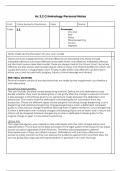
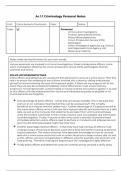
Ac 2.2 Criminology Personal Notes
Unit: Crime Scene to Courtroom Date: Name:
Topic: 2.2 Processes
- Pre-trial
- Bail
- Roles
- Plea bargaining
- Courts
- Appeals
Notes made during the lesson (in your own words)
{There are three categories that criminal offences can be placed into, these include c
indictable offences, summary offences and triable either way offences. Indictable offences
are the most severe cases like murder, these are always tried in the Crown Court. Summary
offences are less severe and include assault without injury and motoring offences which will
usually be tried in a magistrates court. Finally, triable either way offences can be tried in
either court and include theft, burglary, fraud, criminal damage and others.}
PRE-TRIAL MATTERS
Pre-trial matters consist of any decisions that are made by the magistrates court before a
trial takes place.
PLEA/PLEA BARGAINING
This can include, the plea or plea bargaining and bail. Before the trial defendants must
decide whether they want to plead guilty or not guilty after the charge is read out to them.
A plea-bargain is the phrase given to an agreement made between the defendant and
prosecutor. This means that the defendant will plead guilty for concession from the
prosecutor. {There are different types of plea bargains including charge bargaining, count
bargaining and sentence bargaining. Charge bargaining is when a defendant will plead
guilty to a less serious charge, therefore allowing them a lighter sentence. Count bargaining
is when a defendant with multiple charges will plead guilty to one of them and in return the
others will be dropped. Sentence bargaining is when a defendant pleads guilty to the
original charge to gain a more lenient sentence.}
LEGAL AID
The Legal Aid Agency was created to help individuals with the costs of legal advice and
representation. This is due to the basic principle of the legal system that everyone has equal
access to justice regardless of their finances. Therefore allowing people to defend
themselves even if they cant afford a lawyer. Defendants with summary offences have
access to a duty solicitor so they can discuss the evidence against them and their plea. For
any not guilty plea, legal aid and representation is granted in all court hearings.
Unit: Crime Scene to Courtroom Date: Name:
Topic: 2.2 Processes
- Pre-trial
- Bail
- Roles
- Plea bargaining
- Courts
- Appeals
Notes made during the lesson (in your own words)
{There are three categories that criminal offences can be placed into, these include c
indictable offences, summary offences and triable either way offences. Indictable offences
are the most severe cases like murder, these are always tried in the Crown Court. Summary
offences are less severe and include assault without injury and motoring offences which will
usually be tried in a magistrates court. Finally, triable either way offences can be tried in
either court and include theft, burglary, fraud, criminal damage and others.}
PRE-TRIAL MATTERS
Pre-trial matters consist of any decisions that are made by the magistrates court before a
trial takes place.
PLEA/PLEA BARGAINING
This can include, the plea or plea bargaining and bail. Before the trial defendants must
decide whether they want to plead guilty or not guilty after the charge is read out to them.
A plea-bargain is the phrase given to an agreement made between the defendant and
prosecutor. This means that the defendant will plead guilty for concession from the
prosecutor. {There are different types of plea bargains including charge bargaining, count
bargaining and sentence bargaining. Charge bargaining is when a defendant will plead
guilty to a less serious charge, therefore allowing them a lighter sentence. Count bargaining
is when a defendant with multiple charges will plead guilty to one of them and in return the
others will be dropped. Sentence bargaining is when a defendant pleads guilty to the
original charge to gain a more lenient sentence.}
LEGAL AID
The Legal Aid Agency was created to help individuals with the costs of legal advice and
representation. This is due to the basic principle of the legal system that everyone has equal
access to justice regardless of their finances. Therefore allowing people to defend
themselves even if they cant afford a lawyer. Defendants with summary offences have
access to a duty solicitor so they can discuss the evidence against them and their plea. For
any not guilty plea, legal aid and representation is granted in all court hearings.