Ac 2.1 Criminology Personal Notes
Unit: Crime Scene to Courtroom Date: Name:
Topic: 2.1 Requirement
- Charging role – Criminal Justice Act
2003
- Prosecution of Offences Act 1985
- Full Code Test
Notes made during the lesson (in your own words)
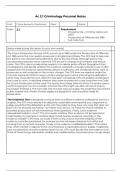
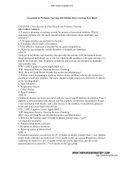
The Crown Prosecution Service (CPS) was set up in 1986 under the Prosecution of Offences
Act 1985 and is the main public prosecutor in England and Wales. The CPS had to take over
the police's role of prosecuting offenders, due to the risk of bias. Although police may
occasionally prosecute minor cases the CPS are still in charge of all complex and serious
cases. The CPS’s role in prosecuting suspects is to advise police officers throughout their
investigations and decide whether the evidence collected is enough to build a case. If after
assessment, the evidence submitted by officers is sufficient, CPS will decide if they want to
prosecute as well as decide on the correct charges. The CPS then are required under the
Criminal Justice Act 2003 to issue a written charge and a notice informing the defendant
when they must attend court. After this has been completed, CPS will prepare and present
their case in court. In deciding whether they want to prosecute a case, tests from the Code
for Crown Prosecutors will be used. The results from these tests will show if a certain case is
worth bringing to court to consider. One test the CPS might use after all lines of inquiry
have been finished, is The Full Code Test, this test has two stages: the evidential test and the
public interest test. If both of these stages are passed the case should be ready for
prosecution.
The Evidential Test is designed to ensure there is sufficient evidence collected to convict a
suspect. The CPS must decide if an objective, reasonable and impartial jury, magistrate or
judge would find the defendant guilty with the evidence they have. Any case that does not
pass will not proceed any further, no matter how serious. To make the choice whether to
proceed, prosecutors will ask themselves three questions. Firstly, is the evidence
allowed/admissible in court? This is to assess whether their evidence will be rejected as
inadmissible, for example it could be determined hearsay evidence. Secondly, is the
evidence reliable? CPS must conclude if there is any chance that the reliability of the
evidence could be questioned, for example are the witnesses statements truthful and
coming from an honest character. Finally is the evidence credible/believable? This means
that, when viewed in regards to the circumstances a reasonable person (judge, magistrate,
jury) would believe that the evidence given is true. CPS must decide that the evidence is all
three of these things: admissible, reliable and credible before the prosecution can go ahead.
Unit: Crime Scene to Courtroom Date: Name:
Topic: 2.1 Requirement
- Charging role – Criminal Justice Act
2003
- Prosecution of Offences Act 1985
- Full Code Test
Notes made during the lesson (in your own words)
The Crown Prosecution Service (CPS) was set up in 1986 under the Prosecution of Offences
Act 1985 and is the main public prosecutor in England and Wales. The CPS had to take over
the police's role of prosecuting offenders, due to the risk of bias. Although police may
occasionally prosecute minor cases the CPS are still in charge of all complex and serious
cases. The CPS’s role in prosecuting suspects is to advise police officers throughout their
investigations and decide whether the evidence collected is enough to build a case. If after
assessment, the evidence submitted by officers is sufficient, CPS will decide if they want to
prosecute as well as decide on the correct charges. The CPS then are required under the
Criminal Justice Act 2003 to issue a written charge and a notice informing the defendant
when they must attend court. After this has been completed, CPS will prepare and present
their case in court. In deciding whether they want to prosecute a case, tests from the Code
for Crown Prosecutors will be used. The results from these tests will show if a certain case is
worth bringing to court to consider. One test the CPS might use after all lines of inquiry
have been finished, is The Full Code Test, this test has two stages: the evidential test and the
public interest test. If both of these stages are passed the case should be ready for
prosecution.
The Evidential Test is designed to ensure there is sufficient evidence collected to convict a
suspect. The CPS must decide if an objective, reasonable and impartial jury, magistrate or
judge would find the defendant guilty with the evidence they have. Any case that does not
pass will not proceed any further, no matter how serious. To make the choice whether to
proceed, prosecutors will ask themselves three questions. Firstly, is the evidence
allowed/admissible in court? This is to assess whether their evidence will be rejected as
inadmissible, for example it could be determined hearsay evidence. Secondly, is the
evidence reliable? CPS must conclude if there is any chance that the reliability of the
evidence could be questioned, for example are the witnesses statements truthful and
coming from an honest character. Finally is the evidence credible/believable? This means
that, when viewed in regards to the circumstances a reasonable person (judge, magistrate,
jury) would believe that the evidence given is true. CPS must decide that the evidence is all
three of these things: admissible, reliable and credible before the prosecution can go ahead.