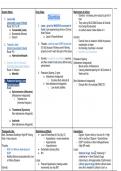
Generic Name: Drug Class: Mechanism of Action:
- Diuretics - increasing urine output to get rid of
1. L
oop (-ide) Diuretics fluid
(Ascending Loop of Henle) - They work by BLOCKING Sodium & Chloride
Route: PO, IV, IM 1. L
oops -given for MASSIVE movement of from being RE-absorbed
a. Furosemide (Lasix) fluidsin pts experiencing (Acute or Chronic - As sodium leaves it takes Water w/ it
b. Bumetanide (Bumex) Heart Failure)
c. Edecrin a. Quick & Powerful/Harsh Osmotic:
- Osmotic force is created to inhibit the passive
2. T
hiazide (-zide) 2. Thiazide -can’t be used if GFR is too low reabsorption of water
(Distal Convoluted Tubule) (15-20) because if Kidneys aren’t filtering - No blocking of particles is involved
Route: PO properly it won’t reach that part of the tubule - No effect on K excretion
a. Hydrochlorothiazide
3. O smotic -usually is crystallized, warmed, Potassium Sparing:
3. O
smotic (Os for Osmotic) and then cooled to body temp. Before being [Aldosterone Antagonists]
(Proximal Convoluted Tubule) administered. - Blocks action of Aldosterone
Route: IV infusion - Causing retention/sparring of K & Excretion of
a. Mannitol 4. Potassium Sparing- 2 types Water and Na
a. Aldosterone Antagonists
4. P
otassium Sparing (-one) i. Excretes Na & Absorbs K [Non-Aldosterone Antagonists]
(Distal Nephron) b. Non-aldosterone Antagonists - Disrupts Na & K exchange DIRECTLY
Route: i. Low diuretic abilities
a. Spironolactone (Aldactone)
[Aldosterone Antagonists]
i. Testoster-one
(hormonal irregular.)
b. T
riamterene (Dyrenium)
[Non-aldosterone Antagonist]
c. A
miloride
[Non-aldosterone Antagonist]
herapeutic Use:
T Side/Adverse Effects Interactions:
Main: Decreases Swelling & High BP (losing ● Loss of Electrolytes (K, Na, Mg, Cl) - Digoxin: If given while pt. (has low K) = High
fluids = less pressure ○ Hypokalemia - muscle weakness risk for toxicity of Digoxin = Dysrhythmias
○ Hyponatremia - DON'T combine w/ other Antihypertensives
Thiazide: ○ Hypochloremia (High BP meds)
- DOC: for African Americans w/ ● Dehydration (loosing fluid) Loops:
H-BP ● N/V - Ototoxic Drugs: Can⬆️ Ototoxicity if
- Mobilize Edema (associated with Liver combined w/ > other Ototoxic Drugs
or Kidney Disease Loops: (Vancomycin, Aminoglycosides, Erythromycin)
● Postural Hypotension (making sudden - Lithium (psych drug): Monitor Lithium levels:
Osmotic: movements can drop BP) since Na is needed for Lithium to be in a
, - an prevent/slow down start of
C T
● innitus (ringing in the ears) therapeutic range = you don't want to give a
kidney failure in Severe L-BP & ● Circulatory Collapse diuretic that blocks Na
Hypovolemic shock
- Reduces pressure in brain (ICP) Thiazide: Potassium Sparing:
caused by Brain Swelling ● Crosses Placenta= Severe baby harm - NEVER GIVE w/ Potassium, Salt substitutes,
- Reduces pressure in eyes (IOP) if not ⬆️
● Glucose lvls (diabetes pt.) or another Potassium Sparing Drugs (ACE
responding to other treatment ● MAY cause Gouty Arthritis inhibitors, ARBS, Direct Renin Inhibitors)
(remember they use K for lethal injections!)
otassium Sparing:
P Osmotic:
[Aldosterone Antagonists & Non] ● Lung Swelling & Congestive Heart Fail
- Usually used w/ (Loop or Thiazide) ● Headache, N/V
to help counteract K loss
Potassium Sparing:
[Non-Aldosterone Antagonists] ● Hyperkalemia (too much K) = cardiac
- Mainly used to counteract K loss dysrhythmias like Vfib
effects in Lasix, etc ○ Insulin can reverse this! (use
- Low diuresis capabilities caution w/ diabetes pts.)
[Aldosterone Antagonists]
● Endocrine Effects (drug is similar to a
steroid hormone so we have hormonal
disturbances)
○ Gynecomastia (men w/ breasts)
○ Menstrual cycle irregularities
[Non-Aldosterone Antagonists]
● Common: N/V, Leg cramps, Dizziness
ontraindications:
C Monitor & Consider Patient Education:
Thiazide: - Check K lvls before administering
- NO Pregnant Wmn (crosses Placenta) - Check BP before administering
- Weigh Daily to see if effective
- Don’t Administer Rapidly (IV) = cardiac
arrest
- Monitor pt CLOSELY for signs of
Hypotension or Cardiac Collapse
Thiazide:
- Monitor Diabetes pts.
- Diuretics - increasing urine output to get rid of
1. L
oop (-ide) Diuretics fluid
(Ascending Loop of Henle) - They work by BLOCKING Sodium & Chloride
Route: PO, IV, IM 1. L
oops -given for MASSIVE movement of from being RE-absorbed
a. Furosemide (Lasix) fluidsin pts experiencing (Acute or Chronic - As sodium leaves it takes Water w/ it
b. Bumetanide (Bumex) Heart Failure)
c. Edecrin a. Quick & Powerful/Harsh Osmotic:
- Osmotic force is created to inhibit the passive
2. T
hiazide (-zide) 2. Thiazide -can’t be used if GFR is too low reabsorption of water
(Distal Convoluted Tubule) (15-20) because if Kidneys aren’t filtering - No blocking of particles is involved
Route: PO properly it won’t reach that part of the tubule - No effect on K excretion
a. Hydrochlorothiazide
3. O smotic -usually is crystallized, warmed, Potassium Sparing:
3. O
smotic (Os for Osmotic) and then cooled to body temp. Before being [Aldosterone Antagonists]
(Proximal Convoluted Tubule) administered. - Blocks action of Aldosterone
Route: IV infusion - Causing retention/sparring of K & Excretion of
a. Mannitol 4. Potassium Sparing- 2 types Water and Na
a. Aldosterone Antagonists
4. P
otassium Sparing (-one) i. Excretes Na & Absorbs K [Non-Aldosterone Antagonists]
(Distal Nephron) b. Non-aldosterone Antagonists - Disrupts Na & K exchange DIRECTLY
Route: i. Low diuretic abilities
a. Spironolactone (Aldactone)
[Aldosterone Antagonists]
i. Testoster-one
(hormonal irregular.)
b. T
riamterene (Dyrenium)
[Non-aldosterone Antagonist]
c. A
miloride
[Non-aldosterone Antagonist]
herapeutic Use:
T Side/Adverse Effects Interactions:
Main: Decreases Swelling & High BP (losing ● Loss of Electrolytes (K, Na, Mg, Cl) - Digoxin: If given while pt. (has low K) = High
fluids = less pressure ○ Hypokalemia - muscle weakness risk for toxicity of Digoxin = Dysrhythmias
○ Hyponatremia - DON'T combine w/ other Antihypertensives
Thiazide: ○ Hypochloremia (High BP meds)
- DOC: for African Americans w/ ● Dehydration (loosing fluid) Loops:
H-BP ● N/V - Ototoxic Drugs: Can⬆️ Ototoxicity if
- Mobilize Edema (associated with Liver combined w/ > other Ototoxic Drugs
or Kidney Disease Loops: (Vancomycin, Aminoglycosides, Erythromycin)
● Postural Hypotension (making sudden - Lithium (psych drug): Monitor Lithium levels:
Osmotic: movements can drop BP) since Na is needed for Lithium to be in a
, - an prevent/slow down start of
C T
● innitus (ringing in the ears) therapeutic range = you don't want to give a
kidney failure in Severe L-BP & ● Circulatory Collapse diuretic that blocks Na
Hypovolemic shock
- Reduces pressure in brain (ICP) Thiazide: Potassium Sparing:
caused by Brain Swelling ● Crosses Placenta= Severe baby harm - NEVER GIVE w/ Potassium, Salt substitutes,
- Reduces pressure in eyes (IOP) if not ⬆️
● Glucose lvls (diabetes pt.) or another Potassium Sparing Drugs (ACE
responding to other treatment ● MAY cause Gouty Arthritis inhibitors, ARBS, Direct Renin Inhibitors)
(remember they use K for lethal injections!)
otassium Sparing:
P Osmotic:
[Aldosterone Antagonists & Non] ● Lung Swelling & Congestive Heart Fail
- Usually used w/ (Loop or Thiazide) ● Headache, N/V
to help counteract K loss
Potassium Sparing:
[Non-Aldosterone Antagonists] ● Hyperkalemia (too much K) = cardiac
- Mainly used to counteract K loss dysrhythmias like Vfib
effects in Lasix, etc ○ Insulin can reverse this! (use
- Low diuresis capabilities caution w/ diabetes pts.)
[Aldosterone Antagonists]
● Endocrine Effects (drug is similar to a
steroid hormone so we have hormonal
disturbances)
○ Gynecomastia (men w/ breasts)
○ Menstrual cycle irregularities
[Non-Aldosterone Antagonists]
● Common: N/V, Leg cramps, Dizziness
ontraindications:
C Monitor & Consider Patient Education:
Thiazide: - Check K lvls before administering
- NO Pregnant Wmn (crosses Placenta) - Check BP before administering
- Weigh Daily to see if effective
- Don’t Administer Rapidly (IV) = cardiac
arrest
- Monitor pt CLOSELY for signs of
Hypotension or Cardiac Collapse
Thiazide:
- Monitor Diabetes pts.